Prime Minister Keir Starmer Welcomes US-Iran Ceasefire Amid Efforts to Reopen Strait of Hormuz
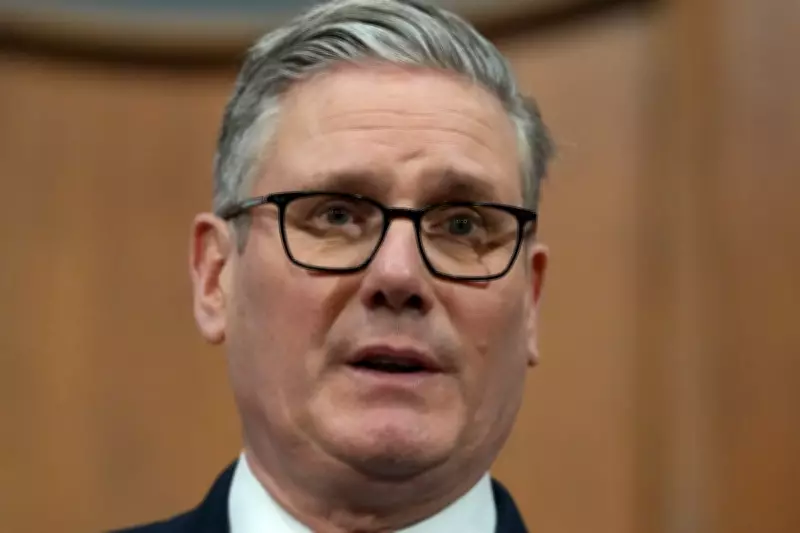
Prime Minister Sir Keir Starmer has expressed his approval of the ceasefire agreement reached overnight between the United States and Iran, describing it as a moment of relief for the region and the global community. In a statement, Sir Keir emphasised the importance of supporting this pause in hostilities to achieve a long-term solution for shipping through the critical Strait of Hormuz.
Diplomatic Mission to the Gulf
Sir Keir is set to travel to the Middle East on Wednesday to engage with leaders of Gulf allies. During his visit, he will discuss diplomatic efforts to uphold the ceasefire and work towards permanently reopening the Strait of Hormuz. The Prime Minister plans to outline the UK Government's call for de-escalation in the Iran conflict and express gratitude to armed forces from the UK and allied nations operating in the region.
According to the Ministry of Defence, UK personnel have intercepted over 110 drone attacks, and the RAF has conducted more than 1,600 hours of defensive operations, highlighting the significant military involvement in securing the area.

Economic Impact and Market Reactions
The announcement of the ceasefire has had immediate economic repercussions, triggering a notable decline in global oil prices and a surge in stock markets. Investors responded with relief after six weeks of economic turmoil caused by the conflict.
Benchmark Brent crude oil prices fell by 14.3% to 93.6 US dollars (£69.78) per barrel, although this remains above the pre-conflict level of around 70 dollars. In the UK, petrol and diesel costs had risen sharply since the US-Israeli military action began on February 28, with diesel prices up 34% to 190.6p and unleaded prices up 19% to 157.7p, as reported by the RAC.
London's FTSE 100 index jumped by as much as 2.6% at the start of trading, reflecting market optimism following the ceasefire news.
Background of the Conflict and Ceasefire Terms
The tension escalated when US-Israeli strikes on Iran and Tehran's response, including targeting Gulf states and effectively closing the Strait of Hormuz, led to soaring fossil fuel prices worldwide. The Strait of Hormuz is a key route for oil and gas shipments, making its closure a significant global economic threat.
US President Donald Trump had issued a stark warning on Tuesday, stating that "a whole civilisation will die" unless Iran met his demands. However, less than two hours before his deadline, Trump suspended threats to widen the military offensive, conditional on the strait reopening.
Trump cited a 10-point proposal from Iran, mediated by Pakistan, as a workable basis for negotiation. He agreed to a two-week ceasefire, pending the complete, immediate, and safe opening of the Strait of Hormuz. In a social media post, Trump heralded the development as "A big day for World Peace!" and predicted "the Golden Age of the Middle East."
International Mediation and Future Prospects
Pakistan played a crucial role as a mediator, with Prime Minister Shehbaz Sharif inviting Iranian and US officials to Islamabad for talks scheduled on Friday. Iran's supreme national security council confirmed acceptance of the two-week ceasefire, with foreign minister Abbas Araghchi stating that safe passage through the Strait of Hormuz would be possible via coordination with Iran's Armed Forces, subject to technical limitations.
Sir Keir reiterated the UK's commitment to collaborative efforts, saying, "Together with our partners we must do all we can to support and sustain this ceasefire, turn it into a lasting agreement and reopen the Strait of Hormuz." This diplomatic push aims to transform the temporary pause into a durable peace agreement, ensuring stability in the region and safeguarding global energy supplies.