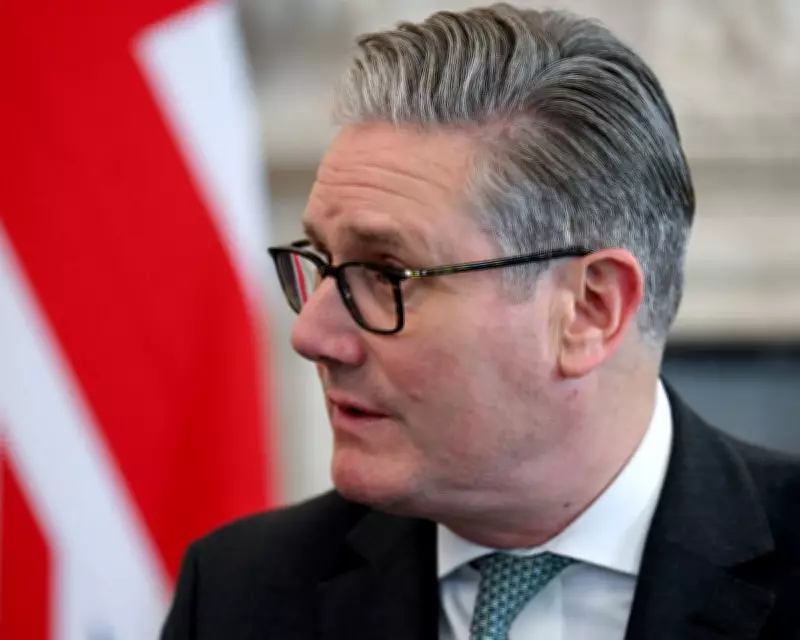
Starmer's 'Defensive Strikes' Policy Faces Legal Scrutiny Amid Trump's Escalating Iran Threats
Keir Starmer has sought to position the UK as a responsible actor focused on regional security, while avoiding direct participation in the conflict. However, this stance is coming under increasing pressure as Donald Trump intensifies his rhetoric against Iran.
From Downing Street, Starmer has consistently emphasised that he will only authorise the use of UK bases by the United States for what he terms "defensive" strikes on Iranian military targets. In stark contrast, from the White House, Trump has openly threatened to bomb civilian infrastructure, stating on Monday that he was "not at all" worried about committing war crimes.
The Legal Tightrope: Defence Versus Offence
So far in the war, Starmer's position has enabled him to portray the UK as a concerned but non-combatant party. Yet, this approach has not only drawn Trump's displeasure but also raised serious legal questions. Experts are debating whether it is plausible to neatly separate defensive and offensive operations under international law.

If US attacks expand to include targets such as bridges and power plants, scrutiny of the British position will intensify, even if those strikes are not launched from UK soil. The government previously released a summary of its legal stance, arguing it was acting "in the collective self-defence of regional allies who have requested support." However, many international law specialists remain sceptical from the outset.
Expert Opinions on the UK's Legal Position
Susan Breau, a professor of international law at the Institute of Advanced Legal Studies, expressed significant concerns. "How do you distinguish what's defensive from what's offensive? It will be extremely complicated for the UK to maintain that distinction given what Trump has said – his whole battle plan is changing," she noted. Breau highlighted that Trump's strategy now includes targeting civilian infrastructure, such as issuing warnings about trains in Iran.
For Breau, the core issue is the UK allowing US use of its bases. "I could see the UK still having bases and having ships there to defend its Gulf neighbours, but it's allowing the US to use their bases that's problematic," she explained. She added that while initial defensive actions might be justifiable, Trump's shifting rules of engagement necessitate a reassessment.
In contrast, Victor Kattan, an assistant professor of public international law at the University of Nottingham, believes the UK's legal position could remain tenable. He argued that the British government could maintain a fine distinction by limiting support to defensive actions, such as intercepting rockets aimed at allies, while prohibiting use of UK assets for offensive strikes on civilian targets.
"They could say, 'Look, we're only allowing our systems, hardware, our personnel to shoot down rockets and the launchers... But our bases and hardware's not being used to punish the government of Iran or to participate in attacks on bridges, critical infrastructure,'" Kattan stated. He acknowledged it is a delicate balance but thinks it is defensible.
Ongoing Review and Future Implications
Both experts agree that the UK will need to continuously monitor its legal stance. Kattan pointed out that constant review is a given, while Breau urged a reconsideration, suggesting authorities are likely already doing so. As Trump's threats escalate, Starmer's policy of defensive strikes faces mounting strain, with the distinction between defence and attack becoming increasingly blurred in a complex geopolitical landscape.
The outcome of this legal and diplomatic tightrope walk could have significant implications for UK foreign policy and its role in regional security dynamics. The situation underscores the challenges of maintaining principled positions amidst volatile international conflicts.