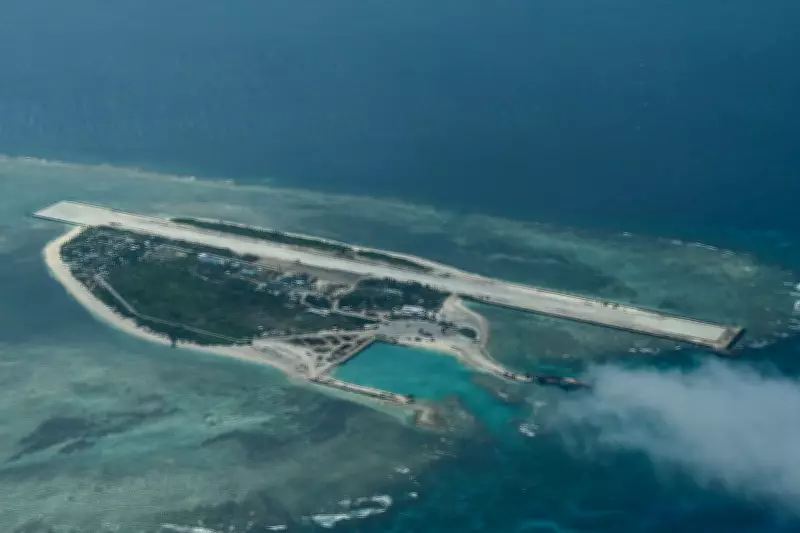
A Taiwanese minister has made a rare visit to a remote island in the South China Sea, marking the first such trip in seven years amid heightened regional tensions. Ocean Affairs Council Minister Kuan Bi-ling travelled to Itu Aba, also known as Taiping Island, to observe coast guard exercises. The drills, described by Taiwan’s coast guard as a “humanitarian relief, medical evacuation and marine pollution removal” operation, included a simulated interception of a cargo vessel that ignored repeated calls.
Significance of the Visit
Itu Aba is the largest naturally occurring island in the disputed Spratly Islands, which are claimed by China, Vietnam, and the Philippines. Taiwan’s Central News Agency confirmed that this was the first ministerial visit in seven years. The visit coincides with large-scale US-Philippines military exercises that have drawn Chinese ire. In response, China deployed a new amphibious warship into the South China Sea and moved an aircraft carrier through the Taiwan Strait.
Details of the Coast Guard Drill
During the exercise, armed personnel boarded the simulated rogue cargo vessel to take control. The coast guard stated, “In order to safeguard the nation’s rights and national security, the cargo vessel was escorted back to Taiping Island for further investigation.” A video released later showed officers in black gear moving through the ship and entering its control room. One officer addressed a crew member, saying, “You have entered the waters under the jurisdiction of our country. Please cooperate with the investigation.”

Island Infrastructure and Population
Taiping Island is located approximately 1,600 kilometres southwest of Kaohsiung and falls under the administration of Cijin District. The island features a runway capable of handling military supply flights and a recently upgraded wharf that can accommodate large patrol vessels. Around 200 people reside there, mostly coast guard members trained for both security and rescue operations. Despite these facilities, the island is not heavily fortified compared to nearby Chinese-controlled outposts.
Broader Geopolitical Context
China has been expanding its presence across the South China Sea, building artificial islands and adding airstrips, radar systems, and other military infrastructure. These actions have raised concern in the region and in Washington. China maintains that its actions are justified, asserting its right to develop and defend what it considers its territory. Taiwan, however, rejects Beijing’s claims and continues to operate independently on the islands it controls.
The South China Sea remains one of the world’s most important waterways, with huge volumes of global trade passing through annually. It is also a major fishing zone and is believed to hold significant oil and gas reserves. A 2016 international tribunal ruling classified Taiping Island as a “rock” under the United Nations Convention on the Law of the Sea, limiting Taiwan’s maritime claims to 12 nautical miles instead of 200 nautical miles. Taiwan presented its case to the tribunal, arguing that Itu Aba should be recognised as an “island” due to its resources, including fresh water. Both Taiwan and China have rejected the ruling.