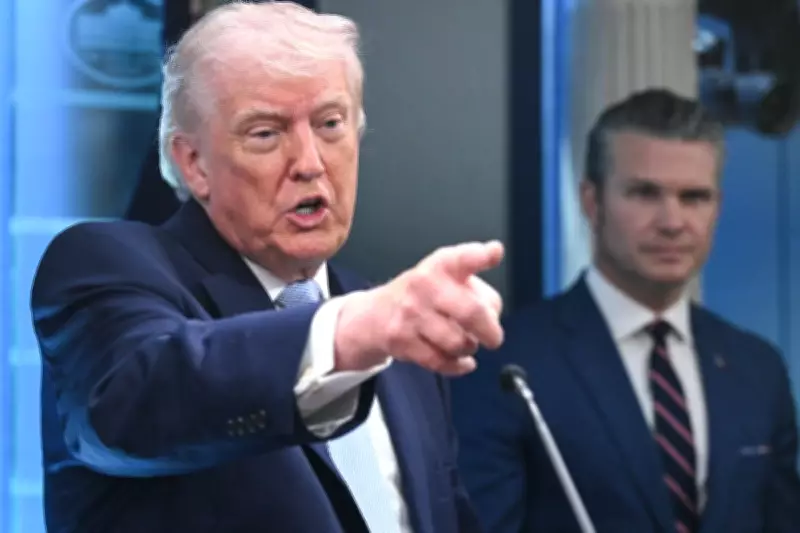
In a significant diplomatic development, former US President Donald Trump has announced a temporary two-week ceasefire with Iran, marking a pause in escalating military tensions. The suspension of hostilities is directly tied to Iran's commitment to fully reopen the strategic Strait of Hormuz, a vital global shipping lane that had been at the centre of recent conflicts.
Mediation Efforts and Agreement Details
The breakthrough follows intensive mediation efforts led by Pakistan's Prime Minister Shehbaz Sharif and Field Marshal Asim Munir, who facilitated talks between the involved parties. Iran's Foreign Minister, Abbas Araghchi, publicly confirmed the agreement, stating that shipping operations would resume through the Strait of Hormuz. In return, Iran has agreed to halt what it described as "defensive" military operations for the duration of the two-week period.
Trump's Statements and Earlier Threats
Earlier on Tuesday, Trump had issued a stark warning, threatening to unleash catastrophic military force on Iran's civil infrastructure if the Strait of Hormuz remained closed. This threat sparked global concern and led to widespread calls for his removal from political influence. However, in his latest announcement, Trump claimed that all military objectives had been successfully met and expressed optimism about the prospects for a long-term peace agreement with Iran and across the broader Middle East region.

When questioned about potential legal implications, Trump stated he was "not at all" concerned about committing possible war crimes, a remark that has drawn criticism from international observers. The temporary ceasefire represents a shift from his previous aggressive posture, though it remains conditional on Iran's compliance with the terms regarding the Strait of Hormuz.
Global Reactions and Future Implications
The announcement has been met with cautious relief by the international community, which had been alarmed by the earlier threats of military escalation. Analysts suggest that this ceasefire could provide a crucial window for further diplomatic negotiations, potentially paving the way for more stable relations in the region. However, uncertainties persist, as the agreement's success hinges on Iran's actions and the ongoing mediation efforts by Pakistani officials.
As the two-week period unfolds, global markets and political leaders will be closely monitoring developments, with hopes that this temporary pause could lead to a more enduring resolution of the longstanding tensions between the United States and Iran.