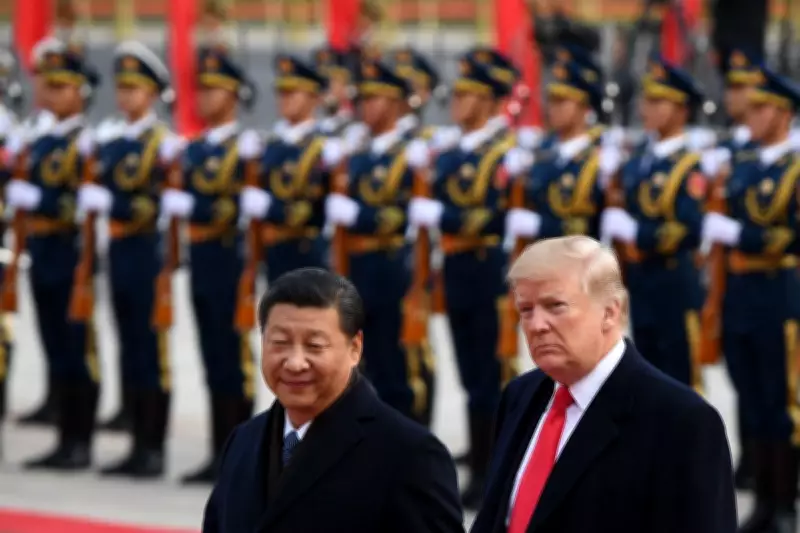
President Donald Trump is scheduled to visit China from May 13 to 15 for a summit with Chinese counterpart Xi Jinping. A delegation of over a dozen high-profile U.S. executives, including Tesla's Elon Musk and Apple's Tim Cook, will reportedly accompany Trump. The visit aims to unlock a series of trade deals and purchase agreements with Beijing.
Key Topics on the Agenda
Discussions are expected to cover trade, artificial intelligence, export controls, Taiwan, and the war in Iran. The war in Iran is a prominent topic, with Trump seeking Beijing's help to reopen the Strait of Hormuz, given that China is Iran's largest oil buyer.
Economic and Strategic Implications
The summit underscores the complex interdependence between the world's two largest economies. While trade tensions have simmered, both leaders are likely to seek areas of mutual benefit, particularly in technology and energy security. The presence of top U.S. CEOs signals a push for concrete business deals.

Analysts note that any progress on AI cooperation could reshape global tech standards, while discussions on export controls may affect supply chains. Taiwan remains a sensitive issue, with Washington reaffirming its commitment to the island's self-defense.
The Iran war dimension adds urgency, as the Strait of Hormuz chokepoint is critical for global oil shipments. China's role as a major Iranian oil buyer positions it as a key mediator.
This visit marks Trump's first trip to China since 2019 and comes amid a shifting geopolitical landscape. Both sides are expected to issue a joint statement at the conclusion of the summit.