Trump Declares 'Big Day for World Peace' Following 11th-Hour Iran Ceasefire Agreement
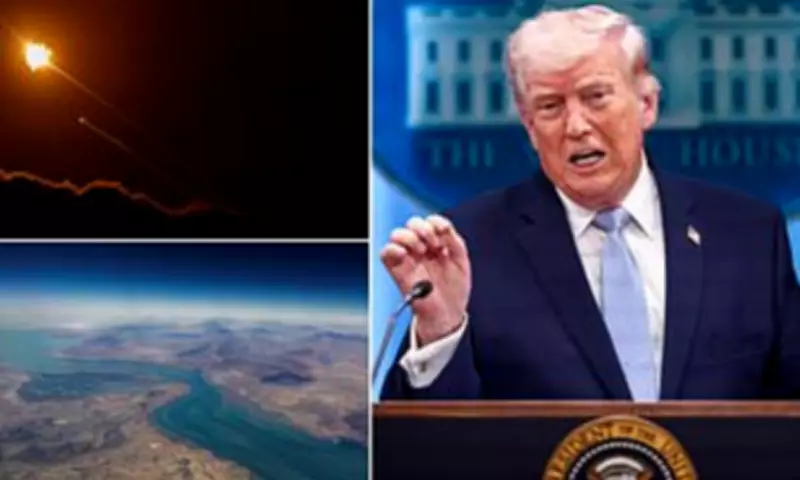
Former President Donald Trump celebrated what he termed a "big day for World Peace!" after brokering a dramatic, last-minute ceasefire deal with Iran. The agreement, reached just before a critical deadline, provides what Trump described as a "workable basis" to potentially end the ongoing conflict. This development follows Trump's ultimatum demanding Iran open the strategically vital Strait of Hormuz, a move he claimed was essential to prevent catastrophic consequences.
Deadline Diplomacy and the 'Golden Age' Promise
In a Truth Social post at midnight, Trump enthusiastically announced the breakthrough, stating, "Iran wants it to happen, they’ve had enough! Likewise, so has everyone else!" He had previously issued a stark two-week deadline, warning that failure to comply could lead to devastating outcomes. Trump framed the opening of the Strait of Hormuz as a gateway to a "Golden Age," promising it would reestablish crucial global trading routes and repair economic setbacks caused by the conflict.
The United States will assist with managing the anticipated traffic buildup in the strait, Trump confirmed, adding optimistically, "There will be lots of positive action! Big money will be made." While negotiations for a final truce are set to proceed, Trump emphasized that U.S. military forces would remain engaged in the region, stating they would be "loading up with supplies of all kinds, and just 'hangin’ around' to ensure everything goes smoothly."

Iran's 10-Point Peace Plan and Contentious Provisions
The ceasefire is based on a 10-point peace plan proposed by Iran, which Trump initially endorsed as a "workable basis on which to negotiate." The plan includes several significant and controversial elements. Iran would maintain control over the Strait of Hormuz, though it pledges to allow passage for countries not deemed threatening. Additionally, the proposal demands the removal of sanctions, compensation for war damages, and a guaranteed ceasefire on all fronts, including Israel's hostilities with Hezbollah in Lebanon.
One of the most contentious aspects is the acceptance of Iran's right to enrich uranium for its nuclear program. When questioned about this by Reuters last week, Trump appeared dismissive, remarking, "That's so far underground, I don't care about that. We'll always be watching it by satellite." However, this provision has raised serious concerns among key allies and within the international community.
Mixed Reactions from Domestic and International Allies
Reactions to the deal have been sharply divided. South Carolina Senator Lindsey Graham, a prominent supporter of the war effort, expressed deep reservations, particularly regarding uranium enrichment. Graham insisted that all highly enriched uranium must be controlled by the U.S. and removed from Iran to prevent future nuclear threats. He stated he looks forward to reviewing the proposal and its submission to Congress for a vote.
Israeli Prime Minister Benjamin Netanyahu offered conditional support, backing Trump's decision to suspend strikes against Iran for two weeks but clarifying that the ceasefire does not encompass Israel's military campaign in Southern Lebanon against Hezbollah. The agreement's credibility was further clouded by discrepancies between Farsi and English versions of Iran's plan, notably the omission of the "acceptance of enrichment" phrase in English translations, which Trump later labeled as "fraudulent" on Truth Social without elaboration.
Domestic Unrest in Iran and Regional Economic Implications
Within Iran, the announcement sparked widespread but mixed reactions. Pro-government demonstrators in Tehran took to the streets, chanting "Death to America, death to Israel, death to compromisers!" and burning American and Israeli flags, reflecting persistent anger among hard-liners. Iranian Foreign Minister Abbas Araghchi indicated that passage through the Strait of Hormuz would be permitted under Iranian military management, though it remains unclear if this signifies a complete loosening of Iran's chokehold on the waterway.

The plan also allows both Iran and Oman to charge fees on ships transiting the strait, with Iran reportedly intending to use the revenue for reconstruction efforts. Other Iranian demands include the withdrawal of U.S. combat forces from the region and the release of frozen assets. The deal's announcement had immediate economic repercussions, with U.S. crude oil prices plunging by over 15% to $95 per barrel after hitting $116 earlier, alleviating some global market pressures.
Path to the Agreement and Ongoing Challenges
The ceasefire followed intense diplomatic efforts, with Trump citing conversations with Pakistan Prime Minister Shehbaz Sharif and General Asim Munir, Pakistan's army chief, as influential in his decision. Sharif had publicly urged a two-week extension to allow diplomacy to advance and for Iran to temporarily open the strait. China, Iran's largest trade partner, also encouraged Tehran to pursue a ceasefire as talks progressed.
In the tense hours leading up to the deal, Trump had escalated threats, warning that "the entire country can be taken out in one night" and targeting infrastructure like power plants and bridges. Airstrikes had already hit bridges, a train station, and military infrastructure on Kharg Island, a key Iranian oil hub. These actions drew criticism from Democrats, UN officials, and legal scholars, who argued they could violate international law. Iran's UN representative condemned the threats as "incitement to war crimes and potentially genocide."
Despite the agreement, significant challenges remain. Concerns persist in Israel about achieving more substantive gains, and the future of Iran's nuclear program continues to be a flashpoint. The deal represents a fragile pause in a conflict that has caused regional chaos, economic disruption, and heightened geopolitical tensions, with its long-term viability yet to be tested.