US President Donald Trump's 'Project Freedom' is paused, and 'Epic Chaos' may be finished, but the world may be told it can begin its recovery - though it may take years, and war is not over. America's pausing Project Freedom was always another sign of incoherence and the chaos that has blighted the military operation for the past nine weeks.
One-day-old Project Freedom was a con-job aimed at dialling down from the bellicose and over-the-top messaging of Operation Epic Fury, which has failed to achieve any of its stated aims other than degrading the Iranian military and killing regime and military figures. And now Trump has started issuing threats again.
All of which has been largely pointless. The White House is fooling nobody in its pretence that a pause of Project Freedom is in some way an act of conciliation, a compromise, as the entire military operation has been an imposition initiated by the US and prodded on by Israel.

Iran Outplays the US
In reaction, Iran is out-playing the US as it seems not to care about the destruction America has imposed. It still has a vast missile capability and wields immense leverage through its domination of the Strait of Hormuz. The conflict, though near-frozen for now, has cost approximately £1 billion a day, more than 5,000 dead across the Middle East, and sent the world economy into a tail-spin.
Like a geopolitical hand grenade, it has further split the US and Europe, solidified alliances between Iran, Russia, and China, and halved the number of missiles in America's armoury.
Desperate Logic Behind the Pause
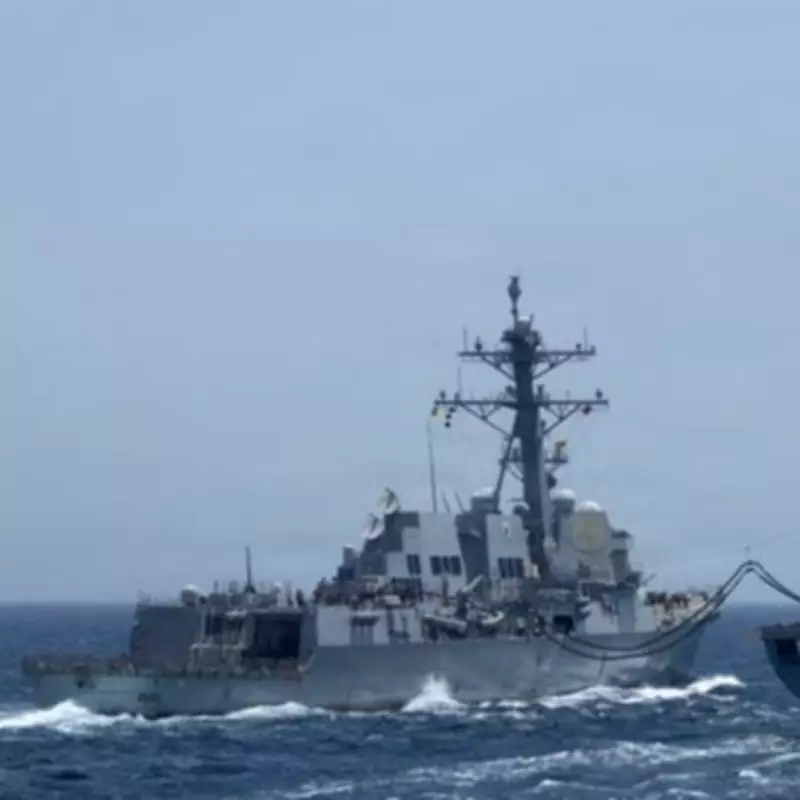
Observers may grudgingly judge that there is some desperate logic to the pause, as it is likely a huge play for time while the US military tries to wrestle with the enormous complexity of escorting trade ships out of the Strait of Hormuz. This means further de-mining a lane close to the coast which could act as safe passage for the ships and safely negotiating a deadly trap of Iranian missiles, drones, and fast-boats.
Meanwhile, there are increasing reports via mediators Pakistan that the US and Iran may be close to a deal which will involve both sides' blockades on the Strait of Hormuz. The US needs to try and coax other militaries into helping.
UAE Involvement and Israeli Influence
That may have started with the UAE, which is showing signs of becoming more involved in offensive operations, perhaps encouraged by its ally Israel. That is why this country, the closest in the region to Israel, is being targeted by Tehran. It could be that the US is preparing to dump the problem on the rest of the world, dressing its departure up as 'mission accomplished.'
However, Secretary of State Marco Rubio says Epic Fury is effectively over - more mixed messaging whose use of the word 'effectively' hints at further violence.
Ceasefire Fragile, Iran Holds Cards
The ceasefire is increasingly fragile, and Iran still holds all the cards. This war will likely flare up again, helped by Israel's refusal to give up, as it has no interest in stopping the degradation of Iran and Hezbollah's military capability. Any enthusiasm or positivity emanating from the White House about peace talks masks the truth - that their insane war has indeed reshaped the Middle East, and not in a good way.
Iran still has its nuclear programme intact and half of its pre-conflict missile stocks. Nobody in their right mind enjoys the presence of the Iranian regime and its IRGC enforcers, their desire for nuclear weapons, or their vile views on Israel. But Iranian regime change and ending their nuclear ambitions was always going to have to be an immense, highly complex, and well-planned operation with years of commitment.
US President Donald Trump is right to say 'no' other President has dared to do what he has done. Because no other President was dumb enough to listen to Israeli Prime Minister Benjamin Netanyahu. They all knew unless there was an international, NATO-wide consensus and beyond, it would not work and was too big an undertaking.
The damage done to the world economy has set us all back at least two years, with further possible fiscal nightmares to come. The Iran regime is now pretty much headed by the IRGC, with no moderate voice calming it down. And, crucially, the nuclear programme still remains.