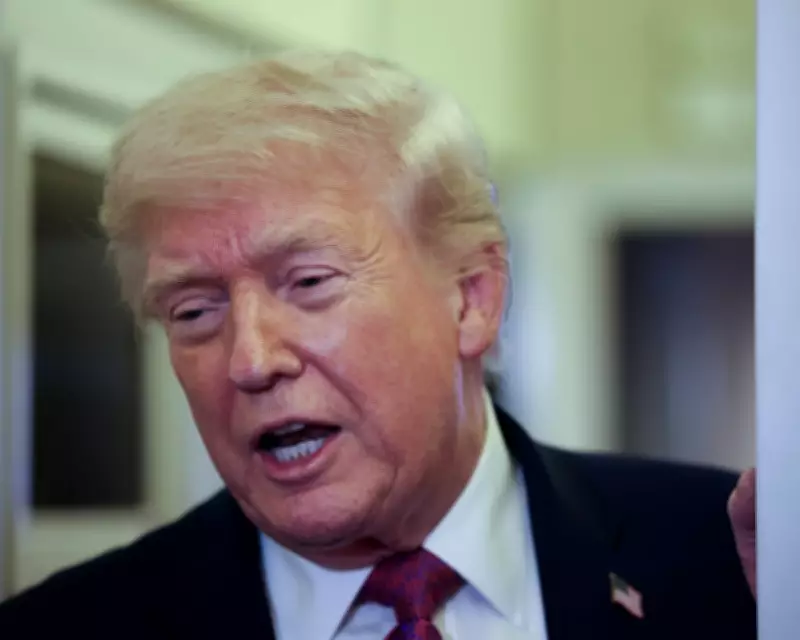
In a dramatic and volatile development, former US President Donald Trump announced on Tuesday a unilateral extension of the two-week ceasefire with Iran, declaring the pause would continue until negotiations conclude. This declaration came amidst intense diplomatic efforts to bring both nations back to the negotiating table in Islamabad, Pakistan, and followed a day of contradictory statements from Trump himself.
A Day of Contradictory Rhetoric
Earlier on Tuesday, Trump had told CNBC he "expected to be bombing" and that the US military was "raring to go," ramping up bellicose rhetoric. However, in a sharp about-turn, he later posted on his Truth Social platform that, upon the request of Pakistan's Prime Minister Shehbaz Sharif and Field Marshal Asim Munir, he would extend the ceasefire. Trump stated the extension was granted to allow Iranian leaders time to formulate a unified peace proposal, citing the "seriously fractured" nature of the Iranian government.
"I have therefore directed our Military to continue the Blockade and, in all other respects, remain ready and able, and will therefore extend the Ceasefire until such time as their proposal is submitted, and discussions are concluded, one way or the other," Trump wrote. This move followed the postponement of an expected trip to Islamabad by Vice-President JD Vance.

Iran's Defiant Response and Internal Divisions
The ceasefire extension was met with immediate and withering criticism from Iranian officials. Mohammad Bagher Ghalibaf, the speaker of the Iranian parliament and the regime's lead negotiator, accused Trump of seeking to turn talks into a "table of surrender." His personal adviser, Mahdi Mohammadi, dismissed the move as "a ploy to buy time for a surprise strike" and warned that "the continuation of the siege must be met with a military response."
Analysts note fierce internal disagreement within Iran's leadership on how to respond to US pressure. Senior figures of the Islamic Revolutionary Guard Corps were reportedly angered by Trump's social media posts last Friday, which depicted Iran as surrendering on key issues like its nuclear programme. This anger led to the strategic Strait of Hormuz being re-closed just a day after Iran's foreign minister had declared it open, demonstrating Tehran's volatile stance.
The Sticking Point: The US Naval Blockade
A major hurdle to renewed talks remains the ongoing US Navy blockade of Iranian ports, which Trump and Treasury Secretary Scott Bessent have insisted will continue. Bessent warned that "in a matter of days, Kharg Island storage will be full and the fragile Iranian oil wells will be shut in," intensifying economic pressure.
Iran has demanded an end to the blockade as a precondition for resuming negotiations. The US seizure of an Iranian cargo vessel on Sunday and the boarding of a sanctioned oil tanker in the Indian Ocean on Tuesday have further escalated tensions. Iran's foreign ministry spokesperson condemned these acts as "piracy at sea and state terrorism," questioning Washington's sincerity in seeking a diplomatic solution.
Pakistan's Mediating Role and Global Stakes
Pakistan has positioned itself as a critical mediator, with Prime Minister Sharif thanking Trump for the ceasefire extension and pledging to continue "earnest efforts for a negotiated settlement." Pakistani officials have expressed confidence that Iran will return to the table for what would be the highest-level US-Iran talks since 1979.
The closure of the Strait of Hormuz, which handles around a fifth of the world's oil and gas, has created a global energy crisis. Fatih Birol of the International Energy Agency called the combined impact of this and the war in Ukraine "the biggest crisis in history" for global energy markets, threatening a worldwide recession. UK Foreign Secretary Yvette Cooper described the situation as "a critical diplomatic moment."

Underlying Issues and Future Prospects
The first round of talks in Islamabad ten days ago ended without agreement on key issues: the status of the Strait of Hormuz, Iran's nuclear enrichment programme, and its support for regional militant proxies. Trump has previously threatened to target Iranian power stations and civilian infrastructure if attacks resume, claiming the US has "taken out their navy, their air force, their leaders" and that the current Iranian leadership is "much more rational."
However, many experts argue the conflict has radicalised Iran's regime, empowering hardliners in the Revolutionary Guard. With security tightened across Islamabad and government offices shut down, the pressure is on for a successful second round. As Pakistani political analyst Nusrat Javed noted, failure would be "an embarrassing situation for Pakistan as well." The extended ceasefire offers a fragile window for diplomacy, but with threats and military posturing continuing from both sides, the path to peace remains perilously uncertain.