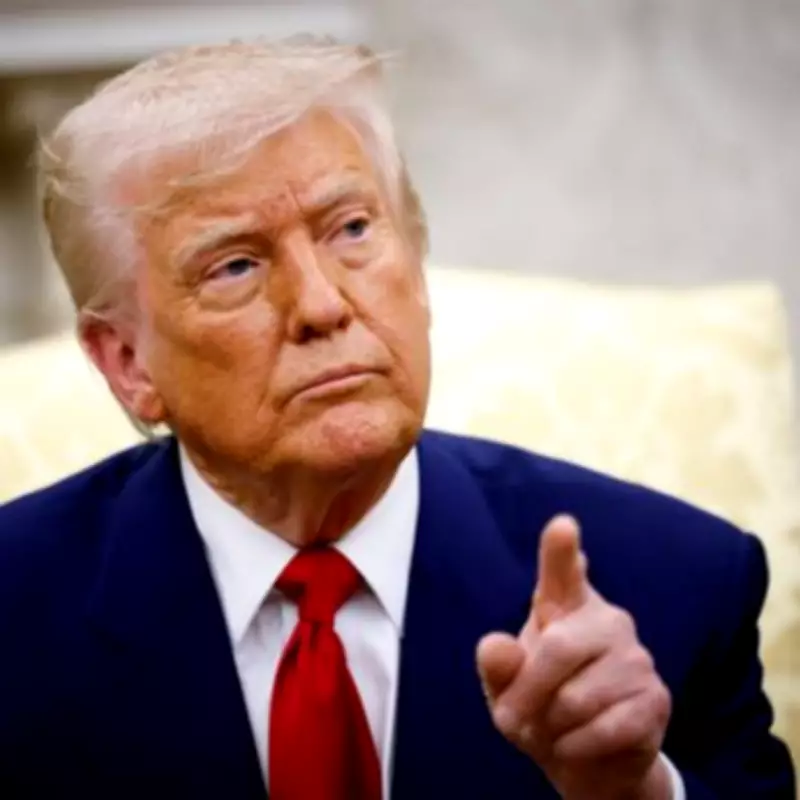
Trump Announces Historic Israel-Lebanon Dialogue Amid Regional Tensions
US President Donald Trump has declared that the leaders of Israel and Lebanon will hold discussions on Thursday, April 16, marking the first such conversation in over three decades. This announcement comes as regional tensions remain elevated, with significant military movements and diplomatic friction involving the United States, Iran, and China.
Trump's Social Media Post Confirms High-Level Contact
In a post on his Truth Social platform, President Trump wrote: "Trying to get a little breathing room between Israel and Lebanon. It has been a long time since the two leaders have spoken, like 34 years. It will happen tomorrow. Nice! President DJT". This statement confirms that Israeli Prime Minister Benjamin Netanyahu and Lebanese leadership are set to engage in dialogue, a rare occurrence given the historical and political complexities between the two nations.
The White House has simultaneously denied reports that the United States requested a two-week extension of the ceasefire with Iran, labelling such claims as "not true". Iran's semi-official Tasnim News Agency has also stated that Tehran has not agreed to extend the ceasefire "at this stage", indicating ongoing volatility in US-Iran relations.

China Voices Strong Opposition to US Blockade of Hormuz Strait
Amid these developments, Chinese Foreign Minister Wang Yi has expressed firm opposition to the US blockade of Iranian ports, which remains in effect. In a telephone conversation with Iranian counterpart Abbas Araghchi late on Wednesday, Wang Yi emphasised that reopening the Strait of Hormuz is a unanimous demand from the international community.
Wang Yi asserted that Iran's sovereignty, security, and legitimate rights as a littoral state of the strait must be respected, while also ensuring freedom of navigation and safety through this critical waterway. "Working to resume normal passage of the strait is a unanimous call from the international community," Wang was quoted as saying in an official government statement.
The Chinese Foreign Minister noted that the current situation has reached a critical juncture between war and peace, suggesting that the window for peaceful resolution is narrowing. Araghchi responded by indicating Iran's willingness to continue seeking a rational and realistic solution through peaceful negotiations, according to the same statement.
Military Buildup and Retaliatory Threats Escalate Tensions
The diplomatic manoeuvres occur against a backdrop of heightened military activity. Tehran has threatened to retaliate against the US blockade by striking targets across the Middle East. In response, the United States is deploying more than 10,000 additional troops to the region, including 6,000 aboard the aircraft carrier USS George H.W. Bush, accompanied by several warships.
This substantial military reinforcement underscores the serious nature of the standoff and the potential for escalation. The combination of diplomatic initiatives, such as the Israel-Lebanon talks, with aggressive posturing in the Persian Gulf region creates a complex and precarious geopolitical landscape.
Observers are closely monitoring whether Trump's confidence in facilitating dialogue between Israel and Lebanon will yield tangible results, while simultaneously assessing the impact of China's intervention in the Hormuz Strait dispute. The interplay of these events highlights the multifaceted challenges facing Middle Eastern stability and international relations.