Donald Trump has informed Congress that the Iran conflict has “terminated,” even as a tense standoff continues in the Middle East, sending shockwaves through global economies, including the United Kingdom. The U.S. president made this declaration as a legal deadline expired for him to seek legislative approval to continue hostilities, a conflict now as unpopular among Americans as the Vietnam War was in the 1970s.
Ceasefire and Congressional Deadlines
This week, U.S. Defence Secretary Pete Hegseth told a Senate hearing that the current fragile truce “means the 60-day clock pauses, or stops.” The president echoed this on Friday, noting he had ordered a two-week ceasefire on April 7 that has since been extended. In a letter to Congress, Mr. Trump stated: “There has been no exchange of fire between United States Forces and Iran since April 7, 2026. The hostilities that began on February 28, 2026, have terminated.”
Despite the ceasefire, Iran maintains its chokehold on the Strait of Hormuz, and the U.S. Navy is enforcing a blockade of Iranian ports to prevent oil shipments. The effective closure of this vital oil and gas supply route has inflicted a global economic shock, sending energy prices soaring. The waterway, which was open before the U.S. and Israel launched strikes against Iran, has become a focal point of transatlantic tensions.

Trump’s Criticism of NATO
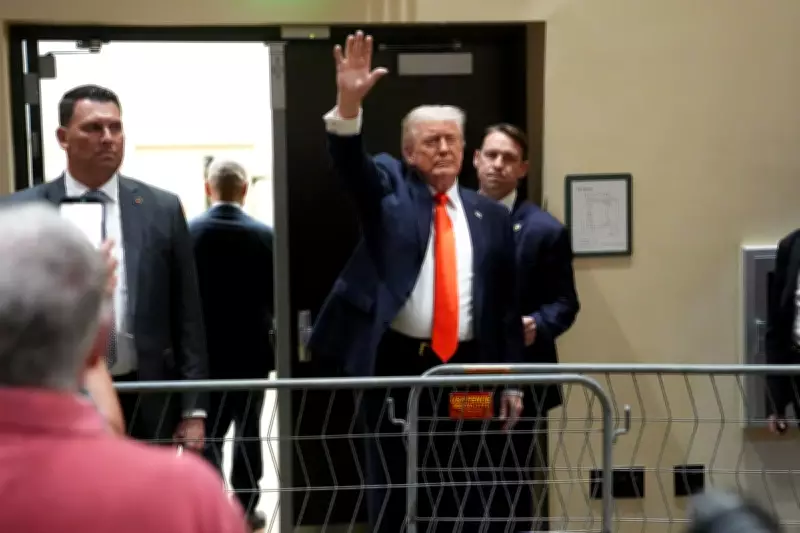
Mr. Trump also renewed his criticism of NATO after the alliance refused to support his offensive against Iran. Speaking at a Florida retirement village, he said: “And we got no help from NATO. We got no help, zero from NATO. You know, we spent trillions of dollars on NATO. We got no help. We didn’t need it, but we got none.” He added: “They know they got problems. It was a paper tiger.”
Under the 1973 War Powers Resolution, a U.S. president can only launch military action for 60 days before requiring Congressional agreement to continue. The White House can request a 30-day extension to allow forces to withdraw. The president formally notified Congress of the conflict 48 hours after the first strikes against Iran two months ago, starting the 60-day countdown that ended on May 1. He has branded the war powers law “unconstitutional.”
Both Republican and Democratic leaders have argued the measure breaches the U.S. constitution because it sets limits on the president’s powers as commander-in-chief. Democrats in Congress have repeatedly attempted to force Mr. Trump to end the war or secure authorisation, insisting there is nothing in the 1973 law allowing for a ceasefire.
Uncertain Future
In his letter to Congress, Mr. Trump also made clear the conflict may not be over. He said: “Despite the success of United States operations against the Iranian regime and continued efforts to secure a lasting peace, the threat posed by Iran to the United States and our armed forces remains significant.” As he left the White House to head to Florida, Mr. Trump said he was “not satisfied” with Iran’s latest proposal to end the war. He added: “They’re asking for things I can’t agree to. It’s a very disjointed leadership. They all want to make a deal, but they’re all messed up.”
Referring to a military briefing he had on Iran, Mr. Trump said: “I mean, do we want to go and just blast the hell out of them and finish them forever? Or do we want to try and make a deal? I mean, those are the options.” Asked if he preferred the former, he said: “I’d prefer not. On a human basis, I’d prefer not, but that’s the option.” Speaking later in Florida, he said: “We’re in a war, because I think you would agree we cannot let lunatics have a nuclear weapon.” He added: “We’re going to get this thing done properly. We’re not going to leave early.”