Donald Trump has announced his intention to speak with Taiwan's President Lai Ching-te, a move that breaks with decades of US diplomatic tradition and threatens to ignite a fresh crisis in relations with China. The call is reportedly tied to the pending approval of a $14 billion arms sale to the self-governing island.
Breaking Diplomatic Norms
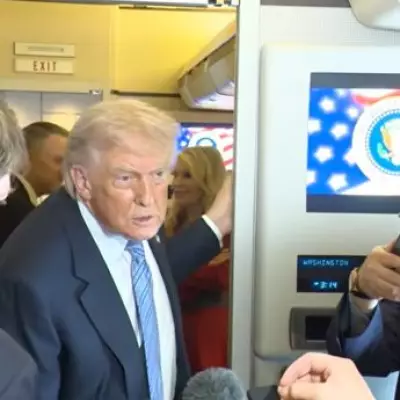
Since 1979, when Washington shifted diplomatic recognition from Taipei to Beijing, no US president has directly spoken with a Taiwanese leader. Trump, however, told reporters in Maryland on Wednesday, "I will speak to him. I speak to everybody. We have that situation very well in hand." He added, "We'll work on that, the Taiwan problem," without providing further details.
This is not the first time Trump has broken precedent. As president-elect in late 2016, he spoke with then-Taiwanese President Tsai Ing-wen, drawing fierce condemnation from China.

Taiwan's Response
Taiwan's foreign ministry stated that Lai would welcome the opportunity to speak with Trump. According to the ministry, Lai would tell Trump that China is undermining peace and that his government intends to maintain the status quo across the Taiwan Strait. However, a source familiar with the matter told Reuters that no call has been scheduled yet.
China's Stance
China regards Taiwan as a breakaway province and has not ruled out using force to reclaim it. In recent years, Beijing has intensified military drills, blockade simulations, and grey-zone warfare near the island. Trump has alarmed Taipei by delaying approval for the latest arms sale, which was announced after an $11 billion weapons package in December.
The US is obligated by the 1979 Taiwan Relations Act to provide Taiwan with the means to defend itself. This was reinforced by the 1982 Six Assurances, which stated that China would have no say in US arms sales to the island.
Summit Discussions
At a landmark summit with Chinese President Xi Jinping earlier this month, Xi emphasized that Taiwan is "the most important issue in China-US relations" and that mishandling it could lead to conflict. Trump later revealed that Xi had raised the issue of US arms sales to Taipei, and they discussed it "in great detail."
The Financial Times reported that China is pressuring the US by delaying approval for a proposed visit by Pentagon policy chief Elbridge Colby, indicating that Beijing will not clear the visit until Trump decides on the weapons sale.