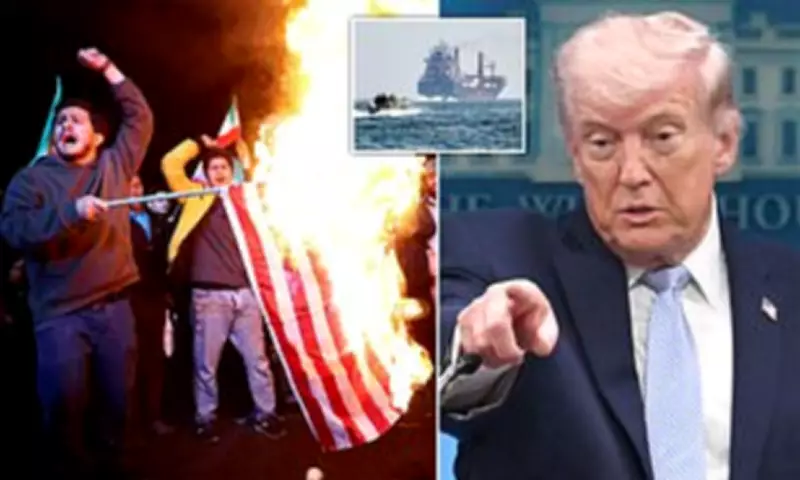
In a surprising diplomatic development, former US President Donald Trump has publicly claimed that the United States and Iran are establishing a 'joint venture' in the strategically vital Strait of Hormuz. This announcement comes as Tehran prepares to implement a controversial toll system that could generate substantial revenue, estimated at up to $1 million per vessel passing through the crucial waterway.
Ceasefire and Toll Agreement Details
Trump revealed last night that Iran has agreed to a temporary two-week ceasefire, during which the Strait of Hormuz will be reopened to maritime traffic. Simultaneously, both nations are considering a comprehensive 10-point peace plan, although the exact terms remain under negotiation and have not been formally finalised.
According to an unnamed Middle East official who spoke to the Associated Press, Iran is pushing to impose tolls of up to $1 million on ships traversing the Strait during this two-week period. Trump appeared receptive to this proposal during a Wednesday interview with ABC, stating, 'We're thinking of doing it as a joint venture. It's a way of securing it - also securing it from lots of other people. It's a beautiful thing.'

The 'Tehran Tollbooth' Mechanism
The Strait of Hormuz, through which approximately one-fifth of the world's oil flows, has now been colloquially dubbed the 'Tehran Tollbooth' due to this new arrangement. Ship owners face a complex and expensive negotiation process, requiring them to disclose detailed information to intermediary companies linked to Iran's Islamic Revolutionary Guard Corps (IRGC).
Key requirements include:
- Providing the ship's cargo specifications
- Disclosing the destination of the vessel
- Revealing the ultimate owner of the ship
Once approved, Iran charges a minimum toll of $1 per barrel of oil transported, with payments mandated in Chinese yuan or cryptocurrency. For a standard oil tanker, this translates to an average fee of around $2 million per passage.
Security Escorts and Financial Projections
If all conditions are met, IRGC boats will provide armed escorts for vessels entering and exiting the 'tollbooth' area, adding a layer of security to the controversial arrangement. Some financial analysts have projected that this toll system could generate as much as $500 billion in revenue for Iran over a five-year period, highlighting the significant economic implications of the deal.
The joint venture represents an unusual collaboration between two historically adversarial nations, with Trump framing it as both a security measure and a potential revenue stream. The development marks a notable shift in Middle East maritime policy, though many details remain subject to ongoing negotiations between the involved parties.