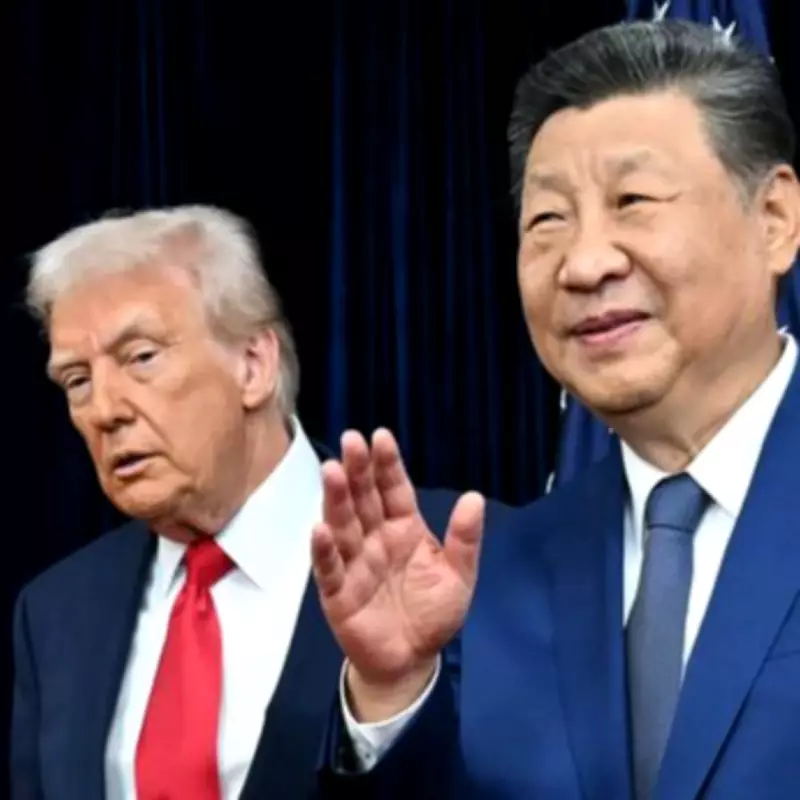
Donald Trump will arrive in Beijing this week facing a humiliating reality no modern American president has encountered before. For the first time since Richard Nixon stepped onto Chinese soil in 1972, the US president will not be the most powerful man in the room. Xi Jinping will be.
And deep down, Trump, who, despite reportedly comparing himself to Julius Caesar, Napoleon Bonaparte and Alexander the Great, to aides, knows it. In the president's mind, this visit is supposed to be the summit where he swaggers into China as the self-declared master of the art of the deal and forces Beijing to retreat in the reckless trade war he started.
Instead, he arrives carrying the smoking wreckage of another self-inflicted disaster: his catastrophic war with Iran. What was once billed as a chest-thumping economic showdown between Washington and Beijing has suddenly become an emergency diplomatic meeting about preventing global economic collapse after the US and Israel plunged the Middle East into chaos.

The great irony is impossible to ignore. The man who spent years boasting that China was weak, dependent and taking advantage of America now needs Xi Jinping's help more than Xi needs his. Because while Trump was busy launching strikes and talking like a wartime despot, oil markets panicked, and attention immediately turned to the vital oil route, the Strait of Hormuz.
China has enormous leverage there. Roughly half of its crude oil imports move through the waterway. Beijing also remains Iran's biggest trading partner and most important economic lifeline. If anyone has influence in Tehran beyond Moscow, it is China. Which suddenly leaves Trump in the deeply uncomfortable position of having to ask for help from the very superpower he spent years demonising on the campaign trail.
The timing could hardly be worse for him politically or personally. Only days before leaving for Beijing, Trump openly admitted that there are only two countries in the world capable of removing Iran's enriched uranium stockpiles: the United States and China. It speaks volumes. The man who built an entire political movement around American dominance has publicly acknowledged that resolving the crisis he helped create now depends on Chinese cooperation.
Xi will have heard every word. But unlike Trump, Xi is patient. The Chinese president will not need the theatrics, social media boasting or rally-style slogans that define Trump's so-called diplomacy. He will simply sit across the table, fully aware that America's president is arriving weaker than he expected to be six months ago.
Because Trump's tariff war achieved little beyond rattling markets and frightening businesses on both sides of the Pacific. The likely outcome now is the same familiar Trump formula: create a crisis, partially reverse it, then declare total victory. There will probably be some vague agreement about tariffs. China may promise to buy more American products. Trump will emerge insisting he has secured the greatest trade breakthrough in modern history.
Fox News will run triumphant graphics. But Beijing understands America under Trump better now. It knows he desperately wants headlines, applause and the appearance of strength. Xi, meanwhile, wants stability, continued access to global trade routes and greater leverage over Taiwan. That matters enormously to China.
So Trump arrives in Beijing not as the dominant statesman he imagines himself to be, but as a president boxed in by his own stupidity. His trade war failed to break China. His Iran war destabilised global energy markets. His promise to quickly bring peace elsewhere, particularly in Ukraine, has gone nowhere.
And now the man who once claimed America would never bow to foreign powers lands in Beijing needing cooperation to steady the global economy and help clean up a firestorm of his own making. Trump will still posture, boast and insist everybody respects him tremendously. He will almost certainly claim the meetings were historic regardless of what actually happens. But the balance of power in the room has changed. For the first time in decades, an American president is flying to China knowing the other leader holds more cards than he does.