Trump's Pledge at Risk as US-Iran Ceasefire Nears Its End
The doomsday scenario that Donald Trump once vowed to avoid—deploying American boots on the ground in a Middle East conflict—now appears increasingly plausible. As a two-week ceasefire between the United States and Iran approaches its conclusion, the prospects for renewed negotiations are fragile, raising the likelihood that President Trump could break his promise and order a ground incursion.
Military Buildup Signals Escalation Readiness
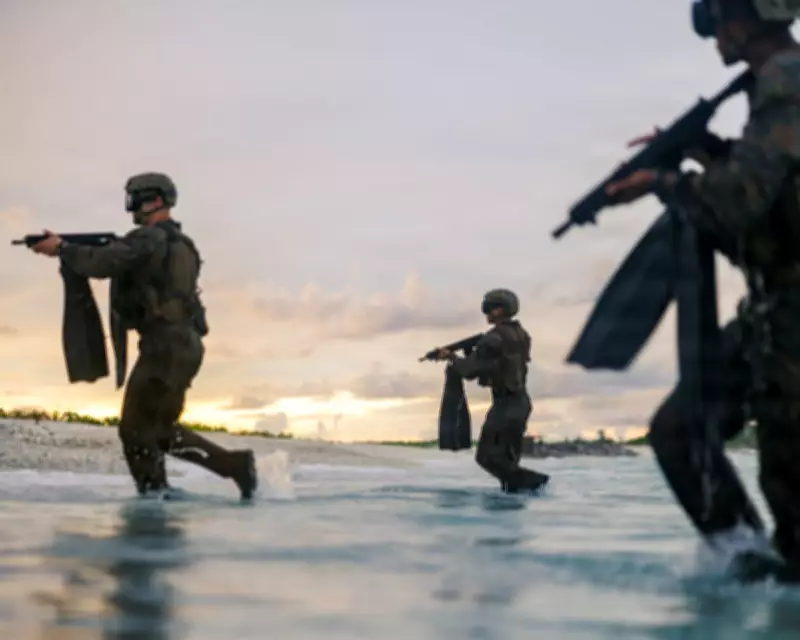
Despite hopes for peace over the past fortnight, the Trump administration has reinforced its military presence in the region, demonstrating preparedness for potential escalation. By the end of the month, with the arrival of the Boxer Amphibious Ready Group and its Marine corps task force, more than 10,000 additional troops will have been deployed since hostilities paused on 8 April under the ceasefire agreement.
Ali Vaez, Iran project director at the International Crisis Group, noted, "If we pay more attention to what President Trump does rather than what he says, then a ground invasion is quite likely. He has often used US military might when deployed, and with thousands of troops sent, the odds are higher." Vaez highlighted the risk of mission creep in such a scenario.

Iranian Confidence and Preparations for Conflict
The regime in Tehran seems to share this assessment. Mohammad Bagher Ghalibaf, the Iranian parliament speaker and chief negotiator in nascent peace talks, stated that Iran is preparing to deploy "new cards on the battlefield" if fighting resumes. Analysts indicate that Iran's military has spent years meticulously planning for a land invasion, with senior figures expressing eagerness for confrontation.
Abbas Araghchi, the Iranian foreign minister, defiantly told NBC, "No, we are waiting for them, because we are confident that we can confront them, and that would be a big disaster for them." Ashkan Hashemipour, an Iran analyst at the University of Oxford, suggested this rhetoric reflects Iran's strength in aerial and naval warfare, which could be amplified on the ground.
Historical Context and Asymmetric Warfare Tactics
Iran's confidence is bolstered by its experience in the 1980-88 war with Iraq, where ideologically driven forces repelled a better-equipped army. Nader Hashemi, a professor at Georgetown University, explained, "That war was a foundational experience for Iranian hardliners, who view current events as a continuation of western attempts to undermine the Islamic revolution."
Militarily outmatched by the US, Iran's Islamic Revolutionary Guard Corps (IRGC) would likely rely on asymmetric tactics, including guerrilla warfare. The IRGC has been divided into 31 provincial units to decentralise command, a strategy devised after the 2003 US-led invasion of Iraq. Saeid Golkar, a politics professor at the University of Tennessee, described this as creating a "mosaic" defence system.
The conventional armed forces, or Artesh, would also play a crucial role, forcing US troops to fight simultaneous conventional and unconventional wars. The Basij volunteer militia, though its effectiveness is debated, could contribute, with key units like the Imam Hussein infantry battalion potentially involved.
Potential Scenarios and Global Implications
Initially, US ground operations might focus on occupying Gulf islands off Iran's southern coast, but such deployments would be vulnerable to missile and drone attacks. Iran could also pressure Houthi allies in Yemen to close the Bab al-Mandab shipping lane, causing global energy prices to surge.
Vaez warned, "There is no military solution to reopen the strait, as Iran could still disrupt traffic with drones from inland." A ground invasion could lead to significant US casualties, with Iran aiming to exploit this to undermine Trump's presidency. Unlike in Iraq and Afghanistan, Iran lacks external support for an insurgency, making public sentiment and US casualty tolerance pivotal factors.

Ultimately, any ground incursion risks entangling the US in a protracted conflict, with Iranian forces prepared to leverage decades of guerrilla warfare experience. As the ceasefire deadline looms, the world watches anxiously, aware that Trump's next move could reshape Middle East dynamics forever.