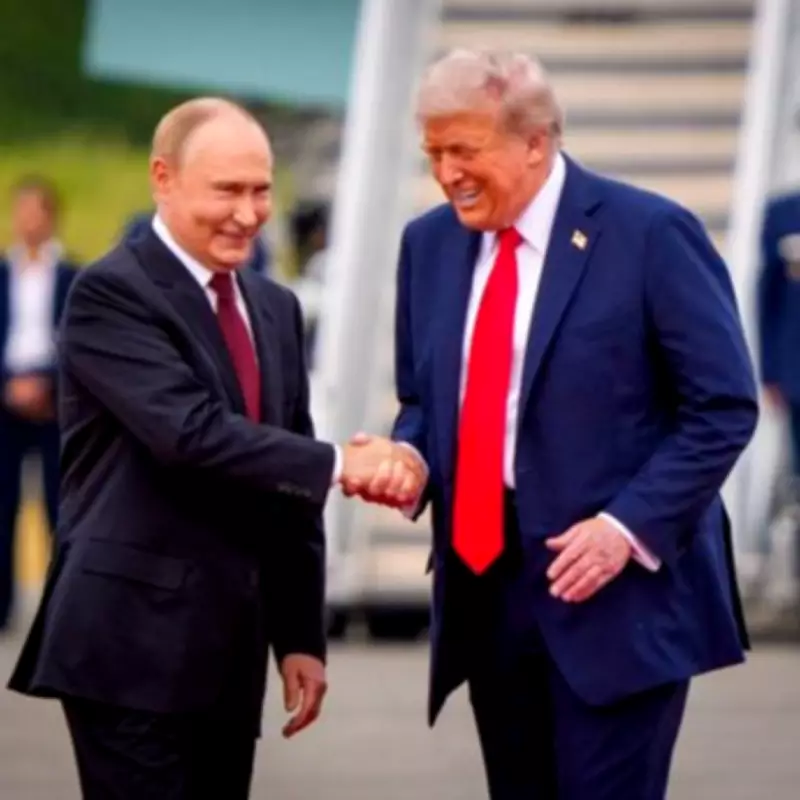
In a dramatic turn of events, former US President Donald Trump has announced a two-week ceasefire with Iran, but experts caution that Russian leader Vladimir Putin is the "real winner" in the escalating Middle East turmoil. The ceasefire, which hinges on the resumption of shipping through the critical Strait of Hormuz, follows Trump's chilling threats of annihilation against Iran, sparking global condemnation and fears of wider conflict.
Trump's Doomsday Threats and Ceasefire Agreement
Trump's provocative post on Truth Social, where he threatened to destroy Iran in "one night" and warned that a "whole civilisation will die" unless his demands were met, sent shockwaves across international diplomatic circles. The Pope and UN Secretary General strongly condemned the statement, as world leaders held their breath amid rising tensions. Pakistan mediated peace talks, leading to an eleventh-hour agreement for a two-week ceasefire, contingent on Iran reopening the Strait of Hormuz, which it had blocked during the conflict with the US and Israel, disrupting global financial markets.
Under the terms, no further military action will be taken by the US or Iran during this period. However, Israel has clarified that the ceasefire does not extend to Lebanon, contradicting earlier statements from Pakistan's Prime Minister. This discrepancy adds to the fragility of the temporary calm.

Putin's Strategic Gains in the Conflict
Professor Anthony Glees, an international relations expert from the University of Buckingham, highlights that Russia, a long-time ally of Iran, has emerged strengthened from the conflict. He explains, "A war that Trump was convinced could be contained has spread across the Middle East, destabilising America's allies and bringing a Third World War closer while crippling Western economies for years." Putin benefits as Iran uses oil and drones to resist destruction, allowing Russia to sell more oil at higher prices globally.
The geopolitical maneuvering is evident in the UN Security Council, where a resolution to reopen the Strait of Hormuz, sponsored by Bahrain, was blocked by China and Russia using their veto power. The resolution, which received 11 votes in favour and two abstentions, was diluted after opposition from Russia, China, and France over language permitting offensive force, instead opting for "all defensive means necessary."
Economic and Diplomatic Fallout
Financial markets reacted positively to the ceasefire announcement, but long-term impacts loom large. The Food and Drink Federation forecasts food inflation to rise by at least nine percent, assuming the Strait of Hormuz reopens within 2-3 weeks and Middle East energy production normalises within a year. This underscores the ongoing economic strain from the conflict.
Meanwhile, UK-Russia relations deteriorate further, with Moscow's state media calling for revenge attacks, such as destroying Westminster Bridge, in response to British drones used in a Ukrainian operation against Russian-held crossings. Propagandist Vladimir Kornilov warned, "It's high time we started bragging: 'Russian missiles destroyed the key Westminster Bridge'." This rhetoric fuels tensions, alongside oligarch Konstantin Malofeev's call for Putin to launch a nuclear strike on Ukraine within a month, threatening to escalate the war with a 20–25 kiloton attack.
As the ceasefire offers a brief respite, the ripple effects of Trump's threats and Putin's strategic positioning continue to shape a volatile global landscape, with experts warning that the real victor may be the Kremlin, not Washington.