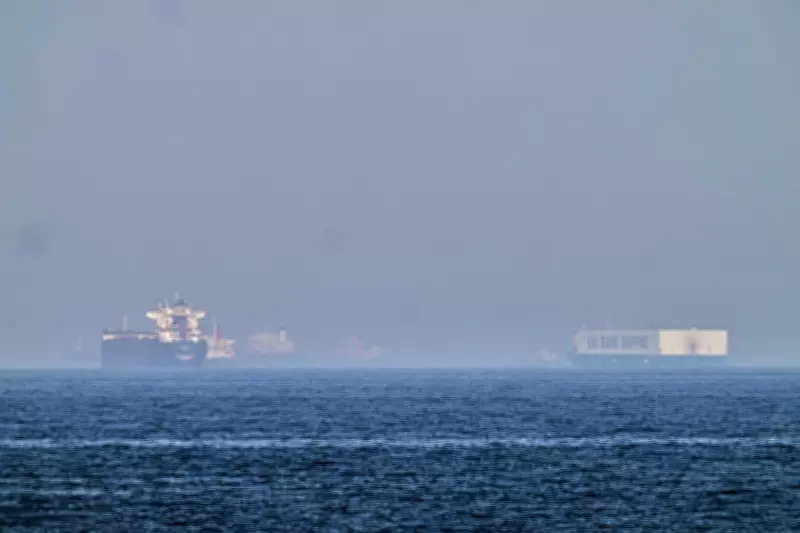
The United Arab Emirates' Ministry of Defense announced that its air defenses are actively engaging with a missile and drone attack, as the fragile ceasefire in the Iran war faced renewed strain. The incident occurred hours after the US military reported thwarting attacks on three Navy ships in the Strait of Hormuz and retaliating against Iranian military facilities.
Ceasefire Under Pressure
No immediate reports of damage emerged from the UAE. The exchange of fire comes as negotiators from Iran and the US seek a deal to end the conflict, though both sides have thus far avoided a return to all-out warfare. Key issues remain unresolved, including Iran's nuclear program—which prompted the US and Israel to launch strikes on February 28—and the Strait of Hormuz, a vital waterway that Iran has effectively closed to pressure the global economy.
On Thursday, Tehran stated it was reviewing the latest US proposals for ending the war, delivered via Pakistan, which serves as a mediator. President Donald Trump downplayed the exchange of fire, describing the retaliatory strikes against Iran as "just a love tap" in a phone call with ABC News. He insisted the ceasefire is holding and a deal could come "any day," but reiterated threats of bombing if Tehran does not accept an agreement that allows for the resumption of oil and natural gas shipments disrupted by the conflict.

Iranian and US Military Actions
Iranian state media reported that its forces exchanged fire with "the enemy" on Qeshm Island in the Strait of Hormuz, and noted loud noises and continuous defensive fire in western Tehran late Thursday night. The ceasefire between the US and Iran has largely held since April 8, following in-person talks hosted by Pakistan last month that failed to reach an agreement.
The UAE's defense ministry advised residents not to approach, photograph, or touch any debris or fragments resulting from successful air interceptions. Earlier, the US military stated it had intercepted Iranian attacks on three Navy ships in the Strait of Hormuz Thursday night and targeted Iranian military facilities responsible for attacking US forces. US Central Command confirmed in a social media post that US forces intercepted unprovoked Iranian attacks and responded with self-defense strikes. No ships were hit, and the US military said it does not seek escalation but remains positioned and ready to protect American forces.
Diplomatic Efforts Continue
Pakistani Foreign Minister Ishaq Dar spoke by phone with his Iranian counterpart, Abbas Araghchi, on Thursday. Pakistani Foreign Ministry spokesperson Tahir Andrabi expressed hope for an agreement sooner rather than later, contributing to peace in the region and internationally, though he declined to give a timeline. Pakistani Prime Minister Shehbaz Sharif stated that Islamabad remains in continuous contact with Iran and the United States, day and night, to stop the war and extend the ceasefire.
Meanwhile, direct talks between Israel and Lebanon are scheduled to resume next week in Washington, according to a US official who spoke on condition of anonymity. The talks are set for May 14 and 15.
Iran Creates Agency to Control Strait Passage
On Thursday, shipping data firm Lloyd's List Intelligence reported that Iran has created a government agency to vet and tax vessels seeking passage through the Strait of Hormuz. The Iranian effort to formalize control over the channel has raised new concerns about international shipping, with hundreds of commercial vessels bottled up in the Persian Gulf. The agency, called the Persian Gulf Strait Authority, is positioning itself as the only valid authority to grant permission for ships transiting the strait, and has emailed application forms to shipping companies.
On Friday, an oil tanker that passed through the Strait of Hormuz in mid-April arrived off South Korea's coast to unload 1 million barrels of crude at the HD Hyundai Oilbank refinery. South Korea, which imported over 60% of its crude through the strait last year, has capped prices of gasoline and other petroleum products amid fears of an energy crisis. Iran has effectively closed the strait, a vital waterway for oil, gas, fertilizer, and other petroleum products, while the US blockades Iranian ports. The disruptions have sent fuel prices skyrocketing and rattled the global economy.

Maritime law experts argue that Iran's demands to vet or tax vessels violate international law, as the United Nations Convention on the Law of the Sea requires countries to permit peaceful passage through territorial waters. The US has threatened sanctions on companies that pay tolls to Iran. The US and its Gulf allies are pushing for a UN Security Council resolution condemning Iran's chokehold on the strait and threatening sanctions. A prior resolution calling for reopening the strait was vetoed by Iran's allies Russia and China.