

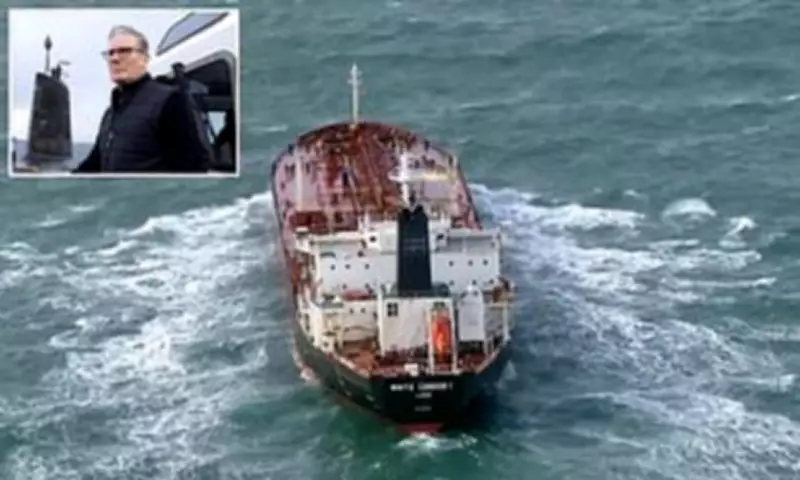
Britain is failing to board and seize Russian 'shadow fleet' vessels in the English Channel, with government officials citing fears about the substantial costs of storing the ships and potential asylum claims from their crews. This revelation comes despite Prime Minister Sir Keir Starmer having granted explicit approval for British commandos to intercept and halt these sanction-breaking ships as they navigate through UK waters.
No Boardings Despite Green Light
Since Sir Keir gave the operational green light last month, not a single vessel from the shadow fleet has been boarded, even though several have transited the busy English Channel waterway. This inaction highlights significant internal concerns within the government that are stalling enforcement efforts against Russia's illicit maritime activities.
Asylum and Cost Concerns Halt Action
Home Secretary Shabana Mahmood and Foreign Secretary Yvette Cooper have reportedly raised serious apprehensions about the possibility of Russian mercenaries crewing these ships making asylum claims if detained. Additionally, officials have voiced fears regarding the financial burden of mooring seized vessels, pointing to the example of the MV Matthew.

The Panama-registered MV Matthew was confiscated in September 2023 after a boarding operation uncovered 2.2 tonnes of cocaine, valued at 157 million euros (£132 million), in its hold. However, maintaining this vessel in Cork Harbour has since cost the Irish government approximately 14 million euros (£12 million), illustrating the potential fiscal strain of such seizures.
Recent Naval Incident Draws Criticism
Earlier this month, Sir Keir faced criticism after the Royal Navy allowed a Russian warship to escort two shadow fleet vessels past Dover without intervention. The frigate Admiral Grigorovich passed the British coast, with the Royal Navy only able to deploy RFA Tideforce, an auxiliary tanker armed with light defensive weapons, to monitor the three-ship flotilla as it headed toward the Black Sea.
Understanding the Shadow Fleet
Moscow's shadow fleet is estimated to consist of more than a thousand ageing tankers that illicitly transport oil and other goods out of Russia. These vessels often fly the flags of other countries to evade Western sanctions imposed following the invasion of Ukraine. In contrast to Britain's hesitation, JEF countries including Finland, Sweden, and Estonia have recently intercepted suspected shadow tankers in the Baltic Sea.
Starmer's Commitment and Current Vulnerabilities
Announcing his plan to authorize commando raids in March, Sir Keir stated, 'Putin is rubbing his hands at the war in the Middle East because he thinks higher oil prices will let him line his pockets. That's why we're going after his shadow fleet even harder, not just keeping Britain safe but starving Putin's war machine of the dirty profits that fund his barbaric campaign in Ukraine.'
He added, 'He and his cronies should be in no doubt, we will always defend our sovereignty and stand with Ukraine for as long as it takes.' Despite this strong rhetoric, Defence Minister Luke Pollard has acknowledged that the recent escort incident 'shows how vulnerable they now are,' referring to the shadow fleet's reliance on naval protection, yet this has not translated into decisive action in UK waters.
The ongoing failure to act underscores the complex challenges facing British authorities, balancing enforcement of sanctions against practical and financial considerations, as the shadow fleet continues to operate with apparent impunity in strategic maritime corridors.






