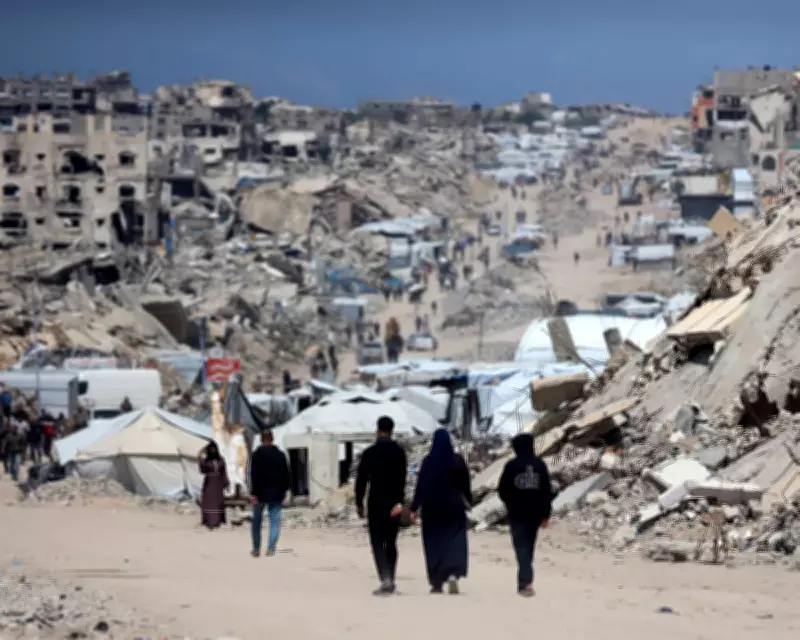
The Foreign Office unit tasked with tracking potential breaches of international law by Israel in Gaza and Lebanon has been closed due to departmental cuts, the Guardian can reveal. The decision to shut the international humanitarian law (IHL) cell follows a review by Olly Robbins, the permanent secretary at the Foreign Office who was dismissed last week by the prime minister over the Peter Mandelson scandal.
Only a fortnight ago, Foreign Secretary Yvette Cooper stated in her major annual foreign policy speech that respect for international law would be a cornerstone of the department under her leadership. The closure also means funding for the Conflict and Security Monitoring Project, run by the Centre for Information Resilience (CIR), will end. The CIR had been conducting extensive work for the Foreign Office, including the world's largest open-source monitoring of incidents across Israel, Palestine, and Lebanon.
This programme was the only one in the UK that collects, verifies, and analyses human rights and conflict incidents in Israel and the occupied territories. The closure of the IHL cell is part of broader cuts to the conflict and atrocity prevention team, which has been critical in warning the Foreign Office of potential atrocities, including in Sudan.

Officials have been warned that the closure of the Conflict and Security Monitoring project will result in the Foreign Office losing access to a database of 26,000 verified incidents in the Middle East. This database, which holds information dating back to 7 October 2023, the day Hamas launched an attack on Israel that killed 1,200 people, mainly civilians, and led to the abduction of 200 Israelis, is believed to be the largest of its kind in the world. It is used to monitor trends, make analyses, and assist Foreign Office teams in deciding whether arms export control licences to Israel should remain suspended. It also helps officials determine whether international humanitarian law concerns, such as proportionality, are being breached.
It is understood that the head of the war crimes team in the counter-terrorism unit urged the Foreign Office to recognise the importance of the CIR's work in helping the Metropolitan Police consider war crimes allegations. In addition to maintaining the database, the CIR has conducted more than 20 open-source investigations, including into the potentially unlawful shooting of minors in Gaza. UK embassies in Tel Aviv, Beirut, and Damascus, as well as the consulate in Jerusalem, have relied on the CIR for rapid assessments of large incidents. The Israel-Gaza conflict map provided by the CIR has garnered tens of thousands of views, with over 25,000 views in a single day.
The cuts appear to be driven by the decision to reduce the overseas aid budget to 0.3% of gross national income, despite maintaining the target to reach 0.7% when resources allow. However, Robbins was also pushing through a restructuring at head office that led to the closure of several teams, including the IHL cell.
In her Mansion House speech, Cooper stated: "It might be tempting to think that international law and the role of international frameworks are out of date, and that in championing them, we somehow cherish rules over national interests. Well, I reject that view, because we're not just defending the status quo. The role that rules-based frameworks play is vital, and respect for the rule of law is a core British value that supports our national interest, underpins our economic stability, makes us a reliable place for international investment, while the whole world spins around us and underpins our security and prosperity. It's in Britain's interests to be a dependable power, a country that keeps its word, a stable base for investment and a partner of choice."
Yasmine Ahmed, the UK director of Human Rights Watch, described the cuts as damning, noting that they come at a time of "continued significant violations of international law and atrocity crimes being committed across the world." She questioned the government's compliance with its obligations under the arms export criteria, the arms trade treaty, and the genocide convention.

Katie Fallon, the advocacy manager at Campaign Against Arms Trade, said closing the IHL cell would protect ministers and senior Foreign Office officials "who know that they have been manipulating the data on potential violations of IHL, beyond any logical interpretation, to obscure unimaginable violations and crimes committed against the most vulnerable people in conflict and sustain arms sales at any cost." She added: "The timing of this closure is notable. As Olly Robbins explained to a parliamentary committee this week, the civil service is under pressure to give the government the answers that they want. Nowhere is this more clear than on ensuring arms sales to 'allies' continue, despite the risks of war crimes."
The Foreign Office has been contacted for comment.