

Ukraine launched a major long-range drone attack on the Moscow region over the weekend, targeting a microelectronics plant and an oil pumping station, according to Kyiv’s military and security officials. The strikes, which involved over 600 drones, represent one of the largest pummellings of Russian territory during the conflict.
Ukraine’s Weaponry Revealed
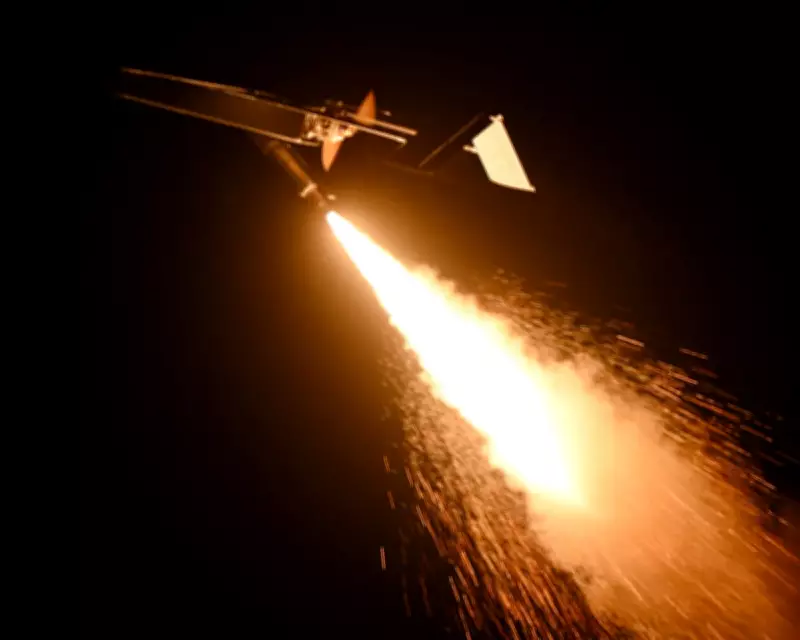
The general staff of Ukraine’s armed forces listed the aerial weapons used in the attack, including the RS-1 “Bars” jet-powered UAV, the Firepoint FP-1 winged drone, and a previously unknown drone dubbed the Bars-SM Gladiator. Ukraine’s SBU security service highlighted a strike on the Angstrom plant in Zelenograd, which “specialises in the production of hi-tech products and microcircuits for high-precision weapons.” A fire was recorded on the facility’s premises. The SBU noted that the plant is a key component of Russia’s military-industrial complex, producing microelectronics, radio electronics, optical systems, and robotics for military needs.
Additionally, the Solnechnogorskaya pumping station, part of the ring oil pipeline around Moscow, was hit. This station is used for pumping, storing, and shipping large volumes of gasoline and diesel fuel, particularly for the Russian army. A fire was reported at the site.

Russian Casualties and Response
Russian authorities reported at least four people killed and a dozen wounded from the attacks. They described several hits as resulting from “drone debris,” a common phrasing used to imply that drones were shot down by Russian defences rather than striking their intended targets. On Monday, the Russian defence ministry claimed that 3,124 Ukrainian drones were shot down over the past week, emphasising the role of its air defences.
Agence France-Presse journalists were granted access to an undisclosed location where Ukraine launched its long-range drones. They described how battalion members prepared plane-like drones, which took off towards Russia leaving trails of sparks and flames from rocket boosters.
Zelenskyy’s Remarks
President Volodymyr Zelenskyy said taking the war to Moscow was “entirely justified.” In his nightly address, he noted that on Sunday, Ukrainian troops’ combat operations on the battlefield outnumbered Russian ones, calling it “a very significant result.” He added, “Much has been accomplished this year, and a shift in the balance of activity on the frontlines is noticeable.”
Other Ukrainian Strikes
Within Ukraine, the SBU reported hitting a Russian command post in the Bunge area of Donetsk region and enemy UAV control points in Dvorichnaya (Kharkiv region), Zavitne (Kherson region), and Udachne (Donetsk region). Ukrainian soldiers also struck enemy manpower concentrations in Myrne (Donetsk region), Krasnohirsk (Zaporizhzhia region), Volfinsky (Kursk region, Russia), and two locations in the Novoekonomichesky district of Donetsk region.
Impact on Ukrainian Regions
Ukraine’s southern Odesa region came under a drone attack on Sunday night, with residential buildings hit. Governor Oleh Kiper said information about casualties and damage was being clarified. In Zaporizhzhia region, a car was hit in a Russian attack, injuring a woman and a man. In Kherson region, a drone dropped explosives on a home, killing a man, while eight civilians were injured in attacks on regional cities and towns.
Drone Incidents in NATO Countries
A suspected Ukrainian military drone was found crashed in Lithuania on Sunday, according to the Lithuanian government’s crisis management centre. The drone was not detected when it entered Lithuania and was not armed with explosives. It was found at the village of Samane, 40km from the Latvian border and 55km from Belarus. Kyiv has not commented. Separately, the Latvian army issued a drone alert on Sunday morning along its border with Russia, with NATO fighters summoned. One drone briefly entered Latvia. Since March, several stray Ukrainian drones have entered the airspace of NATO members Latvia, Lithuania, and Estonia, which border Russia and Belarus. Kyiv insists the drones were aimed at military targets in Russia but were sent off course by Russian countermeasures. The Latvian prime minister, Evika Silina, fired her defence minister after one incident, leading to the fall of her government.

Defence of Long-Range Strikes
The commander of Ukraine’s drone forces, Robert Brovdi (known as “Madyar”), defended the long-range attacks in an interview with Agence France-Presse. He said, “The sources of funding for Putin’s war expenses … have become legitimate and priority military targets in any area, in any part of the territory of the occupying country, whether we are talking about the south, the Urals, or Siberia.” The interview was given before Ukraine launched the wave of more than 600 drones into Russia over the weekend.





