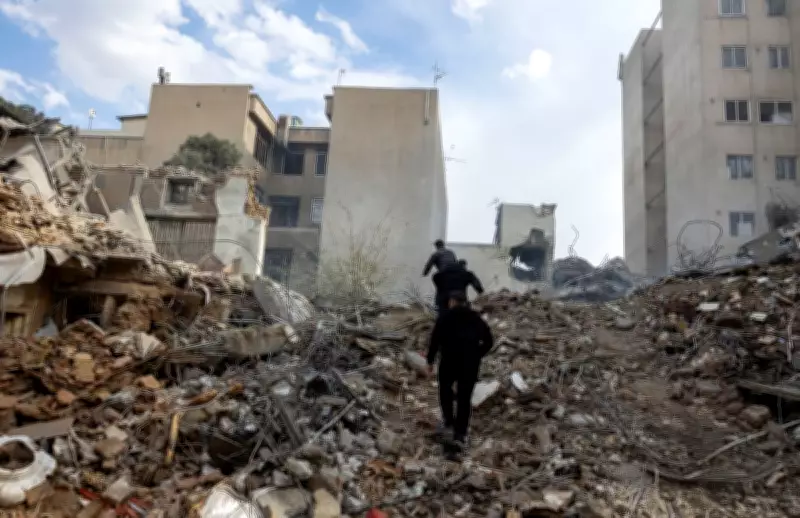
US and Iran Declare Two-Week Ceasefire, Narrowly Avoiding Trump's Deadline
The United States and Iran have agreed to a two-week ceasefire, coming barely an hour before Donald Trump's Wednesday deadline to obliterate the country was set to expire. In a significant development, Tehran announced it will temporarily reopen the vital Strait of Hormuz, a key global oil chokepoint, under Iranian military management for the duration of the truce.
Both Sides Claim Victory in Month-Long Conflict
Both nations have claimed to have won the more than month-long conflict, which has severely roiled global financial markets and sent oil prices skyrocketing. Former President Donald Trump told the AFP news agency that the deal represented a "total and complete victory" for the United States. Conversely, Iran cast the ceasefire as a major triumph. A statement from the Iranian Supreme National Security Council declared, "The enemy has suffered an undeniable, historic and crushing defeat in its cowardly, illegal and criminal war against the Iranian nation." It further asserted, "Iran achieved a great victory."
Ceasefire Details and Upcoming Diplomatic Talks
The White House confirmed that Israel has also agreed to the ceasefire. However, Israeli Prime Minister Benjamin Netanyahu clarified that the agreement does not include Lebanon, where Israeli assaults in response to rocket fire by Iranian-backed Hezbollah have, according to Lebanese authorities, led to more than 1,500 deaths. Iran's Supreme National Security Council stated it conditionally accepted the two-week ceasefire on the basis that attacks against Iran are halted.

Iranian state media reported that negotiations with the United States will be held in Islamabad, Pakistan, starting on Friday, 10 April 2026, to finalise details of an agreement. The talks aim at "confirming Iran's battlefield achievements" and may be extended. Importantly, state media emphasised that these discussions do not signify the end of the war.
Regional Diplomacy and the Ten-Point Peace Plan
Pakistani Prime Minister Shebaz Sharif, a key figure in diplomatic efforts, announced that Iran, the US, and their allies agreed to an immediate ceasefire everywhere, including Lebanon. He invited delegations to Islamabad on "Friday, 10th April 2026, to further negotiate for a conclusive agreement to settle all disputes."
Trump revealed that Iran had proposed a "workable" ten-point peace plan. According to Iranian state media, this proposal includes several conditions previously rejected by the US, such as controlled transit through the Strait of Hormuz coordinated with Iranian armed forces, withdrawal of all US forces from regional bases, lifting of all primary and secondary sanctions, payment of full compensation to Iran, release of all frozen Iranian assets, and Washington's acceptance of Iran's uranium enrichment program—a prior red line for the Trump administration.
Ongoing Tensions and Security Alerts
Even as the ceasefire was proposed, missile alerts continued in the United Arab Emirates, Qatar, and Israel, highlighting the fragile and volatile nature of the situation in the region. The conflict has underscored deep geopolitical divisions and the complex interplay of military, economic, and diplomatic factors in Middle Eastern affairs.