US-Iran Ceasefire Temporarily Halts Regional Escalation
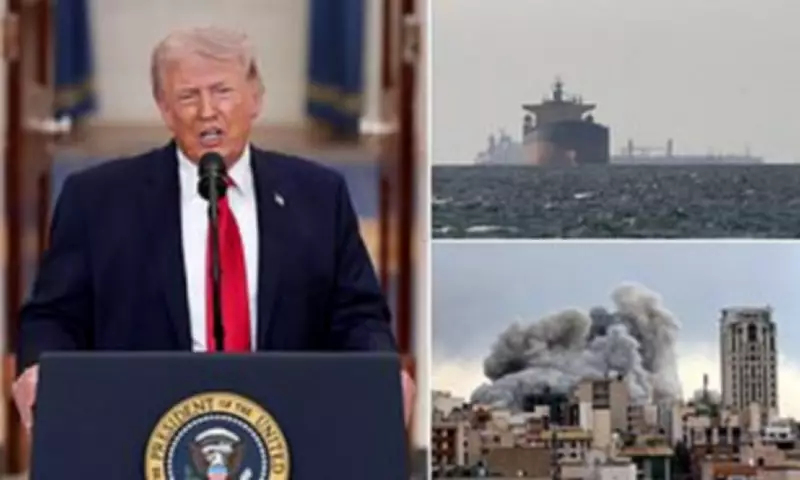
A two-week ceasefire agreement between the United States and Iran has pulled the Middle East back from the brink of a major escalation, leaving global observers anxiously questioning what comes next in this volatile situation. US President Donald Trump confirmed the temporary truce on his Truth Social platform on Tuesday evening, stating explicitly: 'I agree to suspend the bombing and attack of Iran for a period of two weeks.'
President Trump characterised the development as 'a big day for world peace' and asserted that Iran has 'had enough' of the conflict, promising there would now be 'lots of positive action'. This announcement followed an earlier, stark warning from Trump that 'a whole civilization will die tonight, never to be brought back again' if no agreement was reached by his 8pm Eastern Time deadline.
Conditional Truce Centres on Strategic Waterway
The ceasefire is explicitly conditional, hinging critically on the reopening of the Strait of Hormuz. This narrow maritime chokepoint is of immense global strategic importance, with approximately one-fifth of the world's seaborne oil supply transiting through its waters. President Trump described the arrangement as 'double-sided' and justified it by claiming the US had 'met and exceeded all military objectives'.

The diplomatic breakthrough emerged after Iran presented a 10-point counter-proposal to US negotiators via Pakistani officials on Monday. This was a direct response to an initial 15-point US proposal delivered through Islamabad to initiate a ceasefire. In a significant parallel development, Israel has also agreed to pause its military strikes for the identical two-week period, according to a senior White House official. However, Israeli forces continue to engage Hezbollah militants in Lebanon, indicating the conflict's spillover remains unresolved.
The international community is watching this fragile ceasefire with intense scrutiny as peace talks are scheduled to commence in Islamabad this Friday. The fundamental question of who is actually running Iran adds a layer of profound uncertainty to the negotiations. Iranian officials assert the agreement was approved by Ayatollah Mojtaba Khamenei, the country's new supreme leader. This claim persists despite conflicting intelligence reports suggesting Khamenei is currently in a coma. On the diplomatic front, Foreign Minister Abbas Araghchi has been the public face of the deal for Tehran.
Leadership Confusion and Regime Stability
President Trump has stated he is negotiating with Iranian representatives but has been clear he does not mean the supreme leader. The Trump administration has sent mixed signals regarding regime change in recent weeks. Initially, Trump called for a popular uprising and even considered supporting a Kurdish-led offensive to topple the government. However, his aides have since moderated that stance, with Defense Secretary Pete Hegseth claiming this was not a 'regime change war,' while simultaneously boasting that the 'regime sure did change' for the better.
Trump previously admitted that finding a replacement for the late Ali Khamenei is complicated because US and Israeli 'decapitation strikes' have eliminated many moderate alternatives. This reality has stalled plans to apply a 'Venezuela model' of installing a US-backed leader. Instead of relying on exiled figures like Reza Pahlavi, whom Trump doubts has sufficient local support, he suggested a more 'appropriate' successor would likely need to emerge from within Iran's current political system. For now, Mojtaba Khamenei is officially in charge, but with the severity of his condition unknown, top regime officials are expected to manage day-to-day governance and participate in negotiations.

Strait of Hormuz: The Central Bargaining Chip
The control of the Strait of Hormuz is unequivocally the central issue in the ceasefire negotiations. President Trump has been fixated on compelling Iran to end its effective chokehold on the strait. Iran has bombed multiple vessels attempting to transit the waterway, causing oil prices to skyrocket and global markets to churn. Under the current temporary arrangement, Iran is permitting limited access, but strictly on its own terms, with safe passage coordinated by its military.
Foreign Minister Araghchi stated: 'For a period of two weeks, safe passage through the Strait of Hormuz will be possible via the coordination with Iran's Armed Forces.' Iran's 10-point proposal explicitly demands continued control over the strait, signalling that closure remains a viable option if talks collapse. The proposal also allows for potential fees on shipping of around $2 million per vessel, with revenues earmarked for reconstructing infrastructure damaged by US-Israeli strikes.
The US is highly unlikely to concede full control of this vital waterway. When questioned about Tehran potentially charging fees, Trump retorted on Monday: 'What about us charging tolls? I'd rather do that than let them have them. Why shouldn't we? We're the winner. We won.' Experts warn this leverage point is far from resolved. Burcu Ozcelik from the Royal United Services Institute (RUSI) noted: 'Right now, Iran continues to retain control of the threat of control over the Strait of Hormuz… Iran may choose to continue to threaten leverage over the strait.'
However, Ozcelik also cautioned that while the strait offers Iran compelling leverage, maintaining this stance is incredibly costly daily—damaging livelihoods, infrastructure, and military capabilities. Ali Vaez, Iran project director at the International Crisis Group, emphasised to Politico: 'There is no military solution to this challenge. The only path is a mutually beneficial diplomatic arrangement.'
Domestic Political Divisions Exposed
The ceasefire and the preceding weeks of conflict have exposed a growing and vocal divide within the MAGA movement and the broader Republican party. While some supporters praise Trump's leadership, others attack him as a hypocrite, arguing his involvement betrays the core 'America First' pledge.
Senator Rick Scott called the ceasefire 'excellent news' and a 'strong first step toward holding Iran accountable'. Senator Lindsey Graham expressed hope that 'we can end the reign of terror of the Iranian regime through diplomacy', but warned Iran must not be rewarded for hostile acts. Conversely, former Congresswoman Marjorie Taylor Greene labelled Trump's pre-deadline threat as 'evil' and declared it was 'not making America great again', even calling for his removal via the 25th Amendment.
Hard-right commentator Tucker Carlson condemned Trump's threats against Iranian infrastructure as 'a war crime' and 'a moral crime'. Trump dismissed Carlson as 'a low IQ person that has absolutely no idea what's going on'. A CNN survey highlights the partisan split: only 33% of Americans approve of Trump's handling of Iran, compared to 73% of Republicans. Defense Secretary Hegseth and Press Secretary Karoline Leavitt are expected to defend Trump's approach, arguing his threats made the deal possible.
Pathway to Negotiations and Regional Reactions
Pakistan's Prime Minister Shehbaz Sharif, who helped broker the ceasefire, has invited both sides to talks in Islamabad, set to begin on Friday. Sharif had publicly urged both Trump and the Iranian regime to accept the two-week truce to allow diplomacy to proceed. The White House has indicated possible face-to-face meetings, though nothing is confirmed, according to Press Secretary Leavitt.
Major points of conflict remain, especially over Iran's nuclear enrichment activities and permanent control of the Strait of Hormuz. US negotiators demand Iran abandon enrichment, scale back missile and drone programs, and reopen the strait unconditionally. Tehran's proposal demands 'continued Iranian control over the Strait of Hormuz, acceptance of enrichment, lifting of all primary and secondary sanctions,' setting the stage for difficult talks. Trump has called the Iranian proposal 'a workable basis on which to negotiate,' despite earlier criticising it as not 'good enough'.
Vice President JD Vance, along with Jared Kushner and Special Envoy Steve Witkoff, have been leading US negotiations and Vance is expected to head the US delegation in Pakistan. Experts note that strikes have ravaged Iran's export capacity and gutted revenue, making a peace deal imperative for Tehran's survival, but political and security guarantees are prerequisites for any economic recovery.
Israeli Stance and Internal Criticism
Israel has aligned with the US in accepting the temporary ceasefire, but tensions persist over its role. Prime Minister Benjamin Netanyahu's government backed the pause while insisting Iran must reopen the strait and end attacks. However, the ceasefire does not resolve the spillover conflict in Lebanon involving Hezbollah.
Following the deal, Israeli opposition politicians launched sharp criticism. Opposition leader Yair Lapid called it 'a political disaster', accusing Netanyahu of failing politically and strategically, and not achieving any of the war's stated goals—which included degrading Iran's nuclear programme, neutralising its missile capabilities, and curbing its regional influence. MP Avigdor Liberman denounced the truce for giving Iran 'an opportunity to regroup', warning that any agreement not including key concessions means Israel will face a future campaign under worse conditions.
The coming fortnight will be a critical test for regional diplomacy, with the world watching whether this fragile pause can evolve into a more durable peace or merely precede a renewed and potentially more devastating escalation.