Fragile Two-Week Ceasefire Reached Between US, Israel and Iran
A significant but precarious two-week ceasefire has been established between Iran, the United States and Israel, marking a temporary de-escalation in the regional conflict that began on February 28. The agreement comes as US President Donald Trump has notably retreated from his previous threats to destroy Iranian "civilization," though numerous critical issues remain unresolved and the situation remains volatile.
Conflicting Reports and Unresolved Terms
The ceasefire announcement on Wednesday was immediately clouded by contradictory statements from various parties involved. President Trump initially described an Iranian proposal as a "workable" 10-point plan that could potentially end the war, but later dismissed the same plan as fraudulent without providing further explanation. This pattern of shifting positions has become characteristic of the conflict's diplomacy.
Israeli Prime Minister Benjamin Netanyahu confirmed his country's support for the US-brokered ceasefire with Iran but made clear that Israel would continue its military operations against Hezbollah in Lebanon. This directly contradicted statements from Pakistan, which has served as a key mediator in the negotiations. Pakistani officials asserted that the ceasefire agreement included a cessation of hostilities in Lebanon as well.

Pakistan announced that formal peace talks would commence in Islamabad as early as Friday, while simultaneously stating that the ceasefire was to take effect immediately. However, this declaration was followed by continued Iranian attacks on Gulf Arab states and Israel, highlighting the fragile nature of the agreement.
The Strait of Hormuz: A Critical Flashpoint
Central to the ceasefire discussions has been the status of the Strait of Hormuz, the vital waterway through which approximately 20% of the world's oil and natural gas passes during peacetime. Iranian Foreign Minister Abbas Araghchi announced that passage through the strait would be permitted under Iranian military supervision, though it remains unclear whether this represents a complete lifting of Iran's blockade.
According to a regional official involved in the negotiations who spoke on condition of anonymity, both Iran and Oman would be permitted to charge fees on ships transiting through the strategic waterway. The official indicated that Iran intends to use these collected funds for reconstruction efforts within the country.
President Trump commented on social media about the arrangement, stating: "Big money will be made. Iran can start the reconstruction process." However, this proposed system of tolls represents a significant departure from decades of international precedent treating the Strait of Hormuz as an international waterway free for transit. Gulf Arab states, which have suffered repeated Iranian attacks targeting their oil infrastructure, are unlikely to accept this new arrangement without significant resistance.
Unresolved Core Issues and Regional Reactions
The temporary ceasefire leaves numerous fundamental disagreements between the parties completely unresolved. There is little public indication that the United States and Iran have made progress on critical issues including Iran's nuclear program, its ballistic missile development, or its support for regional proxy forces. These were among the primary justifications cited by the US and Israel for initiating the conflict.
Iran has presented additional demands for a permanent resolution, including the complete withdrawal of US combat forces from the region, the lifting of all economic sanctions, and the release of frozen Iranian assets. These conditions are widely viewed as nonstarters for the Trump administration and potentially for other Western nations as well.
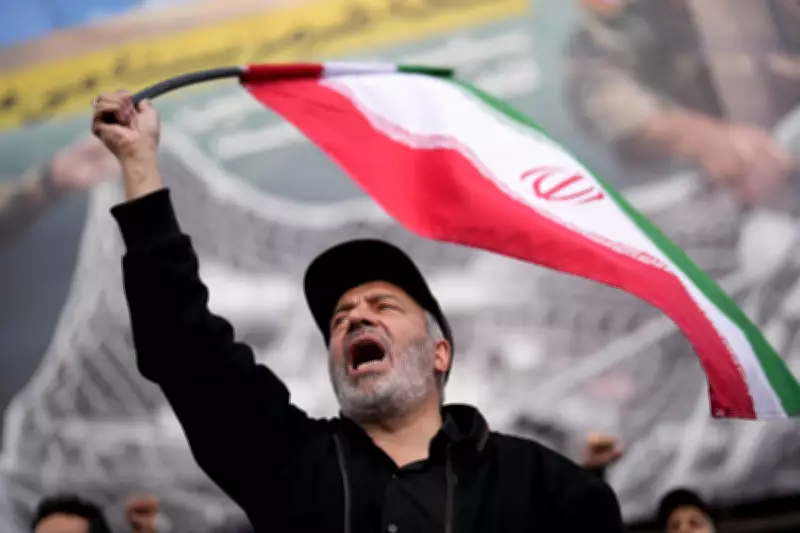
Within Iran, the ceasefire announcement provoked immediate backlash from hardline elements. Pro-government demonstrators took to the streets of Tehran, chanting "Death to America, death to Israel, death to compromisers!" while burning American and Israeli flags. This reaction underscores the ongoing anger among factions that had been preparing for what many believed would be an apocalyptic confrontation with the United States.

Continued Violence and Humanitarian Toll
Despite the ceasefire announcement, violence continued across the region. Missile alerts were activated in the United Arab Emirates, Israel, Saudi Arabia, Bahrain and Kuwait following the agreement. A gas processing facility in Abu Dhabi was set ablaze by incoming Iranian fire, according to officials.
Earlier on Tuesday, the Israeli military reported attacking an Iranian petrochemical facility in Shiraz for the second consecutive day, followed by strikes on bridges used by Iranian forces for transporting weapons and military equipment.
The human cost of the conflict remains staggering. More than 1,900 people have been killed in Iran as of late March, though the government has not updated casualty figures for several days. In Lebanon, where Israel continues to battle Iran-backed Hezbollah militants, more than 1,500 people have lost their lives and approximately one million have been displaced from their homes. Eleven Israeli soldiers have died in the conflict, while Gulf Arab states and the occupied West Bank have reported more than two dozen fatalities. Israel has confirmed 23 deaths, and 13 US service members have been killed.
Economic Implications and International Concerns
The eleventh-hour agreement to reopen the Strait of Hormuz produced immediate economic effects, with oil prices falling and stock markets rising as Asian trading opened on Wednesday. Iran's blockade of the vital waterway had severely disrupted the global economy, increasing pressure on the Trump administration to negotiate a resolution.
President Trump's decision to agree to the ceasefire followed what he described as "conversations" with Pakistani Prime Minister Shehbaz Sharif and General Asim Munir, Pakistan's influential army chief. This diplomatic intervention represents another instance of Trump backing away from deadlines just before their expiration, a pattern that has characterized his approach throughout the conflict.
Within Israel, concerns about the agreement persist. According to a person familiar with the situation who spoke anonymously due to media restrictions, Israeli officials would prefer to achieve more substantial concessions before agreeing to a lasting peace. The fundamental question of what will occur when the two-week ceasefire period concludes remains unanswered, leaving the region in a state of precarious uncertainty.