US Military Poised for Strait of Hormuz Action as Iran Ceasefire Teeters
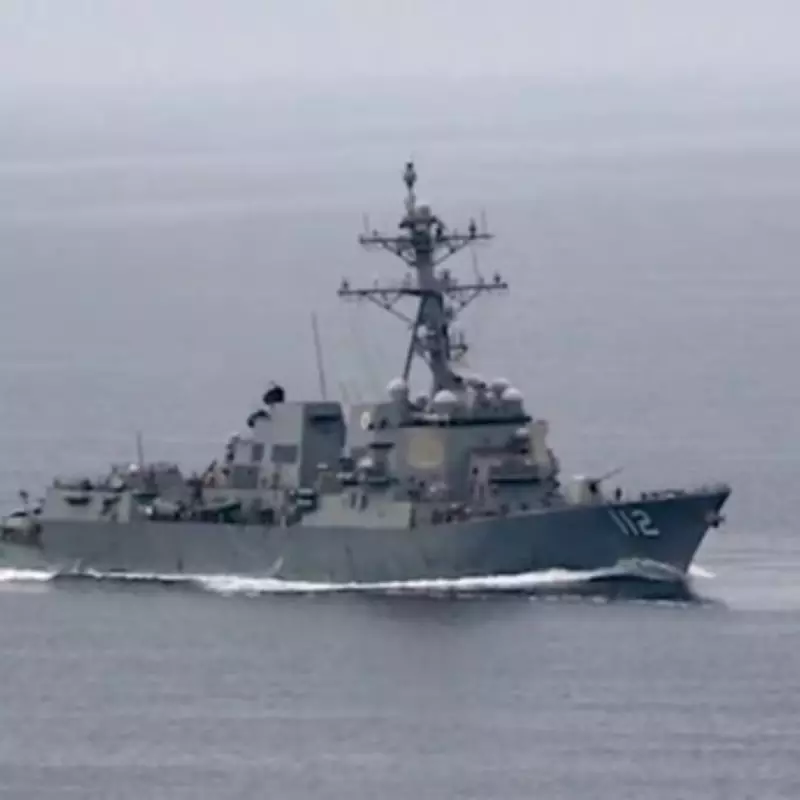
The United States military is on high alert and preparing to intervene in the Strait of Hormuz following a series of aggressive actions by Iran that have shattered a fragile ceasefire and reignited fears of a broader regional conflict. Iranian gunboats targeted multiple commercial ships in the strategic waterway today, prompting urgent international warnings and military preparations.
Attacks on Shipping and a Reclosed Strait
According to the UK Maritime Trade Operations Centre, three separate incidents were reported within hours. An "unknown projectile" struck a container ship around 12:25pm UK time. This followed an earlier attack where Iran's Islamic Revolutionary Guard Corps (IRGC) reportedly fired on a tanker. Shortly after 1pm UK time, the master of a cruise ship reported "sighting a splash in close proximity of the vessel" near Oman, described as "suspicious activity".
These provocations came as Iran officially reclosed the Strait of Hormuz, which had temporarily reopened on Friday. Approximately twenty ships that had begun transiting the strait on Saturday morning were ordered to turn around. The IRGC announced the strait would return "to its previous state... under strict management and control of the armed forces", accusing the US of "piracy".

Trump's Threats and Diplomatic Deadlock
US President Donald Trump delivered a stark warning from the White House, stating Iran "can't blackmail us". He emphasised that a US naval blockade would remain in force and raised the spectre of renewed bombing campaigns if no deal is reached by the ceasefire's expiry next week. "Maybe I won't extend it, so you'll have a blockade and unfortunately we'll have to start dropping bombs again," he stated.
Iranian leaders issued defiant responses. Supreme Leader Mojtaba Khamenei claimed the country's navy is "ready to inflict new bitter defeats on its enemies". The Supreme National Security Council vowed no compromise, asserting control over the strait until "lasting peace is achieved". First Vice President Mohammad Reza Aref declared, "Control of the Strait of Hormuz is in our hands. Either they grant us our right at the negotiating table or we seize it on the battlefield."
Global Economic Crisis Looms
The situation poses an immediate threat to the global economy, as around 20% of the world's oil trade passes through this chokepoint. Foreign Secretary Yvette Cooper described a "critical diplomatic moment", noting that despite the ceasefire, "we don't yet have normal passage through the strait". She warned the global economy is being "held hostage".
The UK government, in coordination with France, is preparing to lead an international defensive mission to protect freedom of navigation "as soon as conditions allow". Emergency plans have been drawn up for a "reasonable worst-case scenario", including potential shortages of critical carbon dioxide (CO2).
Impacts on Britain and Beyond
The closure risks causing a summer of misery for British households and industries:
- Healthcare and Energy: CO2 is vital for cooling blood supplies, organs, vaccines, and for civil nuclear energy. These sectors would be prioritised in a shortage.
- Food and Drink: CO2 extends the shelf life of foods like salad and meats, is used in animal slaughter, and carbonates drinks, threatening beer supplies.
- Agriculture: Farmers face soaring fertiliser costs, potentially impacting crop yields and food prices.
- Aviation: Europe reportedly has just six weeks of jet fuel left. Airlines like Lufthansa and KLM have already cancelled flights due to soaring kerosene costs.
International Energy Agency chief Fatih Birol stated the conflict is causing "the largest energy crisis the world has ever faced", with Asian nations on the "front line" and Europe and the Americas to feel the impact by late May.

Regional Ceasefire Under Strain
Meanwhile, a separate 10-day truce between Israel and Lebanon appeared under threat. Lebanon accused Israel of ceasefire violations, and a French UN peacekeeper was killed in an attack in southern Lebanon, with evidence suggesting Hezbollah involvement—a claim the group denies. Israeli Prime Minister Benjamin Netanyahu indicated the campaign against Hezbollah is not complete.
The convergence of these crises underscores the extreme volatility in the Middle East, with the Strait of Hormuz standing as the immediate flashpoint where military action and economic catastrophe hang in the balance.