US Insists Iran Objectives Achievable Without Ground Troops as War Timeline Shrinks
America has firmly stated that it can achieve all its military objectives in Iran without deploying ground troops, with Secretary of State Marco Rubio claiming the operation is progressing ahead of schedule and could conclude within weeks rather than months. This declaration comes amid significant troop movements and growing confusion over the war's precise goals.
Conflicting Signals on Invasion Plans and Military Buildup
Despite Rubio's public assurances on Friday that the conflict will not be prolonged and can be resolved without any boots on the ground, officials simultaneously revealed that Washington is still actively considering a potential invasion. This contradictory messaging has created a cloud of uncertainty around American strategy.
Military sources indicate a substantial reinforcement is underway, with approximately 10,000 additional troops scheduled to deploy to the region within the next ten days. This deployment will be supported by fighter jet squadrons and armoured vehicles, according to reports from Axios. These forces supplement the 5,000 marines and 2,000 paratroopers ordered to the Gulf earlier in the week.

Polish Prime Minister Donald Tusk expressed grave concerns on Friday, stating, 'I have reasons to believe, also based on information we have received from our allies, that stabilisation is unlikely in the coming days. On the contrary, a new escalation may occur.'
Rubio's Objectives Contrast with Trump's Peace Plan and Internal Dissent
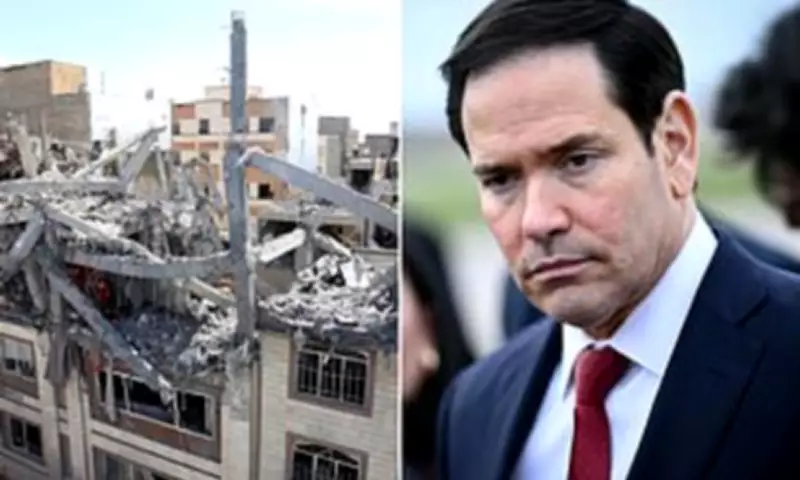
Following a G7 meeting in France, Secretary Rubio outlined clear military objectives, asserting Washington has been transparent from the outset. He listed these goals as:
- The complete destruction of the Iranian navy and air force.
- Significantly degrading Iranian missile launchers to prevent nuclear weapon concealment.
However, this stance appears to mark a dramatic departure from President Donald Trump's 15-point peace plan presented earlier in the week. The confusion deepened after a classified briefing for Republican lawmakers on Wednesday, which reportedly left members alarmed and divided.
One anonymous lawmaker was seen storming out, claiming they had been 'misled' about the war's objectives. They told the Daily Mail that during the briefing, officials stated nuclear capabilities were not a military objective, contradicting previously stated key war goals. When pressed on invasion plans, the White House's response was described as 'jaw dropping' and something that 'will blow your brains out'. The White House has denied these allegations.
Diplomatic Moves and Mounting Costs of the Conflict
As President Trump's next steps remain unclear, German Foreign Minister Johann Wadephul revealed that the US and Iran are preparing for direct talks, with a meeting potentially occurring in Pakistan very soon. Wadephul noted, 'Based on my information, there has been indirect contact, and preparations have been made to meet directly.'
The human and material toll of the war is becoming increasingly apparent. American casualties include more than 300 troops wounded, with ten sustaining serious injuries, and 13 confirmed fatalities. In a strategic setback, US sources informed Reuters that only about one-third of Iran's missile arsenal has been confirmed destroyed, starkly contrasting with Trump's claims that Iran has 'very few rockets left' and that the US has 'decimated' Iran's military.
Furthermore, the Wall Street Journal reports that America's stockpile of Tomahawk cruise missiles in the region is at alarmingly low levels after firing more than 850 missiles.
Regional Reactions and Israeli Escalation
Iran's powerful parliamentary speaker, Mohammad Ghalibaf, mocked the US military buildup, questioning America's ability to protect its forces. He stated, 'How can the US, which can't even protect its own soldiers at its bases in the region and instead leaves them stashed away in hotels and parks, protect them on our soil?'

Meanwhile, Israel has vowed to escalate and expand its attacks, recently striking a key site targeting Iran's naval munitions. This move appears designed to weaken Iran's blockade of the Strait of Hormuz, a vital shipping lane through which 20% of global oil passes. President Benjamin Netanyahu seems to be laying the groundwork for a potential invasion to reopen this critical passage, indicating the conflict's regional dimensions are intensifying.