US Navy Seizes Iranian Cargo Ship Near Strait of Hormuz, Trump Announces
President Donald Trump has announced that the United States Navy forcibly seized an Iranian-flagged cargo ship on Sunday after it attempted to circumvent a naval blockade near the critical Strait of Hormuz. The incident marks a significant escalation in the ongoing standoff between Washington and Tehran, occurring just days before a fragile ceasefire is set to expire.
Details of the Seizure
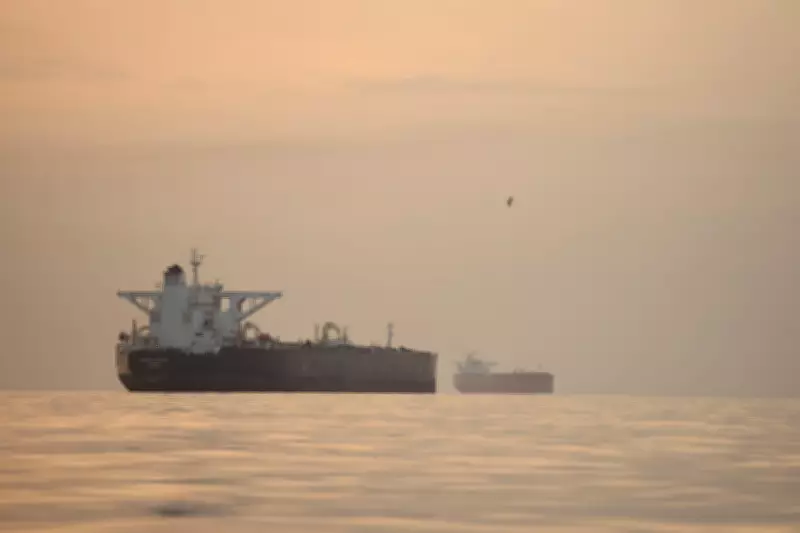
In a social media post, Trump stated that the vessel, identified as the Touska, was warned by a US Navy guided missile destroyer in the Gulf of Oman to stop but failed to comply. "Our Navy ship stopped them right in their tracks by blowing a hole in the engineroom," Trump wrote. He added that US Marines have taken custody of the ship and are inspecting its cargo.
The seizure comes amid heightened tensions over maritime traffic in the strait, a vital waterway through which roughly one-fifth of the world's oil trade normally passes. Iran has maintained that transits are "impossible" while the US blockade remains in effect, leading to hundreds of vessels waiting at each end for clearance.

Broader Diplomatic Context
This development unfolds as the US prepares for a second round of in-person talks with Iran in Pakistan, aimed at extending a ceasefire due to expire by Wednesday. Vice President JD Vance is set to lead the US delegation, following historic face-to-face negotiations last weekend. However, Iran has not confirmed its attendance, with chief negotiator Mohammed Bagher Qalibaf stating "there will be no retreat in the field of diplomacy" but acknowledging a wide gap between the sides.
Key issues remain unresolved, including:
- Iran's nuclear enrichment program
- Its regional proxies
- Control over the Strait of Hormuz
Trump reiterated threats against Iranian infrastructure, warning that if Iran does not agree to a US-proposed deal, "the United States is going to knock out every single Power Plant, and every single Bridge, in Iran." Iranian officials have condemned the blockade as an "act of aggression."
Impact on Global Energy and Regional Stability
The blockade has exacerbated one of the worst global energy crises in decades, disrupting not only oil but also critical supplies of fertilizer, natural gas, and humanitarian aid to regions like Afghanistan and Sudan. Iran's closure of the strait—imposed after the US and Israel launched a war on Iran in February—serves as a powerful economic and political weapon, squeezing Iran's economy while inflicting political pain on the Trump administration.
Recent incidents include Iran firing on two Indian-flagged merchant ships on Saturday, prompting India to summon Iran's ambassador. The war, now in its eighth week, has resulted in significant casualties:
- At least 3,000 deaths in Iran
- Over 2,290 in Lebanon
- 23 in Israel
- More than a dozen in Gulf Arab states
Additionally, 15 Israeli soldiers in Lebanon and 13 US service members throughout the region have been killed.
Iran's Stance and Diplomatic Efforts
Iran's Supreme National Security Council, acting as the de facto top decision-making body, stated late Saturday that "Iran is determined to maintain oversight and control over traffic through the strait until the war fully ends." This includes enforcing Iran-designated routes, fees, and transit certificates. Iranian Deputy Foreign Minister Saeed Khatibzadeh warned that the US blockade risks the entire ceasefire package, and Iran has refused to hand over its stock of enriched uranium, calling the idea "a nonstarter."
Pakistan continues to mediate, with Foreign Minister Ishaq Dar working to "bridge" differences, and Prime Minister Shehbaz Sharif engaging in diplomatic calls with Iranian President Masoud Pezeshkian. As security tightens in Islamabad, the outcome of the upcoming talks remains uncertain, with the seizure of the Touska adding a volatile new dimension to an already tense geopolitical landscape.