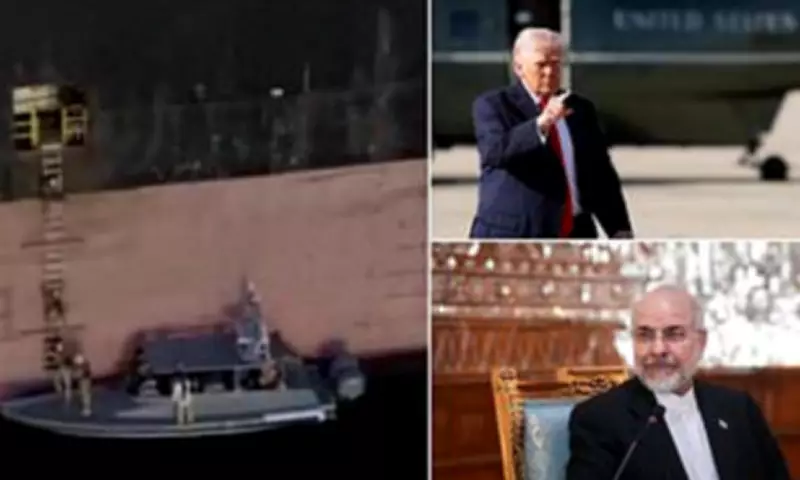
US Officials Warn Clearing Mines in Strait of Hormuz Could Take Six Months
US defense officials have revealed that clearing Iranian mines from the Strait of Hormuz could take at least six months, creating a major obstacle in efforts to reopen the vital waterway through which one-fifth of the world's oil supply passes. This assessment comes as Iranian negotiator Mohammad Bagher Ghalibaf declared reopening the strait "impossible" amid ongoing tensions.
Iran's Defiant Stance on Strait Reopening
Mohammad Bagher Ghalibaf, speaker of the Iranian parliament and lead negotiator, argued late Wednesday that reopening the Strait of Hormuz would be "impossible" under current conditions. In a post on social media platform X, Ghalibaf accused the United States and Israel of "flagrant" breaches of ceasefire agreements, citing the ongoing naval blockade, what he called "the hostage-taking of the world's economy," and "Zionist warmongering."
Ghalibaf added that the US and Israel "did not achieve their goals through military aggression, nor will they through bullying." Iran has stalled peace negotiations unless President Trump ends the naval blockade imposed to damage Iran's oil-dependent economy.

Technical Challenges of Mine Clearance
A senior defense department official told the House Armed Services Committee on Tuesday that clearing the waterway of mines deployed by the Iranian military could require six months of intensive work. According to the Washington Post report, any mine removal efforts cannot begin until hostilities officially end.
The Iranian navy began placing mines in the Strait of Hormuz in March as US-Israeli forces continued joint attacks on the country. Defense Secretary Pete Hegseth previously highlighted efforts to attack Iranian ships laying mines, declaring on social media that US forces were destroying the vessels with "ruthless precision" and vowing the US "will not allow terrorists to hold the Strait of Hormuz hostage."
Complex Mine Detection Problems
Complicating clearance efforts, Iranian forces are reportedly having difficulty locating all the mines they deployed. The US faces similar detection challenges, with some mines reportedly floated remotely using GPS technology, making them difficult for American forces to identify when deployed. Other mines were laid using small boats.
Officials speaking with the Washington Post indicated Iran may have placed 20 or more mines in and around the Strait of Hormuz. This assessment contradicts President Trump's Friday social media post claiming "Iran, with the help of the USA, has removed or is removing, all sea mines."
Escalating Maritime Confrontations
As the standoff continues, Iran's Islamic Revolutionary Guard Corps claimed on Wednesday it stopped two ships attempting to cross the strait and brought them to shore. According to The Guardian, Iran's semi-official Tasnim news agency reported the IRGC accused the Panama-flagged MSC Francesca and Liberia-flagged Epaminondas of "attempting to exit the Strait of Hormuz covertly."
Greece's foreign minister confirmed an attack on a Greek-owned cargo ship, while a UK-based maritime security monitor reported a vessel was approached by an Iranian gunboat "that then fired upon the vessel, which has caused heavy damage to the bridge." This marks the first time since the war began that Iran has taken control of ships in the waterway.
Economic and Political Implications
White House Press Secretary Karoline Leavitt insisted President Trump remains "satisfied" with the naval blockade and "understands Iran is in a very weak position." She argued the US is "completely strangling their economy through this blockade - they're losing $500 million a day."
However, prolonged closure of the Strait of Hormuz threatens dire consequences for global oil and gas markets. Insurance companies, ship owners, and captains remain hesitant to navigate the mine-infested waterway. Richard Nephew, an Iranian diplomacy expert at Columbia University, told the Washington Post, "You're not going to have many people wanting to run that risk."

Gas prices in the US have already soared since the conflict began in late February, with AAA reporting the average cost per gallon rising to $4.02 on Wednesday from $2.98 before hostilities. Treasury Secretary Scott Bessent warned it could be late September before "we can have $3 gas again," raising Republican concerns about potential midterm election losses in November.
Defense spokesman Sean Parnell disputed the six-month timeframe in a statement to the Washington Post, calling the published information "inaccurate." The Department of Defense has been contacted for further comment regarding the mine clearance operations and timeline.