

US Ambassador Waltz Defends Trump's Threat to Target Iranian Infrastructure
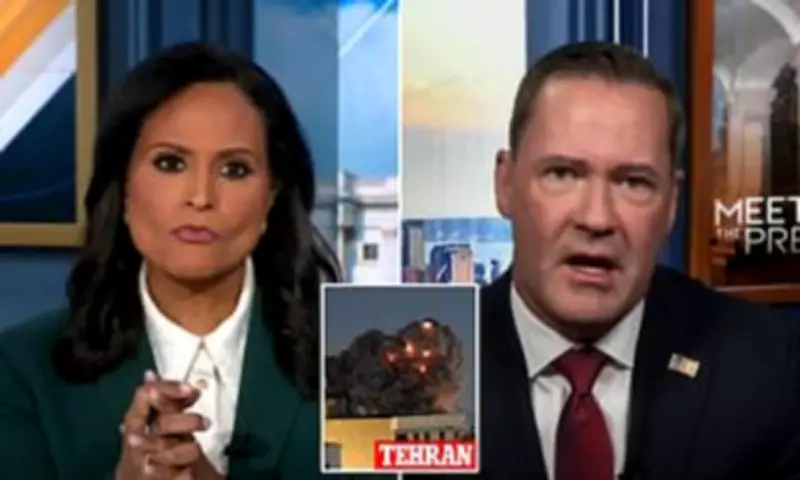
US Ambassador to the United Nations Mike Waltz has robustly defended former President Donald Trump's recent threat to attack civilian infrastructure in Iran, arguing that the United States possesses a "long history of taking down bridges" and similar targets. This defense emerged during a tense exchange on NBC's Meet the Press as a critical ceasefire deadline looms.
Trump's Provocative Statement on Truth Social
On Sunday, Donald Trump posted on his Truth Social platform, declaring there would be "no more Mr Nice Guy" and pledging to "knock out every single power plant and every single bridge" in Iran if the nation refuses an upcoming peace deal. This statement coincided with the eve of renewed peace talks in Islamabad, Pakistan, and the impending expiration of a ceasefire in just three days.
The comments ignited immediate backlash from several Democratic politicians, who accused Trump of threatening "devastation" upon the Iranian civilian population. Congressman Ro Khanna, appearing on ABC's This Week, expressed profound concern, stating, "I didn't think we would ever get to that point" of threatening to destroy all power plants.

Waltz's Fiery Defense on Meet the Press
Ambassador Mike Waltz vigorously countered these criticisms during his interview with NBC's Kristen Welker. "I just want to get ahead of this ridiculous and frankly irresponsible narrative that this would somehow constitute a 'war crime,'" Waltz asserted. He emphasized that targeting infrastructure used by military forces is a legitimate strategy.
"We have a long history of taking down bridges, power plants, and other infrastructure that is powering Iran's military," Waltz stated. He further accused Iran of conflating civilian and military assets, alleging the hiding of weapons in schools and hospitals, which he labeled a war crime on Iran's part.
The interview grew notably heated as Welker pressed Waltz on the implications for civilians. "Are you saying the United States is okay targeting civilians, the people of Iran?" she interjected. Waltz responded by citing the laws of land warfare, arguing that infrastructure supporting military operations, even if civilian in nature, constitutes a legitimate target.
Escalating Tensions and Naval Blockades
The context for these threats is a complex and escalating conflict. The United States initiated combat operations in Iran on February 28, and a US delegation is now in Pakistan for negotiations. Trump has warned that if Iran does not sign a proposed deal, "the whole country is getting blown up."
Complicating matters are dueling naval blockades. Trump previously announced a blockade of the Strait of Hormuz on April 12 after peace talks collapsed, though he later clarified it applied only to Iran. In response, Iran has pledged to restrict ship passage through the strait as long as the US blockade of Iranian ports persists.
Iranian parliamentary Speaker Mohammad Bagher Qalibaf, the nation's chief negotiator, condemned the US blockade as a "naive decision made out of ignorance." These reciprocal actions have severely complicated Pakistani-led mediation efforts, casting doubt on the possibility of extending the current two-week truce.
The Path Forward and Presidential Posture
When questioned about extending the ceasefire beyond Wednesday's deadline, Waltz remained ambiguous, stating, "Everything's on the table." He reiterated the administration's stance that the president is prepared to escalate to de-escalate the conflict, a strategy that has drawn sharp criticism.
Vice President JD Vance is set to lead the next round of peace talks in Islamabad, supported by Special Envoys Jared Kushner and Steve Witkoff. The outcome of these negotiations is now critically urgent, with Trump's stark threats and Waltz's unwavering defense signaling a high-stakes diplomatic and military standoff.
The situation remains volatile, with the international community closely watching whether the ceasefire can be salvaged or if the threats against Iranian infrastructure will materialize, potentially plunging the region into deeper conflict.






