Even before the events of last week, the Conservative Party's prospects were grim. Now some believe it faces a wipeout that would reshape the UK political landscape. Partly in preparation for the worst, but also as a way of finding hope for the longer term, a book that has not exactly been a UK bestseller has suddenly become popular bedtime reading among British Conservative politicians. It is entitled Full Circle: Death and Resurrection in Canadian Conservative Politics.
Written by the Canadian author and historian Bob Plamondon, it charts the obliteration and near-death experience of the country’s centre-right Progressive Conservative party at the 1993 general election, when it crashed from holding a majority in the Commons to losing all but two seats. Many dark years in the wilderness followed, before a merger and name change allowed it to claw itself back into the reckoning and eventually regain power in 2006.
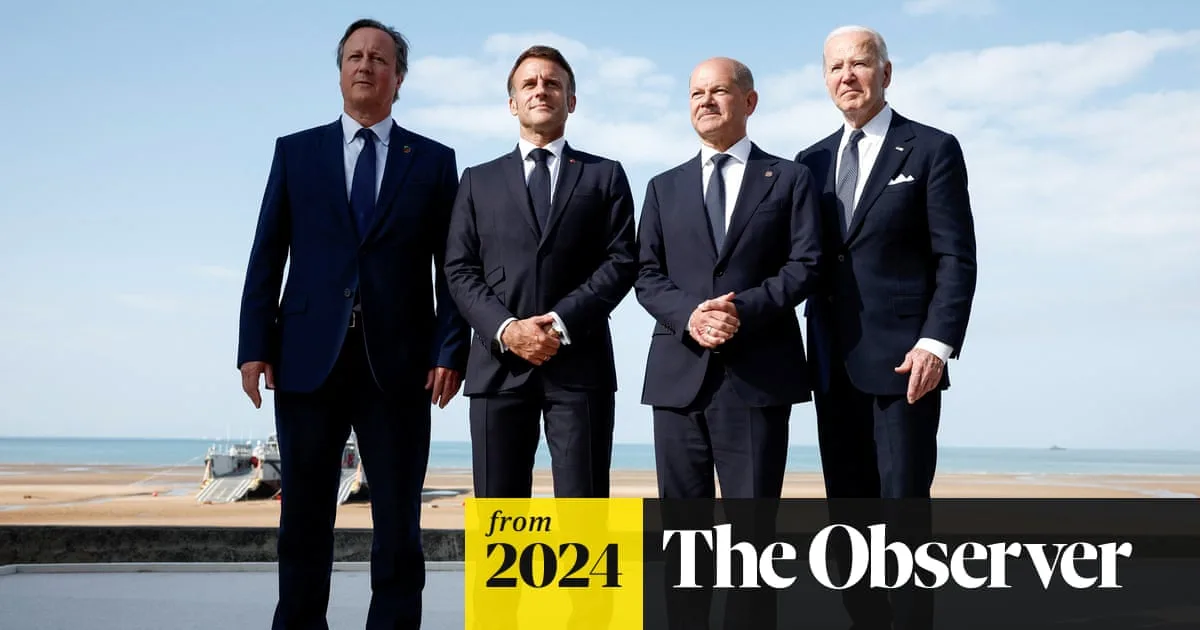
Even before Rishi Sunak’s disastrous blunder on Thursday, when he flew home early from the D-day commemorations to conduct a political interview, potential parallels with the Canadian experience were already being drawn. Could the Tories in Britain be all but wiped out in a similar way, Conservatives are now asking themselves. And if so, what are the chances of a previously annihilated party rising again from the ashes?

This weekend, these questions seem ever more pertinent. The UK Conservative party seems to be spinning ever faster into a death spiral, while Labour shores up its poll lead and poses as a government in waiting. At the end of an emotional service at the British Normandy Memorial on Thursday, Keir Starmer refused to engage in political point-scoring, while Sunak had taken his leave and was already on the plane home to do an interview that may well turn out to be another hammer blow to his chances of re-election.
Next morning, Labour’s defence spokesperson, John Healey, was able to slot the ball into an open net, as veterans accused Sunak of letting the country down. Incredibly, Sunak’s ability to lead the Tories even until polling day on 4 July – never mind beyond – is now being called into doubt by some on his own side. Writing in the Observer, Rob Ford, a leading expert on voting intention and trends, says the evidence from polls shows that “an electoral asteroid is streaking through the atmosphere” and is heading for the Tory heartlands.
Ford no longer thinks it impossible that the Conservatives could end up with less than 100 seats, so badly is their campaign misfiring and so much trust have they lost over 14 years and the tenures of five prime ministers. Other polling experts say that such is the geographical spread of the Tory vote, and the brutal nature of the first past the post system, that once their vote drops into the low 20% region, the number of seats could fall into double digits – and could go as low as 20.