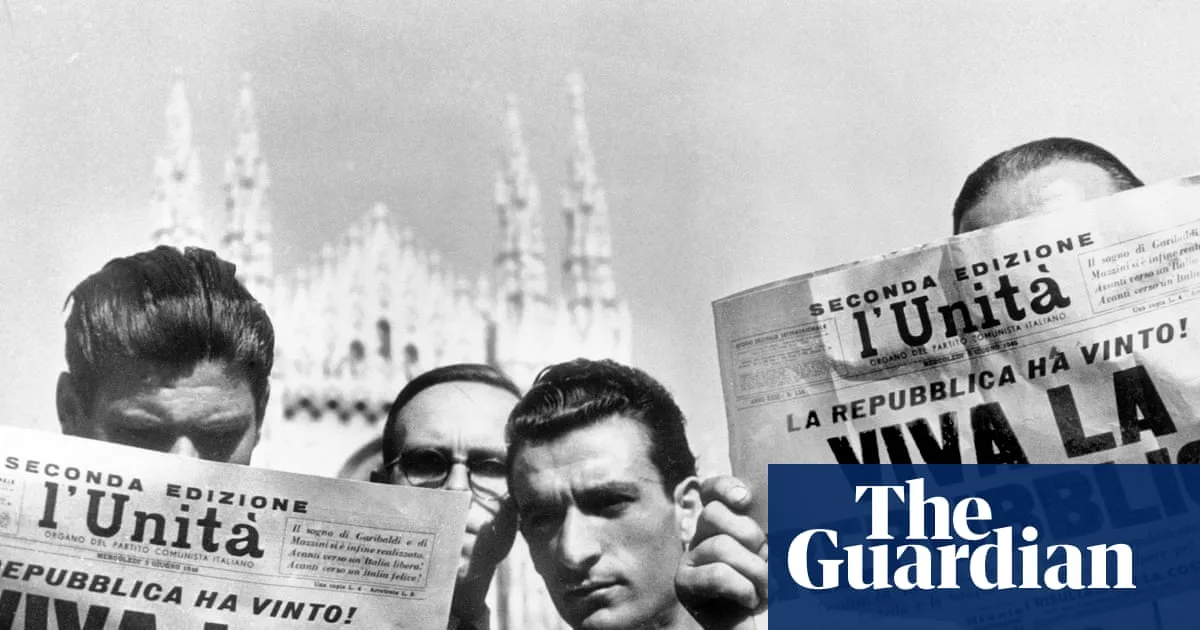
On 2 June 1946, in the first free election since the fall of Mussolini's dictatorship, Italy voted to abolish its monarchy and become a republic. The referendum results, broadcast by Rome radio, showed 12,182,855 votes for a republic and 10,362,709 for the monarchy, based on returns from 34,112 of 35,236 polling districts.
Northern Italy voted overwhelmingly for a republic, while central and southern regions, except Umbria, favoured the monarchy, as did Sicily and Sardinia. Rome was evenly split, with 677,000 votes for the monarchy and 619,000 against. Ex-King Umberto is expected to leave Italy shortly, likely for Egypt, where his father Victor Emmanuel resides.
The election also saw the Christian Democrats lead by about three million votes over the Socialists, with the Communists close behind. The result fulfils half of Mazzini's dream of a united republican Italy, though the margin is not decisive. Observers note that the monarchy's collaboration with fascism influenced the outcome, but nearly half the country remained loyal to the House of Savoy.

Prime Minister de Gasperi declared the republic effectively proclaimed, despite some objections and missing returns. He stated that if King Umberto leaves, he does so still as 'King' of Italy, but the court's announcement of a republican majority is considered final.