Indirect talks between US and Iranian officials over unfreezing at least $6bn in Iranian assets will recommence on Wednesday in Doha, Iran has announced. The two sides have yet to hold a face-to-face meeting since signing a deal to extend the ceasefire and reopen the Strait of Hormuz.
US Envoys in Qatar for Regional Talks
US envoys Steve Witkoff and Jared Kushner were in Qatar on Tuesday for discussions covering regional issues, including the Iran ceasefire and Lebanon. However, Qatar’s foreign ministry spokesperson, Majed Al-Ansari, stressed that these talks were with Qatari mediators. “They are not here for their negotiations with the Iranians,” he said.
The US team is seeking details of a plan for Iran to charge tolls in the Strait of Hormuz and how this relates to proposals from Oman that would introduce fees for navigational services.

Tensions Over Strait Control and Ceasefire
The lack of renewed direct contact between the US and Iran on implementing the memorandum of understanding signed on 17 June reflects tensions over Iran’s determination to maintain control over commercial oil tanker traffic through the Strait of Hormuz. Iran also opposes the proposed Lebanon ceasefire negotiated by Israel, the US, and the Lebanese government last week.
Talks on Iran’s nuclear programme have not even started, despite only 60 days from 17 June having been set aside to complete the complex negotiations. Further talks appeared at risk after both sides traded fire in the Strait of Hormuz over the weekend. In theory, the talks can be extended beyond the 60-day deadline, but slow progress is alarming some diplomats.
Iran Warns European Powers
Iran’s foreign ministry spokesman, Esmail Baghaei, warned European powers such as France and the UK not to seek involvement in de-mining the Strait of Hormuz. “Iran is better aware of its responsibilities than any other party and is capable of fulfilling them, and there is no need for the intervention of others. Interventions that, even if made with good intentions, will in practice only complicate the situation,” he said.
Western powers object to Iran’s plan to impose tolls on commercial shipping passing through the strait but may be more open to discussing Oman’s plan for voluntary contributions or fees for specific services.
Iran’s Stance on Strait Sovereignty
Iran’s top negotiator, Mohammad Bagher Ghalibaf, said on state TV on Tuesday: “The sovereignty of the Strait of Hormuz lies with Iran and Oman, and traffic in the strait is subject to arrangements determined by Iran.” He added that fee-free passage through the strait is only for 60 days, as per the memorandum of understanding.
The UN’s International Maritime Organisation (IMO) held informal discussions with Iran about Tehran’s objections to the IMO opening a sea route through the strait close to Oman in conjunction with the US and Oman. At one point last week, the IMO thought it had the agreement of the Iranian foreign ministry to the route, but Iran then attacked two ships, possibly fearing its control of the strait was being eroded. The IMO Secretary General Arsenio Dominguez then suspended the route to hold talks with Iran.
Shipping Traffic and Blockade
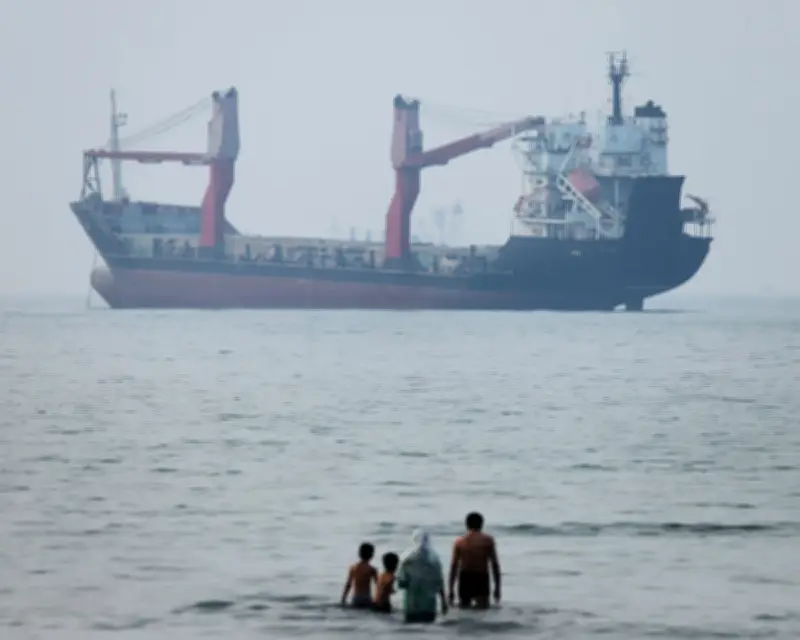
According to data from Kpler, a maritime tracking firm, 40 ships transited the waterway on Monday, up from 24 the previous day and 39 on Saturday. Hundreds of vessels have been stranded since the war between the US and Iran broke out on 28 February, leaving as many as 10,000 seafarers stranded. Not all ships have their transponders on, making an accurate count difficult, but Iran may regard this level of traffic as so far below normal levels as to keep pressure on the price of oil.
Iran is committed to using its best endeavours to lift the blockade in the strait within 30 days.
Optimistic Outlook from Iran
Giving a relatively optimistic account of relations with the US, only days after the two sides exchanged fire over control of the strait, Baghaei said: “From the beginning when we entered this diplomatic process, no one imagined a smooth and unchallenged process. Keep in mind that this diplomatic process began after two wars in less than a year […] we expected to face challenges in the implementation phase.”