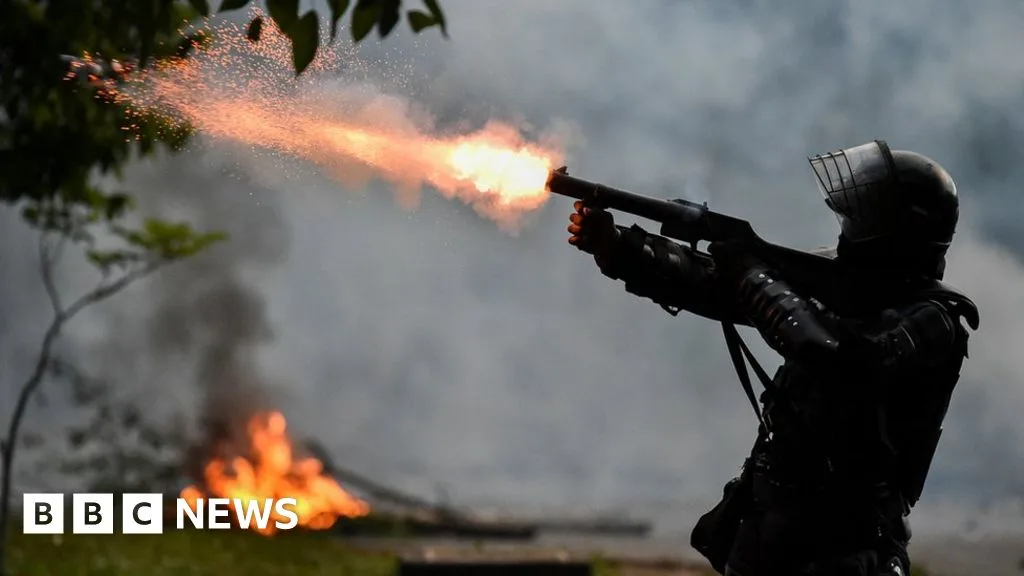
An international human rights body has condemned Colombia for its 'excessive and disproportionate' use of force during anti-government protests this year, in which dozens died. The Inter-American Commission on Human Rights (IACHR) said security forces used 'lethal force' in many situations, though the government argued such cases were exceptions and are under investigation.
The protests, which began in April over a proposed tax reform, largely remained peaceful but occasionally turned violent. The reform was withdrawn, but demonstrations expanded to include issues such as police violence and poverty. Colombia's ombudsman has reported over 50 deaths linked to clashes, while human rights groups claim a higher toll. Around 2,300 civilians and security personnel have been injured.
The IACHR's long-awaited report, based on a June visit and over 500 interviews, alleges human rights violations including indiscriminate use of firearms by police, gender-based violence, and sexual abuse. Commission president Antonia Urrejola stated that the state's response was 'characterised by excessive and disproportionate use of force' and 'in many cases included lethal force'.

The report urges the government to investigate abuse allegations, punish those responsible, and compensate victims. It also recommends removing the national police from defence ministry control, a key protester demand. Reacting, the Colombian government defended the police's current management and rejected a recommendation to revoke a ban on roadblocks as a form of protest. President Iván Duque stated he respects peaceful protest but not vandalism or urban terrorism.
Major protest groups have temporarily suspended demonstrations.