Helena Commission Reverses Immigration Policy Under State Legal Pressure
In a dramatic reversal, Helena's city commission has voted to scrap a resolution that restricted local police cooperation with federal immigration enforcement. The decision came after Montana Attorney General Austin Knudsen threatened legal action and substantial fines against the city, citing violations of the state's sanctuary city prohibition.
Contentious Meeting Ends With Policy Reversal
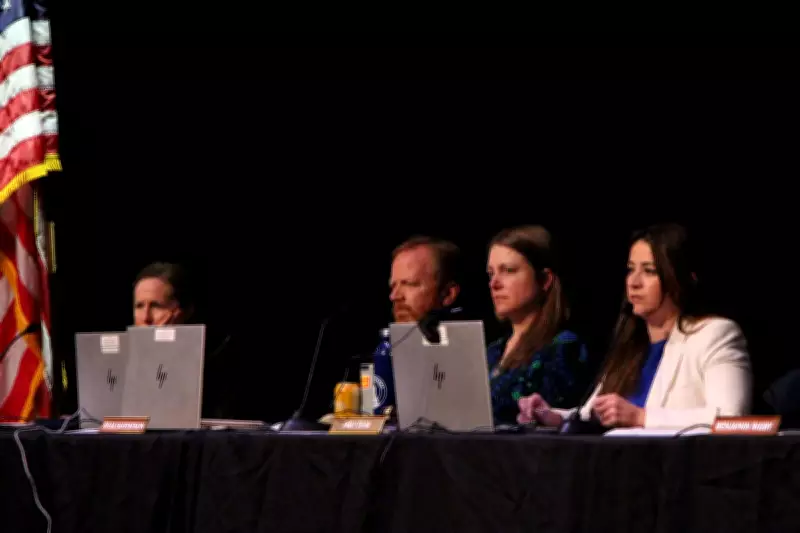
After more than five hours of heated public testimony and deliberation, commissioners voted 4-1 to rescind the January resolution during a special meeting at the Helena Civic Center auditorium. The session drew hundreds of participants both in person and online, with emotions running high throughout the proceedings.
Immediately following the vote, Mayor Emily Dean called for a recess as members of the public shouted "shame" and profanities at city officials. When the meeting resumed, commissioners directed city attorneys to begin redrafting the resolution and invite the attorney general's office to discuss revised language, passing this motion with another 4-1 vote.

State Officials Applaud Decision
Attorney General Knudsen and Governor Greg Gianforte both welcomed the commission's reversal on Friday morning. "The commissioners made the right decision voting to keep the Helena community safe," Knudsen stated. "This resolution should never have been passed in the first place. My office will continue to hold any jurisdictions in violation of Montana's sanctuary city prohibition accountable."
Governor Gianforte echoed this sentiment in a Facebook post, writing: "In Montana, we banned sanctuary cities to keep our cities safe. The City of Helena made the right decision to rescind its resolution and allow the Helena Police Department to continue its cooperation with federal immigration authorities."
Legal and Financial Risks Cited
The commission's decision followed recommendations from outside attorney Natasha P. Jones, whom the city hired to consult on the resolution's legality. Jones warned commissioners about significant financial risks, including potential fines of $10,000 for every five days the city remained out of compliance with state law.
"The problem is, it is the opinion of the AG and the governor that is on the other side of the table," Jones explained during the meeting. "And so, it is, in my view, a waste of resources and an improper process to go about trying to revise without our partner across the table."
Jones noted that Montana's sanctuary city prohibition, while not yet litigated, resembles similar laws in Texas and Florida that have been upheld as constitutional. She emphasized that Helena faced not only substantial fines but also the loss of future public grant dollars and compromised funding for commerce and infrastructure projects.
Passionate Public Testimony
The majority of public commenters urged city officials to maintain the resolution, rejecting the characterization of Helena as a "sanctuary city." Several proponents described the tactics of state officials as "bullying" and "extortion."
"I don't believe rescinding this resolution will restore power to the city," said Barbara Chillcott, a Helena resident and attorney who read an excerpt from "On Tyranny" during her testimony. "This resolution represents not only an appropriate exercise of local government authority. It also represents, importantly, the values of this community."
Other residents urged compliance with state leaders to avoid further political conflict. "We are witnessing tonight a sad waste of the city's time and finances," said Michael Wells, an opponent of the resolution. "I would recommend, obviously, that you better rescind this. And two, that you just let it go, and get about your business of building our city as a great place to live."
Commissioners Express Consternation
The four commissioners who voted to rescind the resolution—Mayor Emily Dean and commissioners Sean Logan, Julia Gustafson, and Ben Rigby—expressed varying degrees of frustration with their decision.

"We are being baited into a fight that is rigged," Dean stated, adding that the vote had consequences extending far beyond Helena's local budget. "I am more concerned than ever about the state overreach and telling Montana communities what they can and can't think, the values they can and can't have."
Commissioner Sean Logan acknowledged the difficult position, telling remaining audience members: "It's been a very impressive display of public engagement. I think we do have a lot to risk here. And there is a lot of financial risk in front of us."
Lone Dissenting Voice
Commissioner Melinda Reed cast the sole vote against rescinding the resolution, attempting to convince her colleagues to maintain their position. "There's been a lot of debate about financial issues, and I just have to ask myself, 'What is the price point for maintaining our rights, for maintaining local control?'" Reed asked shortly before the vote. "I'm not sure I can put a number on that. I think most importantly, listening tonight and listening to my gut, I will not be governed by fear and I will not govern with fear."
Background and Resolution Details
The January resolution came after months of community organizing following the detention of Christopher Martinez Marvan, a Mexican citizen who had lived and worked in Helena since 2008. Martinez Marvan was stopped by Helena police and federal immigration enforcement during a search for two unrelated Venezuelan men in July of last year.
The resolution specifically prohibited the Helena Police Department from entering into federal partnerships with U.S. Immigration and Customs Enforcement known as 287(g) agreements. It also restricted disclosure of immigration status information except when required by law or court order, and called on police to request that federal immigration officers identify themselves when it wouldn't interfere with federal actions.
Path Forward
Jones suggested that once the city rescinded the current resolution and no longer faced investigation threats, city leaders could negotiate with the state to create a different resolution that wouldn't raise concerns from state officials. Commissioners directed city attorneys to provide updates on outreach to the attorney general's office within 30 days.
The commission's decision represents a significant shift in Helena's approach to immigration enforcement, highlighting ongoing tensions between local autonomy and state authority in Montana's political landscape.