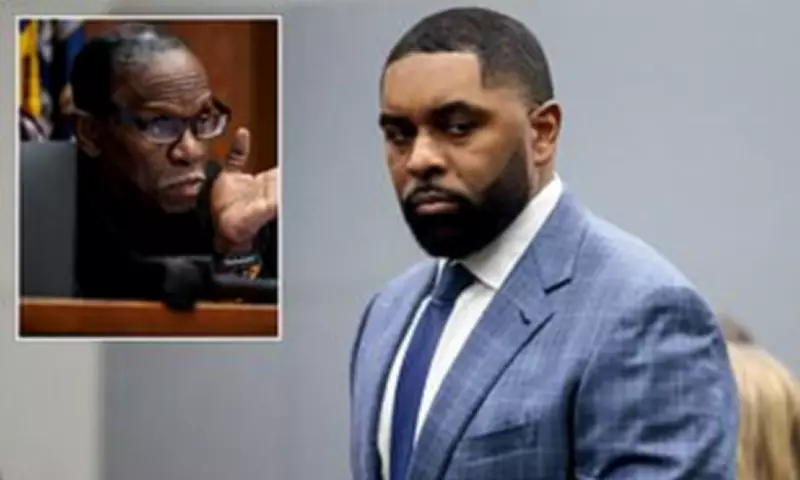
Judge Questions Due Process in Ex-Michigan Coach's Arrest Over Alleged Affair
Michigan authorities are facing scrutiny over whether they violated former Wolverines football coach Sherrone Moore's right to due process during his arrest last December. The married father of three was dismissed from his position in Ann Arbor on December 10 following reports of an improper relationship with a female staff member. Later that same day, Moore was arrested for allegedly entering the woman's apartment, terrorising her, and threatening to harm himself in the aftermath of his dismissal. He was subsequently released from jail on a $25,000 bond two days later.
Courtroom Developments and Judicial Concerns
On Tuesday, Moore appeared before Judge J. Cedric Simpson in a Michigan courtroom, where a March 2 hearing was scheduled to examine police procedure leading up to the 40-year-old's arrest. Moore faces charges of third-degree felony home invasion, misdemeanor stalking, and misdemeanor breaking and entering. During the proceedings, Judge Simpson expressed significant concerns about potential due process violations.
'Defendant's due process may have been violated,' Simpson stated unequivocally. The judge highlighted what he described as a 'glaring' omission in the legal documentation, noting that law enforcement failed to indicate the professional connection between Moore and the alleged victim when securing charges against the former football coach.

This professional relationship could potentially undermine the misdemeanor stalking charge by offering an explanation for why Moore might have needed to repeatedly contact the staff member. 'It's not stalking if the communication has a legitimate purpose,' Ellen Michaels, Moore's attorney, argued during the hearing, as reported by the Detroit Free Press.
Procedural Irregularities and Legal Implications
Judge Simpson elaborated on his concerns, explaining that authorities included comments from the woman's lawyer accusing Moore of misconduct but omitted crucial contextual information about their professional relationship. 'What worries me is the magistrate did not get that opportunity [to hear more information],' Simpson stated. 'And if the magistrate didn't get that opportunity, that means what the people got may not have been a validly sworn out complaint...and that the defendant's due process rights may have been violated. That's my problem, or my concern.'
Although Simpson suggested that law enforcement might have omitted details and included others as 'an intentional misdirection to the court,' he emphasised that police motivation doesn't change the fundamental question of potential rights violations. 'What is clear from this court's perspective is that an omission in certain contexts can be more damaging, more problematic, more troublesome, than what might be an intentional misrepresentation,' the judge concluded.
Prosecution's Response and Case Background
In their own filing, prosecutors for Washtenaw County rejected the arguments presented by Moore's attorney, asserting that '[Moore] has merely called an attorney and a detective liars, and spun his own litigation strategy.'
The case stems from Moore's dismissal in December over what the university described as an 'inappropriate relationship' and his alleged dishonesty about the affair. Following his termination, Moore was accused of going to the woman's apartment, barging into the home, grabbing two butter knives, and backing her into a corner before leaving without causing physical harm.
Michigan football has since moved forward, hiring former Utah head coach Kyle Whittingham to replace Moore. The team attempted to shake off the scandal against No. 13 Texas in the Citrus Bowl under interim coach Biff Poggi but fell 41-27.
Defence Maintains Innocence
Throughout the proceedings, Moore's attorney has consistently maintained her client's innocence. 'Coach Moore maintains his innocence and the truth will come out,' Michaels reiterated on Tuesday. The upcoming March 2 hearing will provide further examination of the police procedures that led to Moore's arrest and whether due process was indeed compromised in this high-profile case that has rocked Michigan football.