

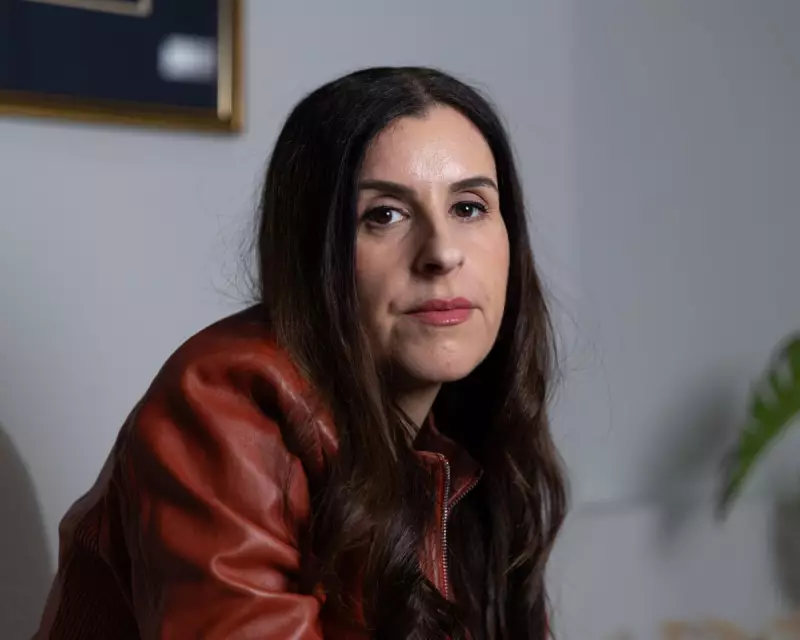
The Adelaide Festival has sparked a major controversy by removing prominent academic and author Dr Randa Abdel-Fattah from its upcoming Writers' Week programme. The board cited concerns over 'cultural sensitivity' in the wake of the Bondi terror attack, a decision the Palestinian advocate has labelled 'blatant and shameless' anti-Palestinian racism.
A Decision Based on 'Community Context'
In a statement released on Thursday, the festival's board explained that a review was undertaken following the 'tragic events at Bondi' and a 'significant heightening of both community tensions and the community debate'. While stressing they did not suggest Abdel-Fattah or her work had any connection to the attack, the board stated it had 'formed the judgment' not to proceed with her scheduled appearance next month.
'Given her past statements,' the board said, 'we have formed the view that it would not be culturally sensitive to continue to program her at this unprecedented time so soon after Bondi.' The board acknowledged the decision would cause disappointment and discomfort but asked for respect towards its staff and volunteers.

Accusations of Racism and Censorship
Dr Abdel-Fattah responded swiftly and forcefully. In her own statement, she accused the board of a 'despicable' attempt to associate her with the Bondi massacre. 'The Adelaide Writers Festival Board has stripped me of my humanity and agency, reducing me to an object onto which others can project their racist fears and smears,' she said.
She argued the reasoning implied her 'mere presence is 'culturally insensitive'' and that she, as a Palestinian, was being deemed a 'trigger' or a threat. Abdel-Fattah further criticised Australian arts institutions for showing 'utter contempt and inhumanity towards Palestinians' since the Hamas attacks of 7 October 2023, claiming 'the only Palestinians they will tolerate are silent and invisible ones.'
Widespread Fallout and Solidarity Withdrawals
The fallout was immediate. The think tank The Australia Institute withdrew its sponsorship for the 2026 event, stating that 'censoring or cancelling authors is not in the spirit of an open and free exchange of ideas.'
Several high-profile writers also pulled out in protest. Evelyn Araluen, a Stella Prize-winning poet, called the decision a 'devastating betrayal' and 'yet another absurd and irrational capitulation to the demands of a genocidal foreign state.' First Nations academic Chelsea Watego and former festival director Jo Dyer also publicly condemned the move, with Dyer calling it 'a shocking decision.'
Publisher Pink Shorts Press, which has several authors scheduled to speak, said it 'strongly condemns' the removal and is reconsidering its collaboration, calling the censorship 'completely at odds' with the festival's history.
This incident follows a similar controversy in late 2024, when Abdel-Fattah was among dozens who withdrew from the Bendigo Writers' Festival after it introduced a last-minute code of conduct. It also comes after she was cleared of any wrongdoing in late 2025 following an investigation into potential conflicts of interest and spending queries, which was launched amid criticism of her comments on Israel. The suspension on an $870,000 research grant was subsequently lifted.
The Adelaide Festival board has now formed a subcommittee to oversee its ongoing review and guide future decisions for Writers' Week, which still features over 150 writers including Palestinian poet Najwan Darwish and Greek economist Yanis Varoufakis.






