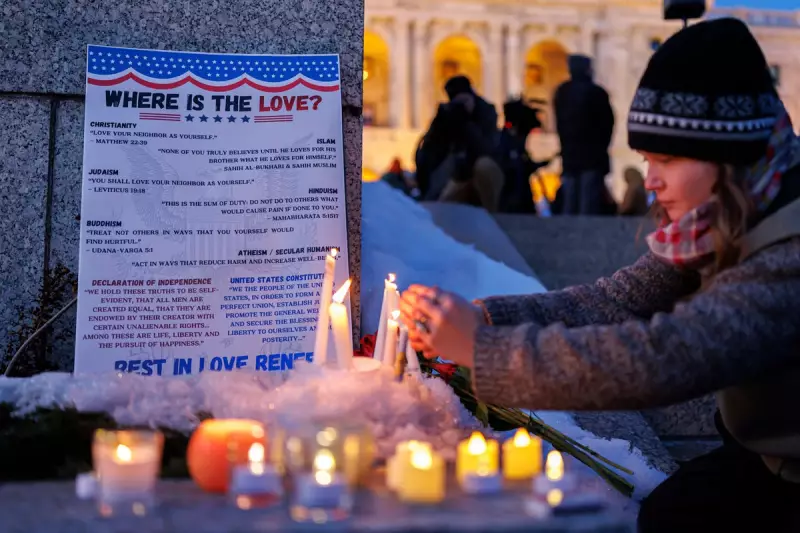
A senior Episcopal bishop in the United States has sparked a national conversation after instructing his clergy to prepare for a potential "new era of martyrdom." Bishop Rob Hirschfeld of the Episcopal Church of New Hampshire made the striking comments, urging religious leaders to get their affairs in order.
A Call to Action Amidst Tragedy
The bishop's remarks were delivered earlier this month at a vigil for Renee Good, who was fatally shot on 7 January 2026 by a US Immigration and Customs Enforcement (ICE) officer. The Trump administration has defended the officer, stating he fired in self-defence while standing in front of Good's moving vehicle.
This official explanation has been strongly criticised by several prominent figures, including Minneapolis Mayor Jacob Frey and Minnesota Governor Tim Walz, who have reviewed video evidence of the confrontation.

Historical Precedent and Present-Day Warnings
In his address, Bishop Hirschfeld invoked the legacy of historical faith leaders who sacrificed their lives. He specifically referenced Jonathan Daniels, a New Hampshire seminary student shot dead in Alabama in 1965 while protecting a young Black civil rights activist.
"I have told the clergy of the Episcopal diocese of New Hampshire that we may be entering into that same witness," Hirschfeld stated. He emphasised that the current moment may demand physical protection of the vulnerable, moving beyond mere statements. "It may be that now is no longer the time for statements, but for us with our bodies, to stand between the powers of this world and the most vulnerable," he said.
A Broader Religious Response to Immigration Policy
The bishop's warning aligns with a growing sentiment among some US religious leaders responding to intensified immigration enforcement under the Trump administration. Hirschfeld did not advocate for violence but called on Christians to confront fear, even of death. "If we truly want to live without fear, we cannot fear even death itself, my friends," he told the gathering.
This perspective finds echoes in statements from other Episcopal leaders. Presiding Bishop Sean W. Rowe recently affirmed the church's commitment to "sheltering and caring for those among us who are immigrants and refugees."
In Minnesota, Rt. Rev. Craig Loya urged a focus on love and disruptive hope in a troubled world, stating, "We are going to make like our ancient ancestors, and turn the world upside down by mobilising for love." These collective statements highlight a significant pastoral and ethical response within a segment of the American religious community to contemporary political challenges.