

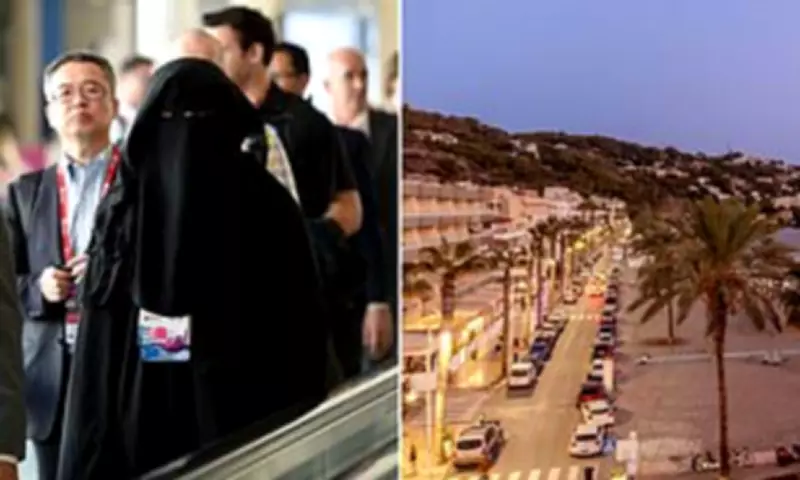
Spain's Costa del Sol Towns Enforce Burka Ban in Municipal Buildings
Two towns in the Costa del Sol region of Spain have introduced a ban on burkas within municipal buildings, sparking political debate and controversy. The towns of Rincon de la Victoria and Alhaurin el Grande have implemented the prohibition, preventing women wearing burkas from entering local government facilities.
Political Support and Opposition
The proposal was put forward by the right-wing VOX party, with politicians insisting the ban was necessary for security reasons and to guarantee women's dignity and security. In Rincon de la Victoria, the ban passed with support from the centre-right political party PP, led by mayor Francisco Salado. Deputy mayor Josefa Carnero defended her party's support, describing the burka as a symbol of female invisibility.
VOX councillor Carlos Chinchilla applauded the ban, stating that the textile dungeon of the burka and niqab will not be permitted in municipal buildings despite the opposition of the left, which embraces a false tolerance that destroys our identity and, incidentally, allows the most patriarchal symbol there is.

In Alhaurin el Grande, the ban passed after several political groups abstained, even though the town is under control of the centre-left party PSOE. This move followed the failure of a similar proposal in the provincial capital, Malaga city, where left-wing parties strongly opposed it.
Criticism and Broader Context
Critics of the ban, widely reported in Spanish media, argue that it restricts the personal freedom of Muslim women. VOX councillor Yolanda Gomez of Malaga City Council lashed out at left-wing politicians, claiming they have demonstrated they have no interest in protecting women from cultures that degrade them.
The passing of this proposal in these two towns comes after neighbouring city Murcia also voted to ban garments that cover the face in municipal buildings. The motion passed with PP support, with VOX councillor Fernando Sanchez Parra stating the garments were incompatible with women's freedom and that his party did not want women to be locked in a fabric prison.
European and Global Perspectives
The burqa is a full-body garment that covers a woman from head to foot, including a mesh screen over the eyes. France was the first European country to introduce a blanket ban on wearing burqas in public in 2011. Since then, more than 20 states worldwide have implemented some form of ban on burqas and other full-face coverings in public, including Austria, Tunisia, Turkey, Sri Lanka, and Switzerland.
The European Court of Human Rights has consistently upheld these bans, including in 2017 when it upheld Belgium's bar on burqas and full-face veils, ruling that states may restrict such garments to protect living together in society. Regions of Italy, such as Lombardy, already impose restrictions, including bans on entering public buildings and hospitals with covered faces since late 2015.
In October of last year, Portugal's parliament approved a bill to ban face veils used for gender or religious motives in most public spaces, proposed by the hard-right Chega party and effectively targeting burqas and niqabs worn by Muslim women. Under the bill, proposed fines for wearing face veils in public range between 200 euros and 4,000 euros, with forcing someone to wear one punishable by up to three years in prison. Face veils would still be allowed in airplanes, diplomatic premises, and places of worship.
Social Implications
Only a small minority of Muslim women in Europe cover their faces. However, full-face coverings such as niqabs and burqas have become a polarising issue across Europe, with some arguing they symbolise gender discrimination or represent a security threat, leading to calls for them to be outlawed. This ongoing debate highlights tensions between cultural identity, personal freedoms, and security concerns in modern societies.






