

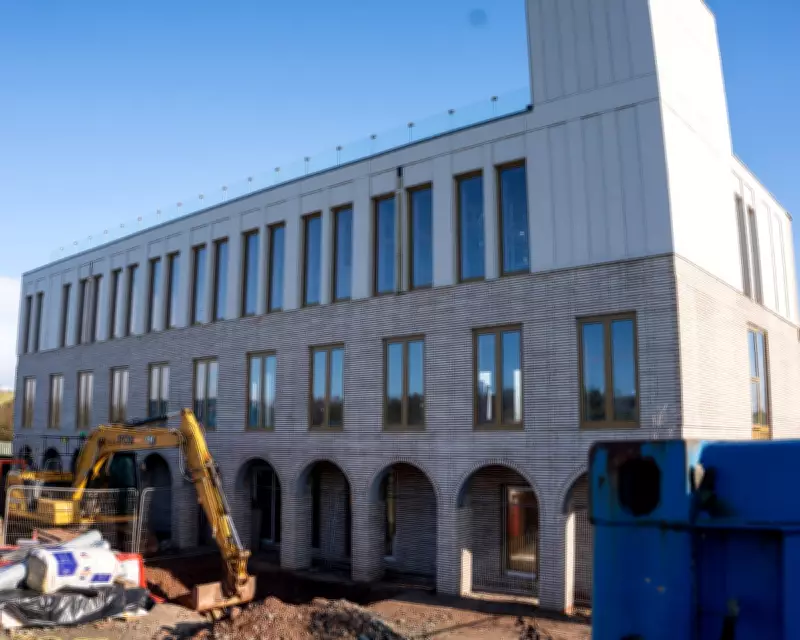
In a significant development for Cumbria's Muslim community, the partially constructed South Lakes Islamic Centre (SLIC) in Dalton-in-Furness has opened its doors early to host nightly congregational prayers throughout Ramadan. This temporary opening comes ahead of the centre's official launch scheduled for July, marking a pivotal moment for local Muslims who have historically lacked a dedicated place of worship.
A Community's Long-Awaited Sanctuary
For years, the Muslim population in Barrow-in-Furness and surrounding areas has faced considerable challenges in practicing their faith collectively. With the nearest mosque located over 50 miles away in Lancaster, community members have been forced to rent function halls for Friday prayers, navigating limited availability and incurring monthly costs of approximately £600. This arrangement proved unsustainable, leading many professionals, particularly in healthcare, to leave the area after short stints due to the absence of Islamic facilities.
Overcoming Adversity and Opposition
The journey to establish the SLIC has been fraught with obstacles, most notably from far-right groups. After Barrow council approved the planning application in 2022 for a three-storey mosque and community centre, the project gained unwanted attention when it was inaccurately labelled a "mega mosque" on GB News. This portrayal ignited protests from activists associated with Ukip and Britain First, who demonstrated at the construction site, waving flags and directing verbal abuse at workers and local businesses involved in the project.

"All of a sudden, this wave of protests started happening, and everything was in our face, all the hatred, all the harassment," recounts Aban Hussain, 40, the mosque's chair and a senior engineer who has lived in Barrow for 18 years. "They started harassing the local businesses who were working with us, harassing the labourers who were working with us, calling them traitors."
Local Support and Counter-Protests
Despite the hostility, Hussain and Dr Ghulam Jeelani, a 76-year-old retired GP who has resided in Barrow for four decades, emphasise that most protesters were not locals but outsiders. The community has rallied in support, with figures like Paul Jenkins, a 58-year-old Barrow resident and campaigner with United Against Fascism and Stand Up To Racism, organising monthly counter-protests. Jenkins notes that these solidarity events have effectively challenged the far-right's claim to represent local opinion.
"What has been really encouraging has been the response of local people who continue to oppose the racists," says Jenkins. "Our solidarity events have completely shattered that idea. Any further protests from the far-right will continue to be opposed."
Ramadan in an Unfinished Space
The decision to open the SLIC during Ramadan, even in its incomplete state, was driven by necessity. The building currently lacks fitted lights, heaters, and has exposed bricks and hanging wires, but a cleared area allows for nightly prayers. Hussain explains the urgency: "In Ramadan, we don't have any other place to go. Hence, we have to open it in a manner where it's not 100% ready, but it's still something we can use. Ramadan only comes once a year, so this is the time, even if it's a bit uncomfortable for us, to go for it."
Future Prospects and Community Impact
Looking ahead, the SLIC team is focused on the official opening in July, which will include plans for inter-faith events and school visits to foster greater community integration. Fundraising efforts continue for the £2.5 million required to complete the centre, serving a Muslim population that constitutes only 0.4% of Barrow and Dalton's residents. Dr Jeelani expresses profound relief and optimism: "This is a great achievement. This year, we won't hire the community centre. We will start prayers in our new mosque. I cannot express how much we feel about this."
The early opening for Ramadan not only provides a temporary solution but also symbolises resilience against adversity, offering hope for a more inclusive future in Cumbria.






