

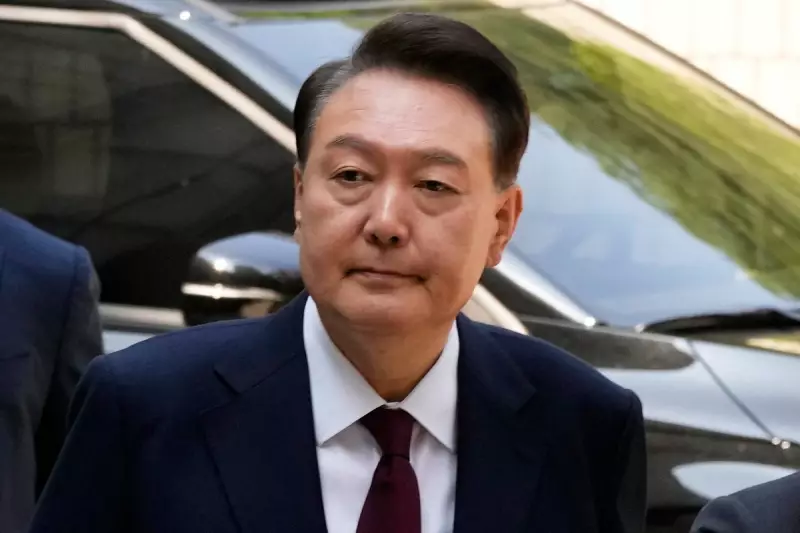
In a dramatic legal development, an independent counsel in South Korea has formally requested a death sentence for former President Yoon Suk Yeol. The demand relates to charges of rebellion connected to his controversial imposition of martial law in December 2024.
The Court Hearing and Charges
The Seoul Central District Court confirmed that independent counsel Cho Eun-suk's team made the extraordinary request during a hearing on Tuesday, 13 January 2026. Yoon, who was removed from office in April last year, was present and expected to address the court.
The most serious allegations against the former leader are that he directed a rebellion. This stems from his short-lived decree, which marked the first use of martial law in South Korea for over four decades. Yoon also faces separate criminal trials linked to other scandals from his time in power.

A Nation Plunged into Turmoil
Yoon has defended his actions, claiming the decree was a desperate but peaceful attempt to highlight what he saw as the dangers posed by the liberal opposition Democratic Party. He accused the opposition-controlled parliament of being "a den of criminals" and "anti-state forces," arguing they used their legislative majority to obstruct his agenda.
However, the reality on the ground was starkly different. The decree authorised armed troops to deploy on Seoul's streets, encircling the National Assembly and entering election offices. This move evoked traumatic memories of the country's military dictatorships in the 1970s and 1980s, when soldiers and tanks were used to suppress democracy protests.
In dramatic overnight scenes, lawmakers—including members of Yoon's own party—rushed to the assembly hall to vote down the decree, creating a profound power vacuum.
Lasting Consequences and Awaiting Verdict
The political and economic fallout from the crisis was severe. South Korea was plunged into deep political turmoil, its high-level diplomacy ground to a halt, and financial markets were severely rattled. Yoon's earlier vows to fight impeachment and arrest attempts further polarised the nation.
His detention in January 2025 made him the country's first sitting president to be held in custody. The Seoul Central District Court is now expected to deliver its verdict on the rebellion and other charges in February 2026, deciding the fate of the former head of state.






