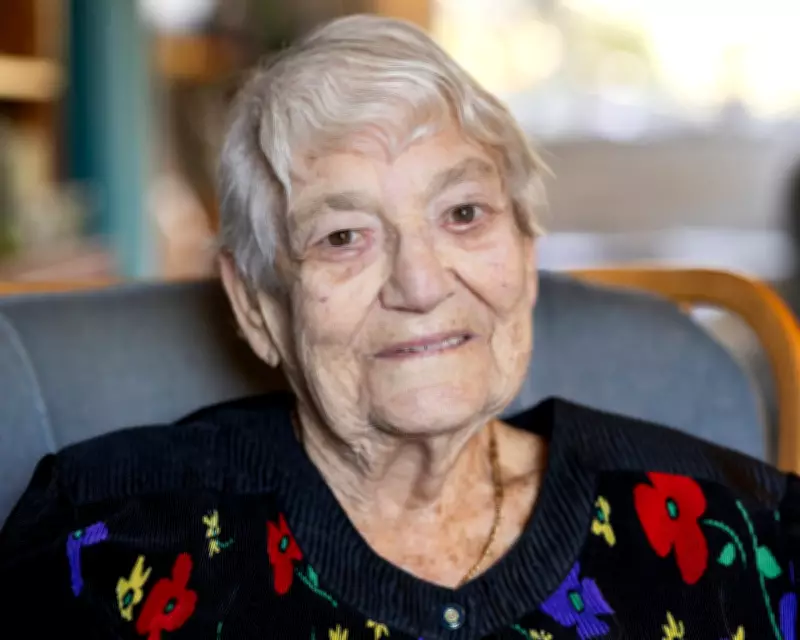
Diane Munday: The Abortion Act Pioneer Who Fought for Women's Rights
Diane Munday, the pioneering abortion campaigner whose tireless efforts were instrumental in securing the landmark Abortion Act 1967, has died at the age of 94. Her lifelong commitment to women's reproductive rights was profoundly shaped by her own harrowing experience and underpinned by her deep-seated humanist beliefs.
A Personal Catalyst for Change
In 1961, Munday found herself pregnant for the fourth time while already caring for three young sons under five. She was resolute in her decision, stating firmly: "Nothing, nobody could have made me have another child." Fortunately, she was able to secure a legal abortion by paying £90 to a Harley Street psychiatrist who argued her mental health would suffer—a considerable sum at the time and an option only available to those with means and knowledge of how to navigate the system.
Reflecting on her own procedure, Munday later recounted: "I woke up thinking of the women who had died, and it was because I had a cheque book to wave in Harley Street that I was alive. I thought I'm going to do what I can for women." This stark realisation of inequality became the driving force behind her decades of activism.

The Fight for the 1967 Abortion Act
Munday's campaign began in earnest when she discovered the dangerous reality faced by ordinary women. She was horrified by the death of a young local dressmaker following a backstreet abortion and learned from colleagues at Barts Hospital in London how common such tragedies were. The hospital would routinely reserve beds on Friday nights, anticipating several women arriving severely haemorrhaging from so-called "miscarriages."
In 1962, she became vice-chair of the Abortion Law Reform Association (ALRA), working alongside activists like Madeleine Simms and Vera Houghton. When Harold Wilson's new government in 1964 claimed there was no public demand for legalised abortion, ALRA set out to prove them wrong.
Munday pioneered a bold approach, writing to women's groups and community organisations offering to give a talk titled "Women's rights in the 20th century." Arriving conservatively dressed in hat and gloves, she would then break a major taboo by openly discussing her own abortion and the urgent need for legal reform. Her talks opened floodgates of shared experience, with women queuing to speak to her during breaks about their own stories.
A Landmark Compromise and Continued Struggle
When the Abortion Act finally became law on 27 October 1967, Munday recognised it as only a partial victory. The legislation applied only to Great Britain, excluding Northern Ireland, and required two doctors to authorise the procedure rather than granting women complete autonomy.
Speaking of that historic night, she recalled: "The act was a compromise. Only when women had the power to decide for themselves would our task be fully done. At 3am we were sitting on the terrace drinking champagne. And I remember saying that it's too soon to celebrate. We have done only half the job, so let's drink half glasses of champagne."
To her critics, she offered a powerful defence: "Abortion is not a negation of the maternal instinct. It's an extension of it, which comes into force when a woman knows she cannot cope with a child and give it the love and care that should be every human person's birthright."
A Life of Activism and Public Service
Following the act's passage, Munday helped establish the Birmingham Pregnancy Advisory Service in 1968, which later became the British Pregnancy Advisory Service (BPAS). She served as its parliamentary, press and public relations director, estimating she had spoken publicly over 1,000 times since 1962 by the time she stepped down in 1990.
Her commitment to justice extended beyond reproductive rights. In 1969 she became a magistrate, serving as chair of the family panel in Hertfordshire until 2001. As a diabetic, she chaired the St Albans diabetes support group from 1988 to 2007, helping others manage their condition. She even campaigned for a secular school in Wheathampstead after her son was called a "pagan" at the local Church of England school.

Munday cared for her elderly parents and her husband Derek after his stroke in 1984, while continuing to advocate for causes she believed in, including assisted dying. She gave her final interview to the Guardian just days before her death.
Early Life and Lasting Legacy
Born Diane Schieferstein in London in 1931 to a Jewish mother and German-named father who drove a bus, she experienced a tough working-class upbringing in the East End. Attending East Ham Grammar School, she faced anti-Semitic abuse and learned early to stand up for herself against Oswald Mosley's blackshirts who patrolled the streets.
After school, she worked as a research assistant at Barts Hospital while studying biochemistry at Birkbeck College in the evenings. She met her husband Derek on a cycling holiday in post-war Europe; they married in 1954 and had three sons.
A longstanding patron of Humanists UK, Munday's activism was fundamentally rooted in humanism and justice-seeking. She endured considerable personal abuse for her work—from her local shop refusing to serve her to finding her car daubed with red paint symbolising "murdered babies' blood" and receiving threatening phone calls featuring a crying baby and the words: "Mama, you murdered me."
Diane Munday is survived by her sons Jeremy, Simon and Nicholas, and her four grandsons. Her legacy as a pioneering campaigner who changed British law and advanced women's rights will endure, even as she herself recognised the work she began remains unfinished.