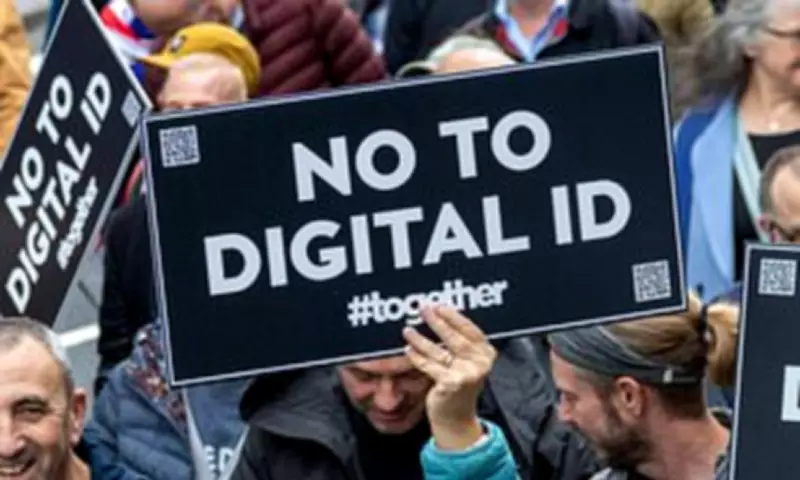
Labour's Digital ID Scheme Raises Police Database Fears
Privacy campaigners have expressed alarm that Keir Starmer's proposed digital ID card system could be transformed into a nationwide facial recognition database accessible to police forces. The concern stems from a specific clause included in Labour's ongoing digital ID consultation, which appears to permit law enforcement access to biometric facial images collected by the government.
Biometric Data and Police Access Provisions
The government announced this week that the digital ID cards will contain "a current, high-resolution biometric facial image that meets specified requirements." Documents published by the Cabinet Office explicitly state that "there is a legal basis for police use of facial recognition, which may include access to biometric data held by government."
These documents further clarify that under the government's proposals, the digital ID system would be subject to existing and any future legal frameworks "for using facial recognition in law enforcement." This language has sparked significant concern among civil liberties advocates who fear the creation of what amounts to a compulsory population-wide identification database.

Civil Liberties Campaigners Voice Opposition
Jasleen Chaggar, representing the civil liberties organization Big Brother Watch, issued a stark warning: "Snuck into the consultation is an admission that the police would be allowed to repurpose our digital ID photos as mugshots to create a population-wide facial recognition database."
Chaggar elaborated on public skepticism, stating: "It is for precisely this reason that the public is rightly sceptical of a sprawling ID system that has been sold to us under various guises - whether to 'stop the boats' or improve public services - but which invariably hands more power and more of our personal information to the state, at our expense."
The campaigner called for the entire scheme to be abandoned, citing "public backlash, high costs, serious data risks and likelihood that this could become a mandatory scheme in practice." She concluded: "The government should drop this digital ID disaster altogether."
Government's Proposed Implementation Timeline
On Tuesday, Labour unveiled its prototype digital ID system as part of its broader "Government by app" initiative. The digital ID will initially be deployed for conducting digital right-to-work checks, but ministers envision significant expansion to include services such as childcare administration, tax and national insurance management, marriage registration, benefit claims, and even municipal services like waste collection notifications.
The government has launched an eight-week public consultation followed by a "people's panel" to gather feedback on the controversial digital ID plans. The consultation period is scheduled to conclude in June, after which ministers intend to introduce legislation before Parliament. The digital ID app is expected to be operational by the end of the current parliamentary term.
Government Reassurances and Ministerial Statements
Ministers have repeatedly emphasized that digital IDs will not be mandatory. When the legislation is presented to Parliament, officials have promised that "it will say this on the face of the Bill."
Darren Jones, the Chief Secretary to the Prime Minister who oversees the project, sought to allay concerns during a press conference: "The digital ID system that we're building is not a mandatory ID that you need to have available to show to the police or anybody else. If you wish to use it, you can, but you don't have to if you do want to."
Jones specifically addressed law enforcement concerns, stating: "So any concerns the public have about how this interfaces with law enforcement, please be reassured that's not what this is about. This is about making customer services easier to access and use across government."
Despite these reassurances, privacy advocates remain unconvinced, pointing to the explicit language in consultation documents that appears to create a pathway for police access to the biometric facial recognition data collected through the digital ID system.