Dunblane Families Warn Gun Laws 'At Risk' 30 Years After Massacre
Three decades after Britain's deadliest mass shooting, the families of Dunblane victims are issuing a stark warning that the nation's hard-won gun control legislation is now "at risk" from emerging technologies and shifting cultural attitudes.
A Scene From Hell That Changed Britain
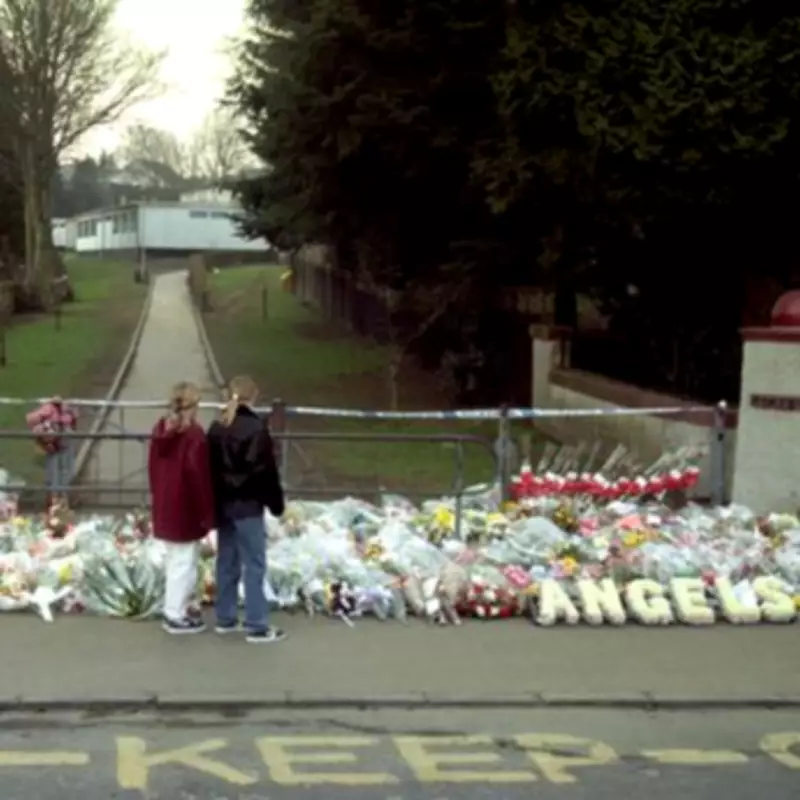
On March 13, 1996, a gunman armed with four legally-owned handguns and 743 bullets entered Dunblane Primary School in Scotland. He proceeded to the gymnasium where Gwen Mayor's primary one class of five-year-olds was about to begin their PE lesson.
In less than four minutes, 16 children and their teacher were shot dead, with 15 others injured. The attacker targeted adults first before turning his weapons on the children, firing continuously as they tried to crawl away.

Eileen Harrild, the PE teacher present that morning, recalled in a recent documentary: "I was aware of the gym door being banged open and a man came in, dressed in combat gear with earmuffs on, and immediately started to shoot. The shooting was continuous and rapid, and he had intent in his eyes."
Michael Forsyth, then Secretary of State for Scotland who attended the scene, described it tearfully as "a scene from hell."
The Snowdrop Campaign and Legislative Victory
In response to the atrocity, grieving parents from the Dunblane area launched The Snowdrop Petition campaign, gathering more than 700,000 signatures backing a ban on private handgun ownership.
Ellie Crozier, whose five-year-old sister Emma was murdered that day, explained: "My parents went through one of the most traumatic events a parent can go through and used their grief to make our corner of the planet safer."
Their efforts led to landmark legislation. In 1997, John Major's Conservative government introduced a ban on most handguns, which Tony Blair's Labour government later expanded to include all cartridge ammunition handguns.
The House of Commons recently commended "the extraordinary courage, dignity and determination shown by the parents and families of Dunblane in the face of unimaginable loss" and their campaign that created "some of the strongest gun laws in the world."
New Threats to Hard-Won Protections
Now, thirty years later, campaigners warn these protections are vulnerable. Ellie Crozier emphasizes that while UK gun laws remain strict, they face unprecedented challenges:
- 3D-printed firearms that circumvent traditional regulations
- American-style shooting ranges appearing in Scottish gun clubs
- Changing attitudes toward guns in video games and popular culture
- Political pressure to relax firearms legislation
"Our laws are strict, but they are not perfect, and they are also at risk," Crozier warns. "Whenever we allow easier access to guns, we create loopholes that allow these dangerous weapons to fall into the wrong hands. The cost is too high."
Institutional Complacency and Evolving Threats
Mick North, whose five-year-old daughter Sophie was killed in the gymnasium, was among those who campaigned successfully for the handgun ban. He now argues that government ministers need to be "more proactive" in identifying emerging dangers as firearm threats evolve.
"The whole of firearms legislation needs to be reviewed," North insists, pointing to 3D-printed guns and converted replica firearms as examples of how laws have developed in a "piecemeal" fashion.
Gill Marshall-Andrews, chair of the Gun Control Network, warns of "institutional complacency" around gun regulation. She notes that campaigners faced death threats and bomb scares from the pro-gun lobby during their original campaign.
"Gun laws have got to be kept up to date," Marshall-Andrews states. "They've got to reflect current reality. There are new kinds of guns. There's a huge gun lobby that's ready and waiting to roll back the legislation. You can't be complacent."

Could It Happen Again?
John Pritchard, an ambulance technician who responded to the Dunblane scene, expresses grave concerns: "We see it with these schools in America, we've seen it across the world where incidents still sporadically pop up. If we don't learn from our past, then we can't go on, it just could easily happen again."
Pritchard, previously a medic in the RAF, described the scene as "eerily calm" with medical personnel exhibiting what he called "shellshock" at the unprecedented violence.
For Rachael Irvine, whose five-year-old brother Ross was killed, the loss remains "a wound that's there forever." She reflects: "In many ways, it's defined Dunblane. I imagine because no-one ever thought that something like that would happen there. But of course, it can happen anywhere."
Looking Forward While Remembering
Ellie Crozier emphasizes the importance of continued remembrance: "This is why it's important we talk about Dunblane, we cannot let people forget." She notes that many current Dunblane residents were too young to remember or weren't born when the tragedy occurred.
The Home Office maintains that "firearms offences are at the lowest level since 2003" and that the government "continues to keep firearms controls under constant review" to address emerging threats including 3D-printed firearms.
But for those who lost loved ones thirty years ago, vigilance remains essential. As Crozier concludes: "There is a notion, even from various politicians, that our laws should be relaxed. This cannot happen, under any circumstances."
The sixteen children and their teacher who died were: Victoria Clydesdale, Emma Crozier, Melissa Currie, Charlotte Dunn, Kevin Hasell, Ross Irvine, David Kerr, Mhairi MacBeath, Brett McKinnon, Abigail McLennan, Emily Morton, Sophie North, John Petrie, Joanna Ross, Hannah Scott, Megan Turner, and teacher Gwen Mayor.