

Republican Senator Rebukes FCC Chairman's Threat to Revoke Broadcast Licenses Over Iran War Coverage
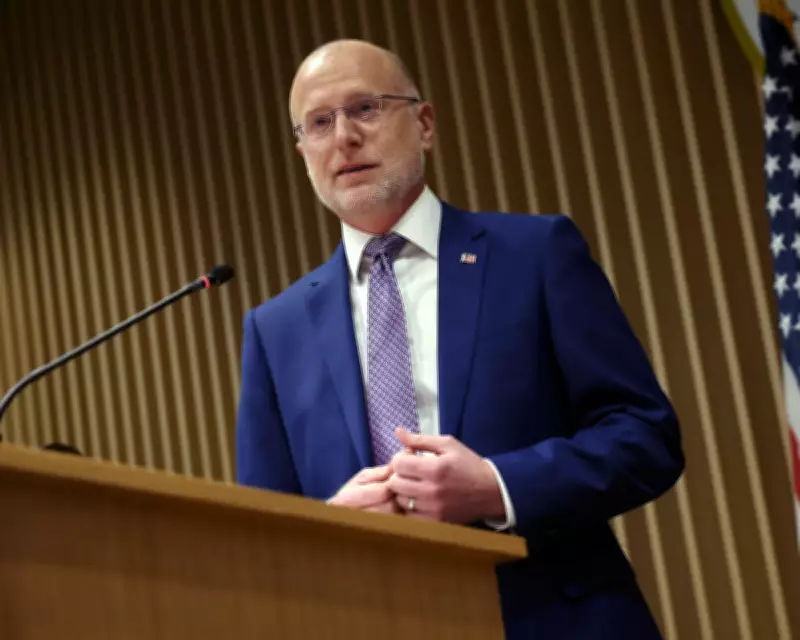
Federal Communications Commission (FCC) Chairman Brendan Carr is facing significant pushback from Republican lawmaker Senator Ron Johnson after issuing a stark warning that broadcasters could lose their licenses if they disseminate what the agency deems "fake news" regarding the Iran conflict. The controversy erupted over the weekend, highlighting deep divisions over government intervention in media.
Senator Johnson's Strong Defence of Free Speech
In a pointed interview on Fox News's Sunday Briefing, Senator Johnson of Wisconsin firmly rejected Carr's approach, emphasising his unwavering support for constitutional protections. "I'm in big support of the first amendment," Johnson declared. "I do not like the heavy hand of government, no matter who's wielding it. So no, I would rather the federal government stay out of the private sector as much as possible."
Johnson elaborated further, stating, "The federal government's role is to protect our freedoms, protect our constitutional rights." His comments underscore a growing concern among some Republicans about potential overreach by regulatory bodies, even as the FCC chair is a Trump appointee.

Carr's Controversial Stance and Subsequent Justification
Brendan Carr, appointed to the FCC during the Trump administration, sparked the debate with a post on social media platform X on Saturday. He wrote, "Broadcasters that are running hoaxes and news distortions – also known as the fake news – have a chance now to correct course before their license renewals come up. The law is clear. Broadcasters must operate in the public interest, and they will lose their licenses if they do not."
Later, in an interview with CBS News, Carr doubled down on his position, arguing that broadcast licenses are not an inviolable property right. "People have gotten used to the idea that, you know, licenses are some sort of property right, and there's nothing you can do that can result in losing their license," Carr said. "I try to sort of help reorient people that, no, there is a public interest, and broadcast is different."
He clarified that broadcasters should feel free to report, provided they avoid what he termed "news distortion."
Democratic Criticism and Constitutional Concerns
Democrats have been equally vocal in their condemnation of Carr's threats. Senator Elizabeth Warren of Massachusetts labelled the move as "illegal" and authoritarian. "It's illegal for the government to censor free speech it just doesn't like about Trump's Iran war. This threat is straight out of the authoritarian playbook," Warren asserted.
Senator Chris Murphy of Connecticut echoed these sentiments, calling it "a truly extraordinary moment" and warning, "We aren't on the verge of a totalitarian takeover. WE ARE IN THE MIDDLE OF IT. Act like it." California Governor Gavin Newsom added that the threat was "flagrantly unconstitutional."
FCC's Diminished Power and Internal Dissent
The FCC's authority has waned in recent years as traditional over-the-air broadcasting has been eclipsed by cable, satellite, and online platforms, which the commission has limited control over. However, it retains significant power in regulating media acquisitions and mergers, such as the recent Paramount Skydance and Warner Bros. Discovery deal.
Within the FCC itself, Democratic commissioner Anna Gomez has publicly challenged Carr's stance. "The FCC can issue threats all day long, but it is powerless to carry them out," Gomez stated in a post. She warned that "such threats violate the First Amendment and will go nowhere," urging broadcasters to "continue covering the news, fiercely and independently, without fear of government pressure."
This unfolding dispute highlights the delicate balance between regulatory oversight and free speech protections in an increasingly polarised media landscape, with implications for how conflicts like the Iran war are reported and scrutinised.






