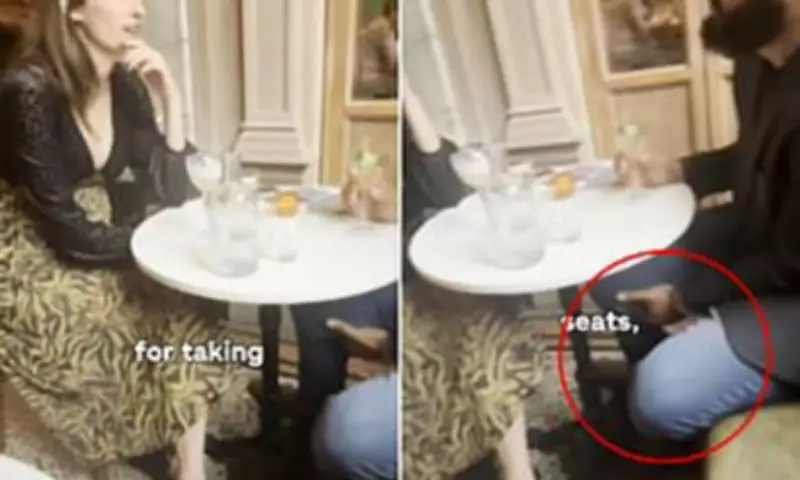
Restaurant Seating Etiquette Ignites Heated Gender Debate
A significant social media debate has erupted over traditional dining etiquette, specifically focusing on whether men or women should take the comfortable booth seat versus a hard chair when dining at cafes and restaurants. This discussion has revealed deep divisions between traditional chivalry and modern egalitarian perspectives.
Traditional Etiquette Versus Modern Perspectives
According to established etiquette guidelines, women should traditionally be offered the most comfortable seating option, typically the booth facing the room or any available view. However, many contemporary diners challenge this convention, with one man declaring: 'If I'm paying, I'm sitting on the good seat.' Another countered: 'Only a real man would take the wooden seat.'
Australian etiquette consultant Jo Hayes strongly advocates for traditional practices, stating: 'The man should absolutely offer the lady the "best seat"... which is usually the booth seat.' She elaborated that this gesture represents a chivalrous demonstration of courtesy and respect that should extend to all women, including mothers, sisters, colleagues, and romantic interests.

Security Concerns and Personal Preferences
Interestingly, some diners prioritize security over comfort, with one man noting: 'A boss doesn't keep his back to the room and potential danger, but the woman should have the more comfortable seat.' This perspective suggests men should position themselves to monitor entrances and potential threats, a view echoed by several participants who referenced protective instincts.
However, many dismiss such security concerns as exaggerated. One man questioned: 'To the people talking about sitting with their backs to the wall to face threats - what kind of restaurants are you guys going to?'
Personal preferences also play a significant role, with one woman sharing: 'I prefer the wooden chair. More comfortable for someone with back issues.' Another added: 'I always have my boyfriend face the room because I have too much social anxiety to make eye contact with the waiters.'
Etiquette Expert's Red Flag Warnings
Jo Hayes suggests that a man who automatically takes the booth seat without offering it to his companion could potentially display concerning behavior. 'It could certainly be a sign that he's generally a bit thoughtless and self-focused,' she explained. However, she cautions against immediate judgment, noting that some men might simply be unaware of this particular etiquette nuance.
The expert recommends a gentle approach for women uncertain about their date's intentions: 'Hey, would you mind if I had the booth seat?' This question subtly indicates seating preference while allowing the man to demonstrate consideration through his response.
Balancing Tradition with Modern Relationships
Many participants advocate for a more flexible approach. One woman summarized this perspective: 'In my experience, most people prefer the wall seat. So I think if you're making an effort to be polite, it's nice to offer that to whomever you're dining with, regardless of gender.'
Hayes acknowledges that traditional etiquette must adapt to contemporary relationships, stating that ultimately 'what the lady wants, the lady gets' within reasonable boundaries. She emphasizes that a 'good woman' would never exploit this courtesy through entitled behavior, which could alienate potential partners.
Ongoing Social Discussion
The seating debate continues across social platforms, with one man recently asking: 'Is there any etiquette on which partner should have their back to the wall and which should have their back to the restaurant?' His practical approach involves offering his partner the wall seat primarily for comfort and convenience with personal belongings.
As dining norms evolve, this discussion highlights broader questions about gender roles, courtesy, and personal preference in social settings. Whether viewed as outdated tradition or respectful consideration, restaurant seating etiquette remains a surprisingly contentious topic in contemporary social discourse.