Guantanamo Bay's Dark Legacy and Its Impact on American Democracy
In a profound examination of recent history, human rights lawyer Eric Lewis delves into the enduring consequences of Guantanamo Bay in his new book. He argues that the facility, established in the wake of 9/11, not only violated fundamental legal principles but also set a dangerous precedent for authoritarian governance in the United States.
The Foundation of Lawlessness
The Bush administration deliberately chose Guantanamo Bay as a detention site, believing it existed beyond the reach of American law. This allowed for secretive operations marked by extreme cruelty and a lack of accountability, all justified under the vague banner of national security. Politicians leveraged this to craft a narrative of victory in the global war on terror, despite early evidence suggesting most detainees were innocent.
Senior naval officials quickly realised that many of the hundreds of men rounded up were not terrorists but rather individuals turned in for bounties or caught in the chaos. However, the Pentagon ignored these reports, preferring to maintain the illusion of capturing the "worst of the worst" to reassure a fearful public.

Systematic Torture and Its Aftermath
Detainees faced horrific abuses, including waterboarding, prolonged sleep deprivation, and confinement in coffin-sized spaces. The so-called "frequent flyer program" involved moving prisoners between cells constantly to prevent rest. These methods, authorised under an official program, often spilled over into unofficial cruelty, even targeting minors.
Lawyers played a key role in enabling this system, advising that torturers were immune from prosecution and that torture laws did not apply to foreigners outside U.S. territory. Despite calls for accountability, such as from human rights lawyer Philippe Sands, no officials faced charges, with many advancing in their careers.
Indefinite Detention and Its Persistence
Unlike the Japanese internment during World War II, which had a clear endpoint, Guantanamo introduced indefinite detention without trial as a permanent feature. Today, 15 men remain, with only a few charged or convicted, and many cleared for release but still held. Of the 780 detainees over the years, 765 were never charged with any crime, highlighting a system indifferent to evidence.
Defense Department tribunals were farcical, often relying on coerced confessions and misinformation. Detainees lacked proper legal representation, and facts were routinely ignored, leading to cases where individuals were accused of impossible crimes, such as fighting with infant sons or being part of non-existent London cells.
Cultural and Human Rights Abuses
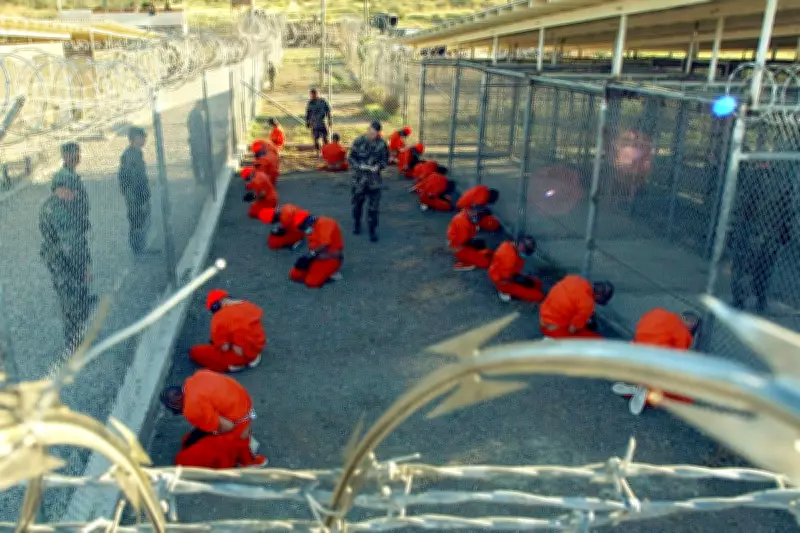
Islamophobia was rampant, with Qurans desecrated and detainees subjected to religious taunts. Conditions in camps like X-Ray were deplorable, with prisoners kept in open-air cages, exposed to wildlife like snakes and large iguanas, which ironically received more protection than the human inmates. Children as young as 13 were among those detained, echoing current controversies over migrant detentions.
A Harbinger of Modern Autocracy
Guantanamo Bay normalised torture and executive overreach, creating a blueprint for authoritarian practices that resonate in today's political climate. The executive branch accumulated unchecked power, detaining and releasing individuals at will without judicial oversight. This legacy, as Lewis contends, has lit a fuse for ongoing challenges to democratic norms in America, influencing policies under figures like Donald Trump.
Eric Lewis's book, "Leaving Guantanamo: How One Country Brought Home Its Men from the Forever Prison," published by Cambridge University Press, serves as a critical reminder of these lessons, urging reflection on the moral and legal failures that continue to shape the nation's path.