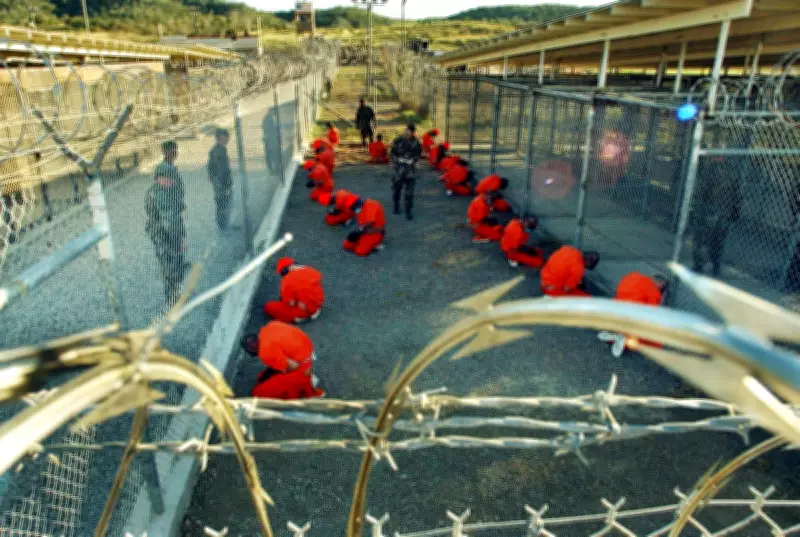
The Shocking Reality of Guantanamo Bay: Innocents Swept Up in Post-9/11 Panic
In the immediate aftermath of the September 11 attacks, the United States launched a sweeping operation that led to the detention of hundreds of men at Guantanamo Bay, Cuba. As detailed in a new book extract by human rights lawyer Eric Lewis, most of these individuals were not terrorists at all, yet a system was built that could not admit its own catastrophic failures.
A Hasty and Flawed Capture Process
The US invasion of Afghanistan in October 2001, aimed at hunting down Osama bin Laden, quickly devolved into a chaotic bounty program. The US government distributed leaflets offering substantial rewards for the capture of al-Qaeda and Taliban suspects, leading locals to hand over men—often of Arab descent—for payments equivalent to two years' earnings in the impoverished border region. Secretary of Defense Donald Rumsfeld famously described the leaflets falling "like snowflakes in December in Chicago." This resulted in the US accepting detainees without proper scrutiny, driven by a desperate need to show progress in the Global War on Terror.
Early Warnings Ignored by Officials
Internal assessments soon revealed the grim truth. Within weeks, senior military officers admitted that many detainees were not dangerous terrorists. A Marine intelligence officer concluded that a large group "had nothing of substance to offer and should not have been there at all," while an Army officer noted by spring 2002 that "we're not getting anything because there might not be anything to get." Colonel Lawrence Wilkerson, Chief of Staff to Secretary of State Colin Powell, later stated in a court declaration that many prisoners were taken without regard to whether they were truly enemy combatants, victims of "incompetent battlefield vetting."

The Role of Bureaucratic Fear and Inertia
Despite these early realizations, bureaucratic fear and indifference kept innocent men detained. Major General Jay Hood, a former Guantanamo commander, conceded that "sometimes we just didn't get the right folks," but releases were stalled because "nobody wants to be the one who signs the papers." Deputy commander Brigadier General Marin Lucenti added that many detainees "weren't fighting, they were running." This inertia allowed torture and abuse to continue, approved at high levels, including by Rumsfeld and other top officials, even though it yielded little actionable intelligence and damaged US moral authority.
The Human Cost: Traders, Teachers, and Aid Workers
Many detainees were simply in Afghanistan or Pakistan for charitable work, trade, or study, following long-standing traditions in the Gulf region. They had no connection to terrorism or 9/11, yet were swept up in the dragnet. The US refused to accept that these men were often humanitarian workers or civilians fleeing conflict, not enemy combatants. This disregard for their lives, compounded by cultural and religious differences, led to years of unjust imprisonment and abuse.
Legal Black Hole and Erosion of Rule of Law
Guantanamo was deliberately chosen as a "legal black hole," where detainees could be held without due process. President Bush declared that the Geneva Conventions did not apply, a unprecedented move that White House Counsel Alberto Gonzales justified by calling the war on terrorism a "new paradigm" that rendered Geneva's protections "obsolete" and "quaint." This erosion of legal standards, as Vice President Cheney suggested, meant the US could "take off the gloves," leading to widespread torture and human rights violations.
The book, Leaving Guantanamo: How One Country Brought Home Its Men from the Forever Prison, published by Cambridge University Press, exposes how this system, built on false premises, persists as a dark chapter in American history, highlighting the urgent need for accountability and reform.