Iran Faces Allegations of Secret Executions and Brutal Crackdown
Human rights organisations have issued stark warnings that the Iranian regime is conducting secret extrajudicial executions and administering lethal injections to detainees in the aftermath of its severe suppression of anti-government unrest. This alarming development coincides with security forces arresting at least four senior reformist politicians on suspicion of conspiring to overthrow the Islamic system, occurring during a period of heightened tensions with the United States.
Mounting Death Toll and Arrests
Since protests ignited in late December, the US-based Human Rights Activists News Agency (HRANA) has verified 6,961 fatalities, predominantly demonstrators, with an additional 11,630 cases currently under investigation. The agency has also documented more than 51,000 arrests. A comprehensive internet blackout has severely hampered efforts to ascertain the full scale of casualties, with Iranian medical professionals suggesting the actual death count could surpass 30,000 individuals.
Televised Confessions and Psychological Torture
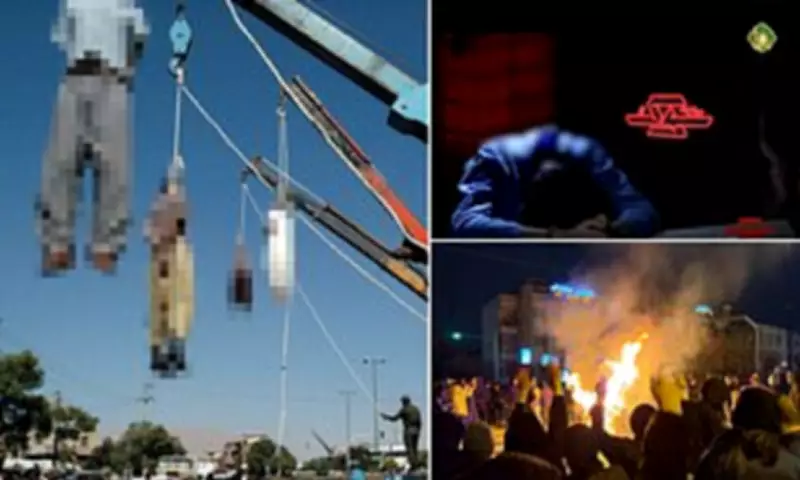
In recent weeks, Iranian state television has broadcast hundreds of coerced 'confessions', where detainees are accused of moharebeh – waging war against God – and subsequently sentenced to death. Prisoners are forcibly removed from their cells and placed under intense studio lights for these televised interrogations, a tactic designed to instil widespread fear that hundreds, if not thousands, could face execution by hanging.

According to Arina Moradi of the Hengaw Organisation for Human Rights, detainees are also subjected to 'mock' executions within prisons as a method of psychological torture and humiliation. Complementing these reports, Norway-based Iran Human Rights is investigating several credible accounts indicating demonstrators have been 'secretly executed in several prisons' across the nation since the onset of nationwide riots.
Individual Cases Highlight Regime Brutality
The case of 18-year-old Shervin Bagherian exemplifies this brutality. Appearing in a televised confession wearing a bright blue prison uniform and silver handcuffs, he was accused of inciting crowds against paramilitaries and desecrating the bodies of deceased security officials. An interrogator demanded to know 'how many families you have ruined, how many children you have orphaned,' causing Bagherian to slump forward in desperation. Despite begging for his life, he was condemned to execution.
By late December, as protests gained momentum, the regime had already executed more than 2,200 individuals across 91 cities, according to the National Council of Resistance of Iran (NCRI). This figure represents the highest in decades, marking an unprecedented peak in brutality during Supreme Leader Ayatollah Ali Khamenei's 36-year rule.
Allegations of Abuse and Mysterious Deaths
Detainees from the recent crackdown have alleged severe abuse in custody, including forced nudity, exposure to freezing conditions, and 'injections with substances of unknown composition,' as reported by Iran International, citing a source close to a prisoner. The case of Samira Parvareshkhah, arrested on January 9 in Rasht and released two days later with 'extensive bruising,' ended tragically when she died en route to hospital after developing severe nausea. No official explanation has been provided for her death, echoing authorities' past dismissals of similar mysterious fatalities during the 2022 'Woman, Life, Freedom' protests as overdoses or suicides.
Crackdown on Reformists and International Context
The arrest of key reformist figures, including Azar Mansouri, head of Iran’s Reformists Front and former adviser to President Mohammad Khatami, signals a deepening crackdown. Ebrahim Asgharzadeh, Mohsen Aminzadeh, and spokesperson Javad Emam were also detained. The state-affiliated Fars news agency accused them of 'targeting national solidarity,' opposing the constitution, and colluding with enemy propaganda.

These domestic actions unfold against a complex international backdrop. While US President Donald Trump claimed his intervention prevented over 800 scheduled executions and warned of 'grave consequences,' Iranian judiciary chief Gholamhossein Mohseni-Ejei promised 'swift action' and harsh punishments for protesters. Recent US-Iran talks in Oman, described as positive, focused on nuclear programmes but showed no immediate indication of addressing the protest crackdown, with Iranian authorities appearing to tighten their grip internally.
Sentencing of Activists and Official Figures
In a further escalation, Iranian Nobel Peace Prize winner Narges Mohammadi was sentenced to six years for harming national security, plus an additional eighteen months for 'propaganda' against the Islamic system, totalling 17 more years behind bars and 154 lashes. Several prominent activists, including filmmaker Mehdi Mahmoudian, have also been arrested for criticising authorities post-January crackdown.
Iranian authorities have acknowledged 3,117 protest-related deaths, releasing a list of 2,986 names, most labelled as security forces or innocent bystanders. However, with Supreme Leader Khamenei urging national 'resolve' against foreign pressure and the regime intensifying repression, the human rights situation remains critically dire, characterised by secret executions, televised confessions, and a relentless assault on dissent.