

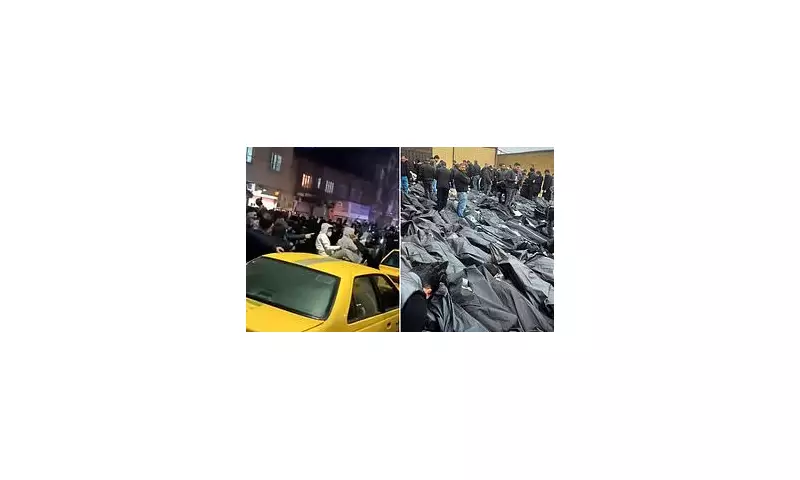
Undercover agents from Iran's Islamic Revolutionary Guard Corps (IRGC) are posing as ordinary civilians to lure anti-government protesters into pre-arranged 'killing zones' where they are shot dead, a demonstrator has revealed.
A Strategy of Infiltration and Terror
As the regime intensifies its brutal suppression of nationwide unrest, protesters report that plainclothes IRGC operatives have successfully infiltrated demonstration groups. These agents pretend to offer help and guidance, only to shepherd unsuspecting individuals into specific locations where security forces lie in wait to open fire with lethal force.
A protester from Tehran described the tactic to the Times, stating: 'They come dressed as civilians and say: "Let's help." But later it becomes clear they are IRGC. They encourage people to go to certain places that are actually killing zones, and then they shoot everyone there.' The demonstrator added that the objective is to sow fear and destroy trust among those opposing the government.

Mounting Death Toll and Hospital Control
The official Iranian death toll has surged to approximately 2,000, a dramatic increase signalling the regime's determination to crush all dissent. However, protesters and medical personnel insist the real figure is far greater, with most victims believed to be young people shot at close range.
Two sources within Iran claim the IRGC now effectively 'controls' hospitals, turning sanctuaries of healing into traps. Witnesses state that wounded protesters seeking medical treatment are arrested after being stabilised and taken away. Grieving families are allegedly pressured to sign documents blaming 'terrorists' – the regime's term for demonstrators – for the deaths of their relatives.
A surgeon working at a Tehran hospital reported treating dozens of gunshot wounds in recent days, many to the head or genitals, confirming that the majority of those killed were under 30 years old. He warned that the scale of violence inside the country is almost impossible to comprehend from abroad.
International Condemnation and Threats of Execution
The claims emerge as Iran's judiciary chief, Gholamhossein Mohseni-Ejei, signalled a move towards fast-track trials and executions for the estimated 18,000 detained protesters. This comes despite a stark warning from US President Donald Trump, who stated, 'We will take very strong action if they do such a thing... If they hang them, you're going to see something.'
The threat of imminent execution became terrifyingly real for the family of 26-year-old shopkeeper Erfan Soltani, who faced hanging after being convicted for participating in a protest last week. His family staged a desperate protest outside Ghezel Hesar prison in a last-minute bid to save him.
The US-based Human Rights Activists News Agency (HRANA) reports that at least 2,571 people have been killed in the crackdown, a figure that dwarfs death tolls from previous decades of unrest in Iran. State television has shown dozens of body bags at the Tehran coroner's office, attributing the deaths to 'armed terrorists'.
Volker Turk, the UN human rights chief, said he was 'horrified' by the mounting violence against peaceful protesters, stating, 'This cycle of horrific violence cannot continue.' Meanwhile, President Trump has urged Iranians on Truth Social to 'KEEP PROTESTING' and promised that 'HELP IS ON ITS WAY,' though he did not specify the nature of that assistance.
The protests initially erupted over economic grievances, including the Iranian rial plunging to a record low of 1.42 million to the US dollar, but have rapidly transformed into a broad movement challenging the regime's authority amidst scenes of severe state violence described by witnesses as resembling a 'warzone'.






