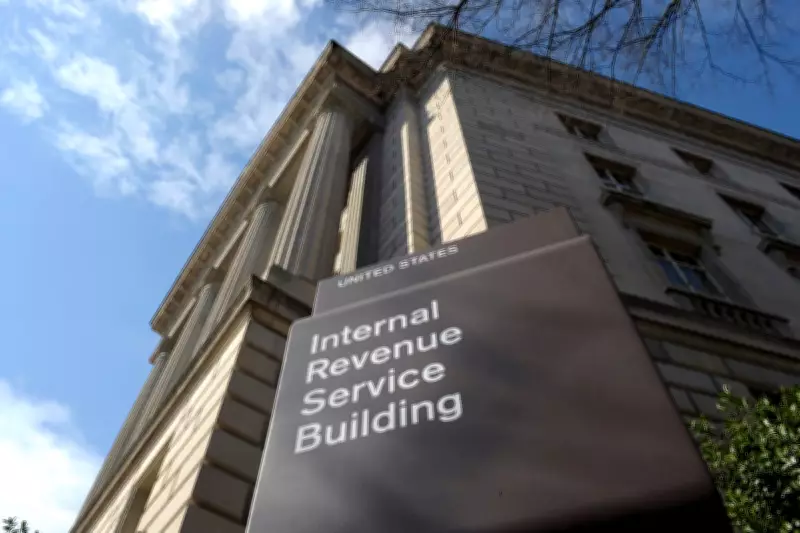
IRS Privacy Breach: Taxpayer Data Wrongly Shared with Homeland Security
A significant privacy breach at the Internal Revenue Service has come to light, with taxpayer information of thousands of individuals being erroneously shared with the Department of Homeland Security, according to a new court filing. This disclosure stems from a controversial data-sharing agreement between the two federal agencies, designed to assist in identifying and deporting people illegally residing in the United States.
Details of the Data-Sharing Agreement and Error
The agreement, signed last April by Treasury Secretary Scott Bessent and Homeland Security Secretary Kristi Noem, permits U.S. Immigration and Customs Enforcement to submit names and addresses of immigrants suspected of being in the country illegally to the IRS for cross-verification against tax records. In a declaration filed on Wednesday, IRS Chief Risk and Control Officer Dottie Romo stated that the IRS was only able to verify approximately 47,000 of the 1.28 million names requested by ICE.
For less than 5% of those individuals, the IRS provided ICE with additional address information, a move that potentially violates strict privacy rules established to protect taxpayer data. Romo added that the Treasury Department notified DHS of the error in January and requested assistance in promptly remediating the matter in accordance with federal law, which includes the appropriate disposal of any data provided to ICE based on incomplete or insufficient address information.

Legal Challenges and Court Interventions
The IRS-DHS agreement has sparked significant litigation between advocacy groups and the federal government since its inception. Public Citizen filed a lawsuit against the Treasury secretary, the Homeland Security secretary, and their respective agencies on behalf of several immigrant rights groups shortly after the agreement was signed. Most recently, a Massachusetts federal court ordered the IRS to cease sharing residential addresses with ICE.
In a prior ruling last November, a federal court blocked the IRS from sharing information with DHS, citing that the IRS had illegally disseminated the tax data of some migrants during the previous summer. The news of this erroneous disclosure was initially reported by The Washington Post, and a spokesperson from the IRS did not respond to an Associated Press request for comment.
Advocacy Concerns and Statements
Advocates have expressed deep concerns that the potential unlawful release of taxpayer records could be used to maliciously target Americans, violate their privacy, and create other serious ramifications. Lisa Gilbert, co-president of Public Citizen, emphasized that this breach of confidential information was a primary reason for filing the lawsuit. She stated, "Sharing this private taxpayer data creates chaos and, as we’ve seen this past year, if federal agents use this private information to track down individuals, it can endanger lives."
Tom Bowman, policy counsel for the Center for Democracy & Technology, highlighted the severity of the issue, saying, "The improper sharing of taxpayer data is unsafe, unlawful, and subject to serious criminal penalties." He further explained, "Once taxpayer data is opened to immigration enforcement, mistakes are inevitable and the consequences fall on innocent people. The disclosure of thousands of confidential records unfortunately shows precisely why strict legal firewalls exist and have — until now — been treated as an important guardrail."
This incident underscores ongoing tensions between government surveillance efforts and individual privacy rights, raising questions about the safeguards in place for sensitive taxpayer information in the context of immigration enforcement.