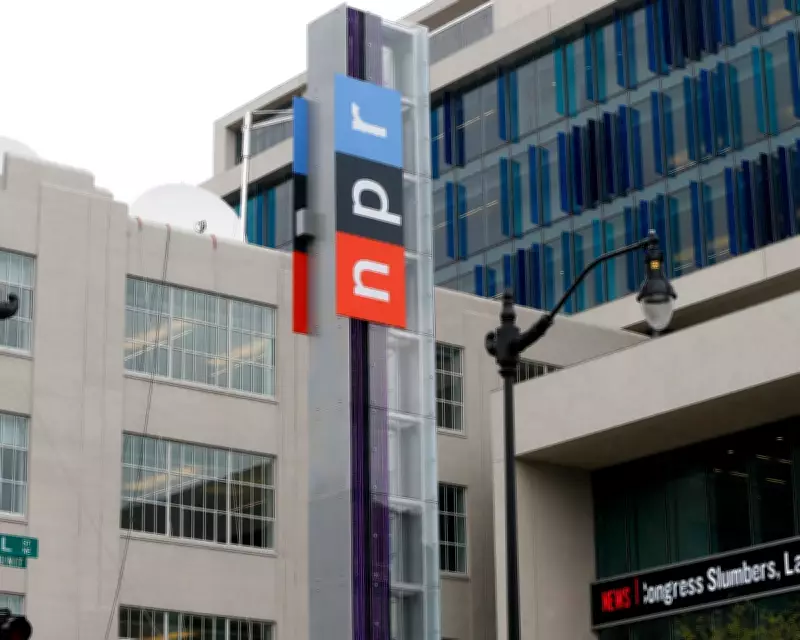
Federal Judge Permanently Blocks Trump's Order to Defund NPR and PBS
In a landmark ruling, a federal judge has permanently blocked the Trump administration from implementing an executive order aimed at ending federal funding for National Public Radio (NPR) and the Public Broadcasting Service (PBS). The decision, issued on Tuesday, cites the First Amendment, declaring the order unlawful and unenforceable due to its targeting of media entities based on their perceived political viewpoints.
Judge Moss's Ruling on First Amendment Grounds
US District Judge Randolph Moss, appointed by former President Barack Obama, ruled that Donald Trump's directive to cease funding for NPR and PBS constitutes unlawful viewpoint discrimination and retaliation. In his written opinion, Moss stated, "It is difficult to conceive of clearer evidence that a government action is targeted at viewpoints that the president does not like and seeks to squelch." He emphasized that the First Amendment "does not tolerate viewpoint discrimination and retaliation of this type."
The judge noted that the executive order broadly directs all federal agencies to "cut off any and all funding" to NPR, based in Washington, D.C., and PBS, headquartered in Arlington, Virginia. Moss highlighted that the government failed to provide any legal precedent supporting such a ban based on past speech, reinforcing the unconstitutionality of the action.

White House Response and Legal Context
Abigail Jackson, a White House spokesperson, criticized the ruling as "a ridiculous ruling by an activist judge attempting to undermine the law." She asserted that NPR and PBS have no entitlement to taxpayer funds and pointed to Congress's prior vote to defund them, expressing confidence in an ultimate victory on appeal.
The legal battle stems from a lawsuit filed by NPR and three public radio stations in May of last year, targeting administration officials, including Trump. While Congress was not a defendant, its role has been significant, having voted to eliminate overall federal appropriations for PBS and NPR, leading to the closure of the Corporation for Public Broadcasting (CPB), which previously distributed funds to these networks.
Impact on Public Broadcasting and Broader Implications
The operational impact of Judge Moss's decision remains uncertain, pending likely appeals and the extensive damage already inflicted on the public-broadcasting system by both the president and Congress. Trump's order immediately slashed millions in funding from the Education Department to PBS for children's programming, resulting in layoffs of one-third of the PBS Kids staff.
Katherine Maher, NPR's president and CEO, hailed the ruling as "a decisive affirmation of the rights of a free and independent press," stating that public media serves the public interest, not political agendas. Similarly, PBS chief Paula Kerger expressed thrill at the decision, calling the executive order "textbook" unconstitutional viewpoint discrimination and retaliation, reaffirming PBS's mission to educate and inspire Americans.
Theodore Boutrous, the plaintiffs' attorney, celebrated the victory, noting that the court recognized the government's overreach in using financial power to suppress disfavored expression. This case underscores ongoing debates over government funding for media and the protection of free speech rights in the United States.