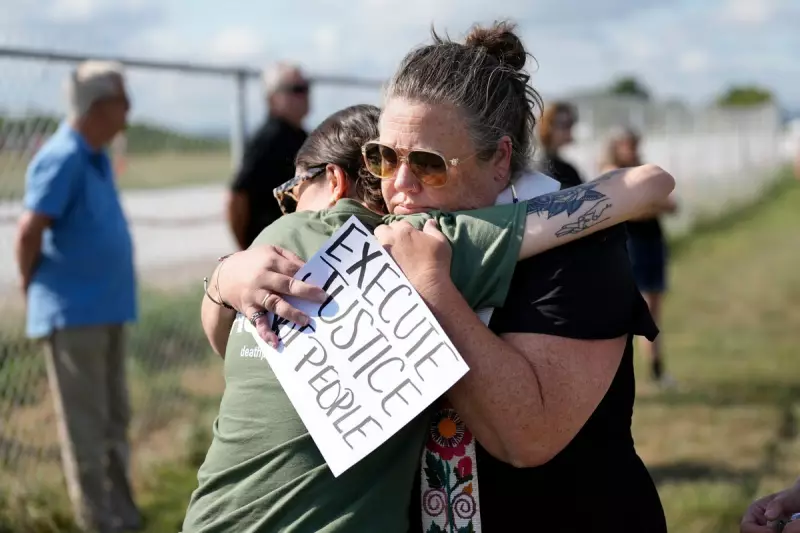
A judge in Tennessee has issued a significant ruling that compels state prison authorities to allow journalists a much broader view of executions carried out by lethal injection. The decision comes after a major lawsuit filed by a coalition of news organisations.
Legal Challenge Leads to Temporary Injunction
Chancellor I'Ashea L. Myles ruled on Friday, 17 January 2026, granting a temporary injunction in favour of the media coalition. The group, which includes The Associated Press, Gannett Co., Inc., and several local Tennessee media outlets, had sued the state. They argued that existing execution protocols violated constitutional rights by preventing the press and public from witnessing the full process.
The lawsuit specifically named Kenneth Nelsen, warden of the Riverbend Maximum Security Institution in Nashville, and Frank Strada, commissioner of the Tennessee Department of Correction, as defendants. The legal action was filed in Davidson County Chancery Court in Nashville.

What the New Ruling Changes
Previously, reporters invited to witness an execution were only allowed to observe for a brief window, estimated at 10 to 15 minutes. They would enter after the condemned inmate was already strapped to a gurney with IV lines inserted, missing the crucial initial stages. The precise moment the lethal drugs were administered was also concealed, as the injection team operated from a separate room.
Under Chancellor Myles's order, the protocol must change. The curtains to the official witness room must now be opened by 10 a.m., which is when the inmate is restrained and the IV process begins. Critically, the curtains must remain open until death is pronounced. This allows witnesses to see nearly the entire procedure.
The judge wrote that this full observation is essential for the public to assess if the state carries out death sentences lawfully and humanely, ensuring "democratic oversight." To address security concerns raised by prison officials, the order stipulates that execution team members must wear disposable protective suits over their uniforms and badges, and may opt to wear a mask.
Arguments and Implications
Prison authorities had defended the restrictions, arguing that the First Amendment does not grant the press special access beyond what the public receives. They also claimed full visibility would endanger security and the identities of those carrying out the execution.
The judge's ruling rejects that stance for the purposes of the injunction. The Tennessee Department of Correction did not immediately respond to a request for comment on the Friday evening ruling. This decision sets a new precedent for transparency in the execution process within the state, potentially influencing similar debates elsewhere in the United States.